

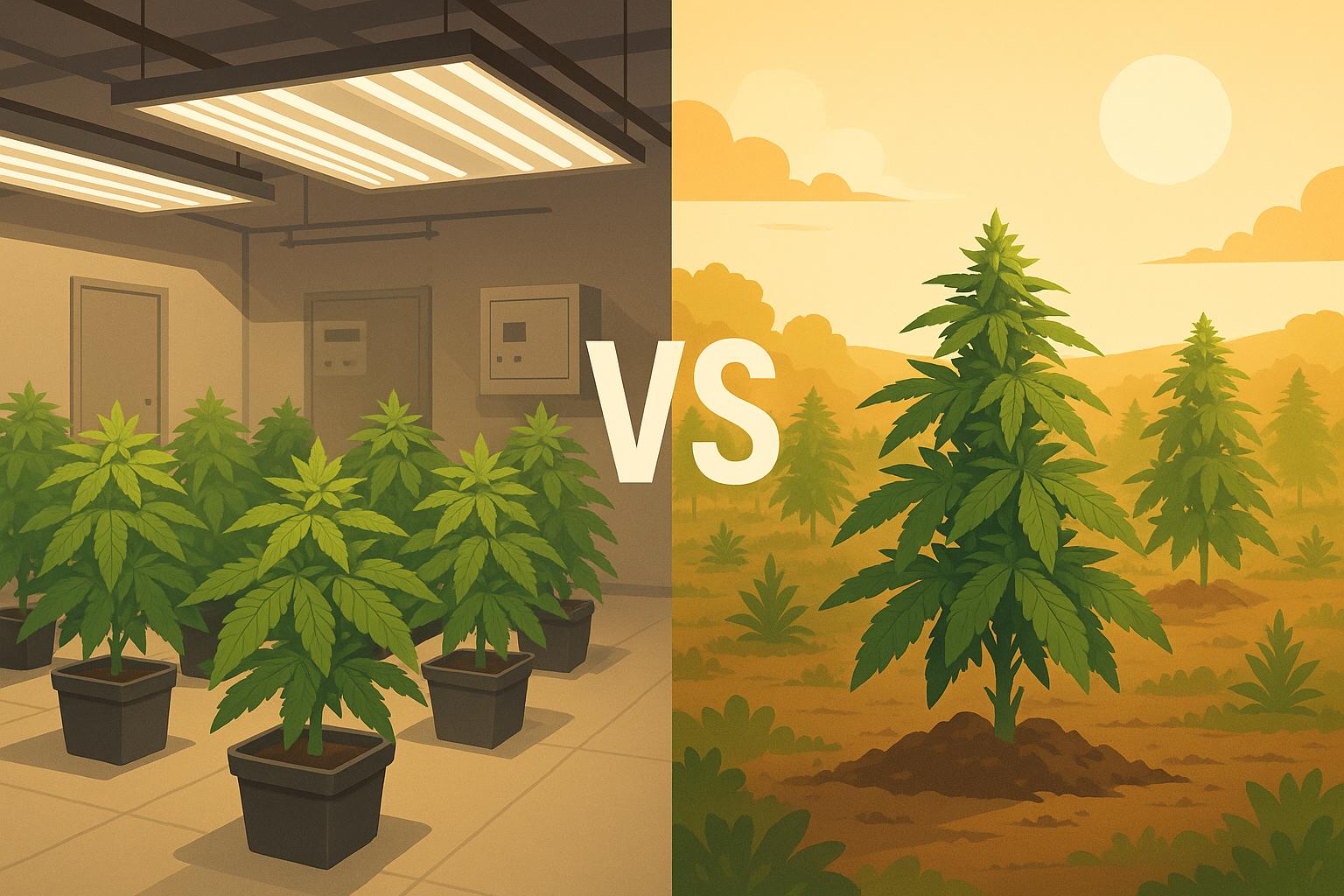
Looking to grow cannabis but unsure whether to go indoor or outdoor? Here’s the quick breakdown:
- Indoor Growing: Offers full control over temperature, humidity, lighting, and airflow for consistent year-round harvests. However, it comes with higher setup costs ($830–$2,750) and monthly expenses ($270–$530). Ideal for harsh climates or growers prioritizing precision and privacy.
- Outdoor Growing: Relies on natural sunlight and weather, making it more cost-effective (setup: $200–$600; monthly: $50–$140) and eco-friendly. Produces larger plants with richer terpene profiles but is limited by seasonal cycles and weather unpredictability.
Quick Comparison
| Factor | Indoor Growing | Outdoor Growing |
|---|---|---|
| Initial Investment | High ($830–$2,750) | Low ($200–$600) |
| Monthly Costs | High ($270–$530) | Low ($50–$140) |
| Growing Season | Year-round | Seasonal (spring to fall) |
| Environmental Control | Full control | Weather-dependent |
| Yields | Smaller but consistent | Larger per plant |
| Pest/Disease Risk | Lower risk | Higher risk |
| Energy Use | High (electricity) | Low (natural sunlight) |
Bottom Line: Choose indoor growing for control and consistency, or outdoor growing for affordability and larger plants. Your local climate, budget, and goals will guide your decision.
Basic Growing Methods
Indoor Growing Basics
Indoor growing gives you full control over the environment by using specialized equipment and constant monitoring. This approach involves creating a dedicated space with artificial lighting, ventilation, and climate control systems.
Here’s what a typical indoor setup looks like:
| Equipment | Purpose | Growth Impact |
|---|---|---|
| LED/HPS Grow Lights | Mimic natural sunlight | Ensures steady and reliable light cycles |
| Ventilation System | Promote air circulation | Helps prevent mold and keeps plants healthy |
| Temperature Controls | Maintain ideal conditions | Keeps temperature between 70–85°F (21–29°C) |
| Humidity Management | Control moisture levels | Reduces disease risk and aids strong growth |
This method allows for cultivation throughout the year, no matter the weather outside. It’s especially useful in areas with harsh climates or short growing seasons.
Outdoor Growing Basics
Outdoor growing takes advantage of natural elements to support plant growth. It relies on sunlight, rainfall, and soil nutrients, with results influenced by the local climate and seasonal changes. Key factors to consider include:
- Natural Light Cycles: Plants grow according to the sun’s schedule, typically planted in spring and harvested in fall.
- Soil Quality: Healthy, nutrient-rich soil is crucial, whether planting directly in the ground or using raised beds.
- Weather Challenges: Be prepared to manage extreme conditions like heavy rain or strong winds.
- Space: Outdoor setups offer more room for plants to grow taller and wider.
Using natural sunlight can cut down on energy costs and may even improve the flavor and quality of the plants. For a middle-ground approach, greenhouses combine sunlight with added protection, extending the growing season while shielding plants from bad weather and pests.
Costs and Resources
Setup Costs
Here’s a breakdown of the setup costs for indoor growing:
| Equipment Type | Cost Range (USD) | Lifespan |
|---|---|---|
| LED Grow Lights | $200–$1,000 | 5–7 years |
| Ventilation System | $150–$400 | 3–5 years |
| Climate Control | $300–$800 | 4–6 years |
| Growing Medium | $50–$150 | Per harvest |
| Containers/Pots | $30–$100 | 2–3 years |
| Monitoring Tools | $100–$300 | 2–4 years |
Outdoor setups generally cost less to get started:
| Item | Cost Range (USD) | Lifespan |
|---|---|---|
| Soil Amendments | $50–$200 | Per season |
| Basic Tools | $100–$250 | 3–5 years |
| Protective Covers | $30–$100 | 1–2 seasons |
| Support Stakes | $20–$50 | 2–3 seasons |
Monthly Expenses
Once the system is up and running, monthly costs differ significantly between indoor and outdoor setups:
| Expense Category | Indoor Cost/Month | Outdoor Cost/Month |
|---|---|---|
| Electricity | $150–$300 | $0–$20 |
| Water | $30–$50 | $10–$30 |
| Nutrients | $40–$80 | $20–$40 |
| Maintenance | $50–$100 | $20–$50 |
Cost Comparison
Indoor systems demand a higher upfront investment, ranging from $830 to $2,750, and monthly costs between $270 and $530. These expenses stem largely from artificial lighting and climate control. In contrast, outdoor setups are more affordable, with initial costs around $200 to $600 and monthly expenses between $50 and $140. Outdoor growing benefits from natural sunlight, which eliminates the need for energy-intensive equipment.
While outdoor growing is easier on the wallet and often results in larger plants due to natural conditions, indoor setups offer a controlled environment. This allows for consistent, year-round harvests, making them a solid choice for growers looking for steady production.
Yields and Quality Results
Indoor Results
Growing indoors allows for controlled lighting and nutrient management, resulting in consistent yields with dense, trichome-heavy buds and bright green colors. While space limitations can lead to lower yields per cycle, the ability to harvest multiple times a year helps make up for this.
Outdoor Results
Outdoor cultivation benefits from abundant sunlight and natural growth conditions, producing larger yields per plant. The buds tend to have darker green tones and a more open structure due to the unrestricted growing space.
Research from Columbia University, in collaboration with Emerald Triangle farmers, revealed that outdoor-grown plants often feature:
- More complex terpene profiles
- Reduced signs of oxidation
- Higher levels of sesquiterpenes
These differences in yield and quality are important factors for growers when deciding how to balance costs with production goals.
Results Comparison
The differences between indoor and outdoor cultivation come down to trade-offs in quality, yield, and appearance.
| Characteristic | Indoor Growing | Outdoor Growing |
|---|---|---|
| Bud Color | Bright green | Darker green |
| Bud Density | Very dense | More open structure |
| Trichome Content | Higher concentration | Moderate concentration |
| Terpene Profile | Standard profile | More complex and nuanced |
| Visual Appeal | Manicured, polished look | Natural, rustic appearance |
| Harvest Frequency | Multiple times per year | Typically one major harvest |
| Plant Size | Limited by space and light | Much larger potential size |
Indoor cultivation is ideal for growers prioritizing consistent, visually appealing cannabis. On the other hand, outdoor growing delivers larger yields and a richer terpene profile. The best choice depends on your goals and resources.
Climate Control and Pests
Indoor Climate Management
Indoor growing environments offer the ability to closely manage factors like temperature, humidity, lighting, and airflow. Essential equipment for indoor setups includes:
- HVAC Systems: Maintain steady temperatures to support plant health.
- Dehumidifiers: Reduce excess moisture, helping to prevent mold and other moisture-related issues.
- Air Circulation Fans: Improve airflow and strengthen plant stems with consistent movement.
By maintaining a controlled environment, growers can reduce the likelihood of pest infestations and diseases. Regular monitoring is also crucial for spotting and addressing any problems early. In contrast, outdoor growing presents a different set of challenges due to its unpredictable conditions.
Outdoor Weather Factors
Outdoor cultivation operates at the mercy of natural weather patterns, requiring growers to adapt to changing conditions. Key strategies include:
- Selecting the best planting season and a site with natural wind barriers and good drainage.
- Employing natural pest control methods, such as companion planting and encouraging beneficial insects.
Common outdoor pests include aphids, spider mites, deer, and rabbits. To protect crops, growers often use fencing or natural deterrents tailored to their specific challenges.
Risk Comparison
The differences between indoor and outdoor growing environments lead to distinct risk profiles, as shown below:
| Factor | Indoor Growing | Outdoor Growing |
|---|---|---|
| Temperature Control | Consistently managed | Variable |
| Humidity Management | Easily controlled | Dependent on weather |
| Pest Risk Level | Lower risk | Higher risk |
| Disease Prevention | Easier to maintain | More difficult |
| Weather Impact | Minimal | Significant |
| Climate Consistency | Stable year-round | Seasonal variability |
Indoor growing offers predictable outcomes due to precise environmental controls. On the other hand, outdoor cultivation, while benefiting from natural ecological practices like companion planting, demands a more hands-on approach to pest and weather management.
sbb-itb-5407682
OUTDOOR VS INDOOR CANNABIS from a chemistry …
Method Comparison
When deciding between indoor and outdoor growing, it’s crucial to weigh the costs, yields, and pest management challenges of each method. Indoor setups offer complete control over growing conditions but come with higher upfront and ongoing expenses. Outdoor growing, on the other hand, relies on natural resources and is more cost-effective but can be impacted by unpredictable weather.
Here’s a side-by-side look at the key differences:
| Factor | Indoor Growing | Outdoor Growing |
|---|---|---|
| Initial Investment | High costs for equipment like lighting, ventilation, and climate control | Lower costs with basic tools and soil amendments |
| Monthly Costs | Higher due to electricity and nutrient needs | Lower, thanks to natural sunlight and rainwater |
| Growth Cycle | Allows year-round cultivation | Limited to seasonal cycles |
| Space Requirements | Restricted by indoor space, accommodating fewer plants | Larger outdoor areas support more plants and wider spacing |
| Environmental Control | Complete control over temperature, humidity, and light | Dependent on weather conditions |
| Resource Use | Consumes more energy but allows controlled water usage | Relies on natural light and rainwater, reducing resource demands |
| Maintenance | Requires consistent monitoring and adjustments | Less intensive, relying on natural processes |
| Risks | Vulnerable to equipment failures and power outages | Exposed to weather damage and pests |
This comparison highlights the pros and cons of each method, helping you choose the one that best fits your needs and local environment.
Conclusion
Deciding between indoor and outdoor growing depends on your resources, climate, and goals. Indoor setups provide year-round cultivation with full control over conditions. While this method boosts production efficiency, it also demands more resources, which can have a larger environmental impact.
Outdoor growing, on the other hand, is generally more affordable and eco-friendly. It relies on natural sunlight and rainwater, making it less resource-intensive. However, it comes with the challenge of adapting to external conditions.
For beginners or those on a tight budget, outdoor cultivation is often the easier choice due to its lower startup costs. Indoor growing is better suited for those who value precise control and consistent harvests throughout the year, even though it involves higher upfront expenses. Outdoor-grown plants also tend to develop darker, denser buds thanks to their exposure to natural elements.
Your local climate plays a big role in this decision. If you live in an area with favorable weather, outdoor growing might be ideal. But if extreme conditions are a concern, indoor cultivation could be the better option. Don’t forget to consider factors like available space, local regulations, and the level of privacy you need.
FAQs
What should I consider about my local climate when choosing between indoor and outdoor cannabis growing?
When deciding between indoor and outdoor cannabis growing, your local climate plays a crucial role. Consider factors like temperature, humidity, and seasonal weather patterns. For outdoor growing, ensure your climate supports the strain you choose – some strains handle heat, cold, or humidity better than others. Indoor growing offers more control over these conditions, making it ideal for unpredictable or extreme climates.
Other key considerations include soil quality, water availability, and protection from pests or harsh weather. Outdoor growers may need to prepare soil and implement safeguards like windbreaks or shade cloth, while indoor growers should invest in proper ventilation, grow lights, and temperature control systems. Tailoring your approach to your environment will help you achieve optimal growth and yields.
What are the cost differences between indoor and outdoor cannabis growing over time?
Indoor growing typically involves higher upfront costs compared to outdoor growing due to the need for specialized equipment like grow lights, ventilation systems, fans, and grow tents. For example, setting up a small indoor grow might cost around $420 or more, depending on the size and complexity of the setup. Additionally, ongoing expenses for indoor cultivation include higher electricity bills to power lights and maintain environmental controls.
Outdoor growing, on the other hand, relies on natural sunlight, wind, and rain, which significantly reduces initial and recurring costs. However, outdoor growers may need to invest more in pest control and fertilizers to protect their plants from environmental challenges. Over time, indoor growing can be more expensive due to energy usage, while outdoor growing may save money but requires careful attention to weather and pests.
What are the key differences in yield quality and plant traits between indoor and outdoor cannabis growing?
Indoor cannabis growing offers a controlled environment, allowing growers to fine-tune factors like light, temperature, and humidity. This often results in consistent quality, higher potency, and predictable yields. Additionally, indoor setups can produce multiple harvests year-round, making them ideal for those seeking efficiency and control.
Outdoor cultivation, on the other hand, benefits from natural sunlight and ample space, which can lead to larger plants and higher yields per plant. Outdoor-grown cannabis may also develop unique flavors and aromas, thanks to its exposure to a wider range of environmental factors. However, it is more susceptible to pests, weather changes, and seasonal limitations.
Choosing between the two depends on your goals, resources, and the level of control you prefer over the growing process.