


Table of Contents
What if the soaking method matters more than the seed itself?
Where high-quality seeds fit into better germination results
Quick Answer:
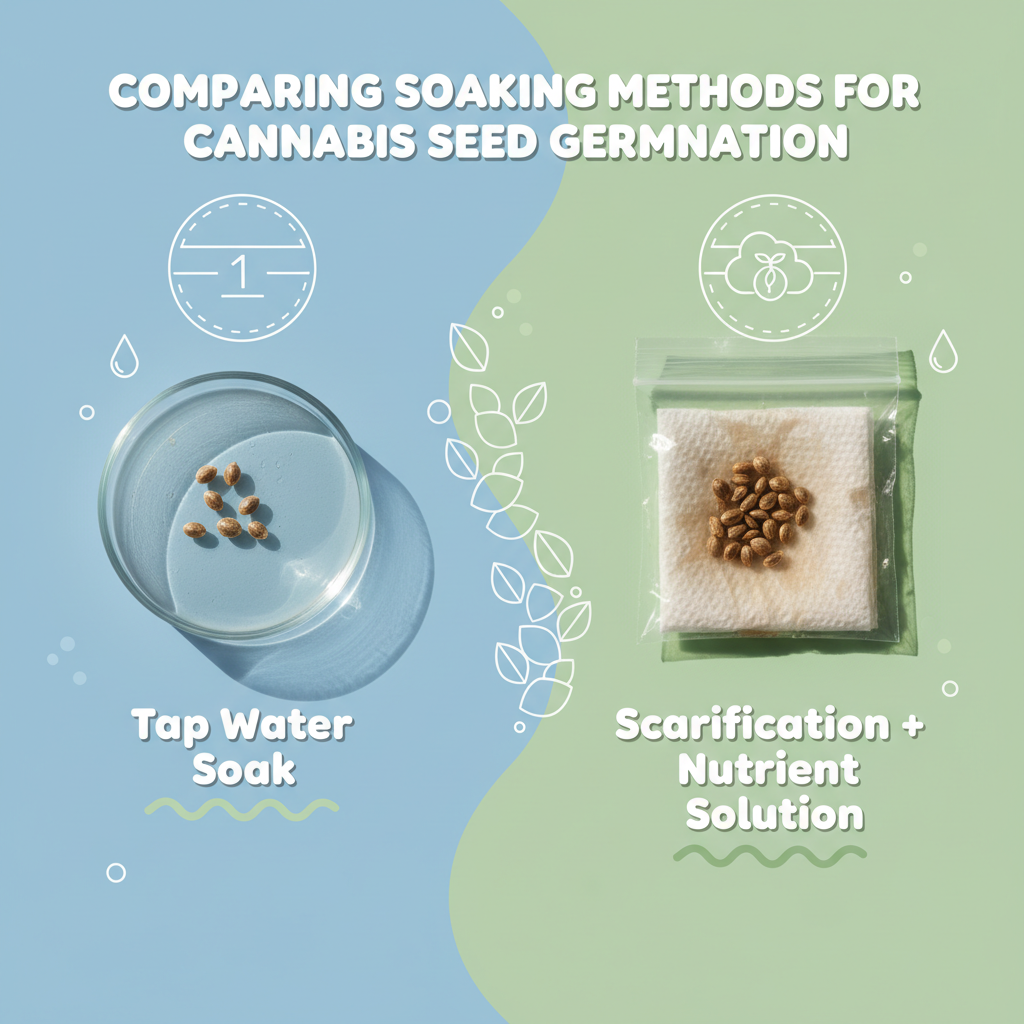
Pick the soaking workflow that matches your visibility and handling preferences. Each method changes how quickly the seed surface hydrates and how easy it is to check progress without disturbing the setup.
- Plain water (room temp): Best for a calm, simple routine with periodic checks.
- Warm water (with tight temperature control): Useful when you need more consistency and you can keep conditions stable.
- Paper-towel after-soak: Best when you want a quick visual read so you can move forward immediately after the early change you’re targeting.
- Glass jar soak: Good if you want containment and clear sightlines without repeatedly handling seeds.
- Short pre-soak → direct planting: Best for minimizing time in a fully wet state and getting seeds into the medium promptly.
Fast selection rule: prioritize easy inspection if you tend to wait too long without feedback; prioritize reduced wet-time and handling if your workflow makes monitoring difficult.
How long should you soak fresh cannabis seeds before planting?
There isn’t one universal soak time for every seed. Instead, use your chosen method’s check points to decide when the seed is ready for the next step in your workflow.Quick cues by method (use these to stop, not to estimate a fixed duration):
- Plain (room-temp) water: stop when the seed’s surface looks consistently hydrated and the texture is no longer “dry-seed stiff.”
- Warm water (tightly controlled): stop at the first point where you see uniform surface hydration without letting the setup linger.
- Paper-towel after-soak: stop as soon as the seeds show even, readable hydration during your visual check.
- Glass jar soak: stop when inspection shows uniform hydration—avoid repeatedly opening/handling just to “wait longer.”
- Short pre-soak → direct planting: stop sooner so the transition to your medium happens quickly.
Do older cannabis seeds need different soaking than fresh seeds?
Often, older seeds may take longer to show change. The adjustment is less about soaking “much longer” and more about choosing a workflow that makes subtle progress easier to confirm.What to change for older stock:
- Check more frequently because the shift can be slower at first.
- Use a method that gives clearer visibility or easier, cleaner handling so you can act before conditions drift.
- If you’re not seeing improvement at your check points, switch workflows to one that improves moisture contact and the transition process.
What happens if you use too much water when soaking cannabis seeds?
Overdoing water—especially leaving seeds in a stagnant, continuously wet setup too long—can reduce oxygen at the seed surface and increase the chance of stagnation.What to watch (method-specific):
- Glass jar / fully submerged setups: easiest to unintentionally overdo because it’s harder to “course-correct” without reopening/adjusting.
- Paper-towel workflows: often reduce the risk of extended waterlogging because you typically move out of the fully-wet state quickly.
Stop or change course if you notice:
- Mushy or overly soft texture
- Stagnant look/smell (a wet, stuck environment)
- No meaningful progress across your planned checks
What is the risk of using too little water during seed preparation?
Too little moisture can create uneven hydration, where some areas respond while others lag behind.Signs:
- Uneven swelling/softening
- Dry spots that don’t seem to catch up
How to correct:
- Switch to (or adjust) a method that improves seed-to-moisture contact.
- Increase check frequency so you can change before the process stalls.
How does the soaking method affect cannabis seed germination speed?
Soaking usually doesn’t “boost biology” in a guaranteed way—it changes the conditions and workflow timing that determine how quickly you reach your next step.In practice, “speed” often comes from:
- Time to an informed check: methods with easier visibility help you avoid waiting blindly.
- Consistency of surface hydration: more even moisture contact reduces delays caused by patchy soaking.
- Transition efficiency: short pre-soaks can speed the overall timeline by getting seeds into the medium sooner.
Pick the approach that helps you get from dry → successfully transitioned state with the least risk of messy handling or extended stagnation.