



Nothing kills enthusiasm faster than a promising plant that turns out nothing like the advertised phenotype, leaving a grower confused and annoyed. When harvests swing wildly between potency, yield, aroma and resin, most growers blame technique before considering the genetic root cause. Understanding cannabis genetics explains why siblings from the same pack of seeds can behave like different cultivars.
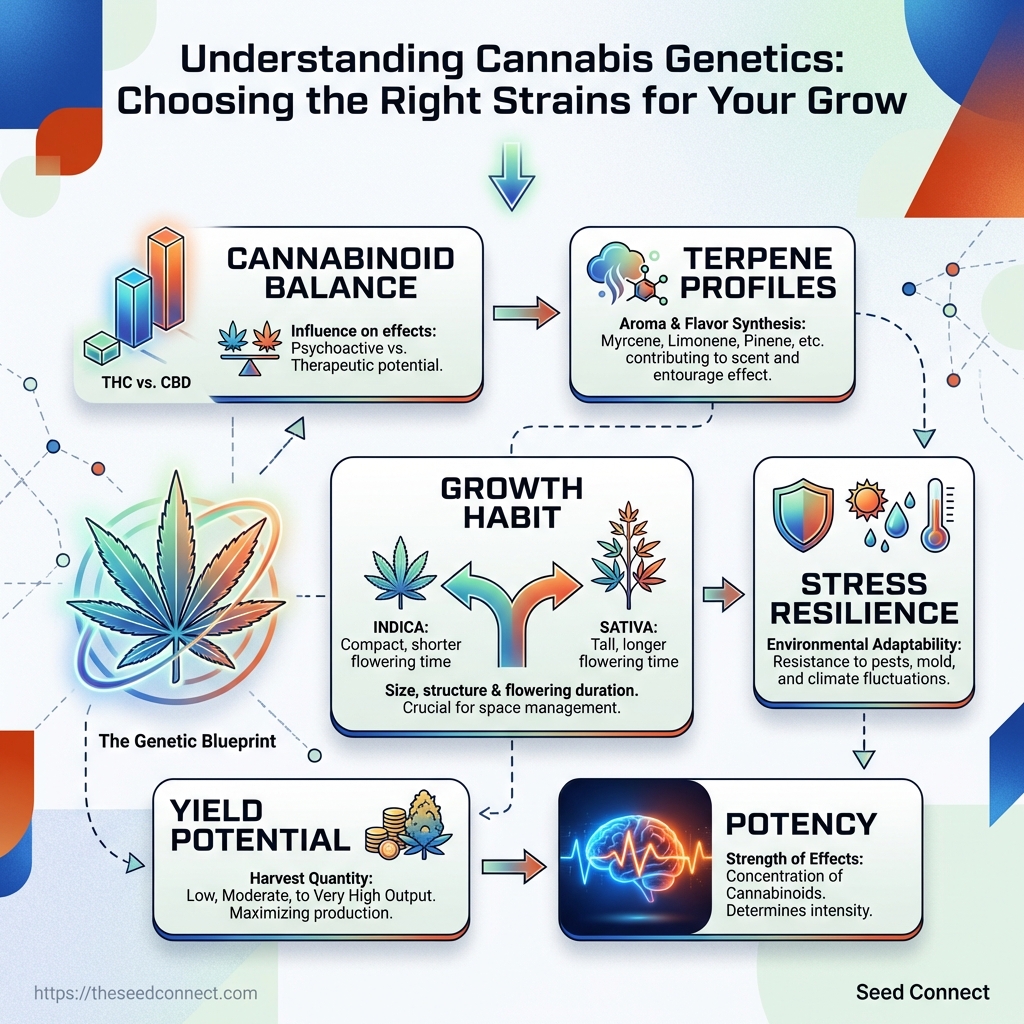
Genetics set the baseline for plant architecture, flowering schedule, cannabinoid potential, terpene profile, and resilience to pests and stress. Smart strain selection aligns those inherited tendencies with a grower’s light, space, timeline, and tolerance for variability. Skip that match and even immaculate environmental control can’t prevent surprises at bud structure, potency, or harvest window.
A common mistake is trusting flashy names and hype rather than pedigree notes and stable phenotype reports. Reading breeder lineage, understanding dominant versus recessive traits, and knowing typical phenotype spread turns uncertainty into informed choices. With that foundation, growing cannabis strains becomes a controllable craft where expectations match outcomes.
Evaluating seed quality and supplier credibility
A quick, reliable way to protect a grow is to spot good seeds and pick suppliers that stand behind them. High-quality seeds are uniform, firm, and show maturity; a trustworthy supplier backs that with clear germination terms, transparent sourcing, and sensible shipping practices. Shifting a little time toward a simple tap-test, checking packaging and guarantee language, and confirming legal shipping routes saves weeks of wasted effort and prevents legal headaches when ordering across borders.
What good seeds look like
- Firmness: Gently squeeze — mature seeds feel hard, not squishy, and resist light pressure.
- Color and pattern: Healthy seeds usually show mottled brown/grey tones with defined stripes; pristine dark-green or pure white seeds are suspicious.
- Size consistency: Uniform size within a pack suggests stable genetics and careful sorting.
- No surface damage: Cracks, holes, or a powdery film indicate age, pests, or mold.
Practical example: a pack from a reliable grower often has seeds within a narrow size range and no crushed or discolored pieces.
How to perform a quick tap-test and what it tells you
- Place a seed on a flat surface and tap it gently with a fingernail.
- If the seed produces a sharp, audible click and feels dense, it’s likely mature.
- If it crushes, sticks, or emits a hollow sound, consider the seed immature or compromised.
This test isn’t proof-positive, but combined with visual checks it separates likely winners from losers before wasting setup time.
Germination guarantees and practical protections
- Clear guarantee terms: Good suppliers state the percent coverage, timeframe, and what replacements or refunds look like.
- Simple claim procedures: Look for step-by-step requirements — photos, germination logs, or return windows — that are realistic.
- Third-party verification: Independent germination data or grower testimonials add credibility.
A fair guarantee covers more than a promise; it reduces risk if a batch underperforms.
International shipping and legal compliance
- Declared contents and paperwork: Seeds should be shipped with accurate paperwork and, when required, phytosanitary certificates.
- Know local import rules: Some countries restrict or prohibit seed imports—verify local laws before ordering.
- Discrete, insured shipping: Insurance and discreet packaging protect against loss and customs issues.
For authoritative seed options and clear germination policies, platforms like cannabis seeds for sale are useful references for comparing offerings.
A few minutes inspecting seeds and reading guarantee language prevents months of frustration; choose consistency over flash, clarity over vague promises.
Conclusion
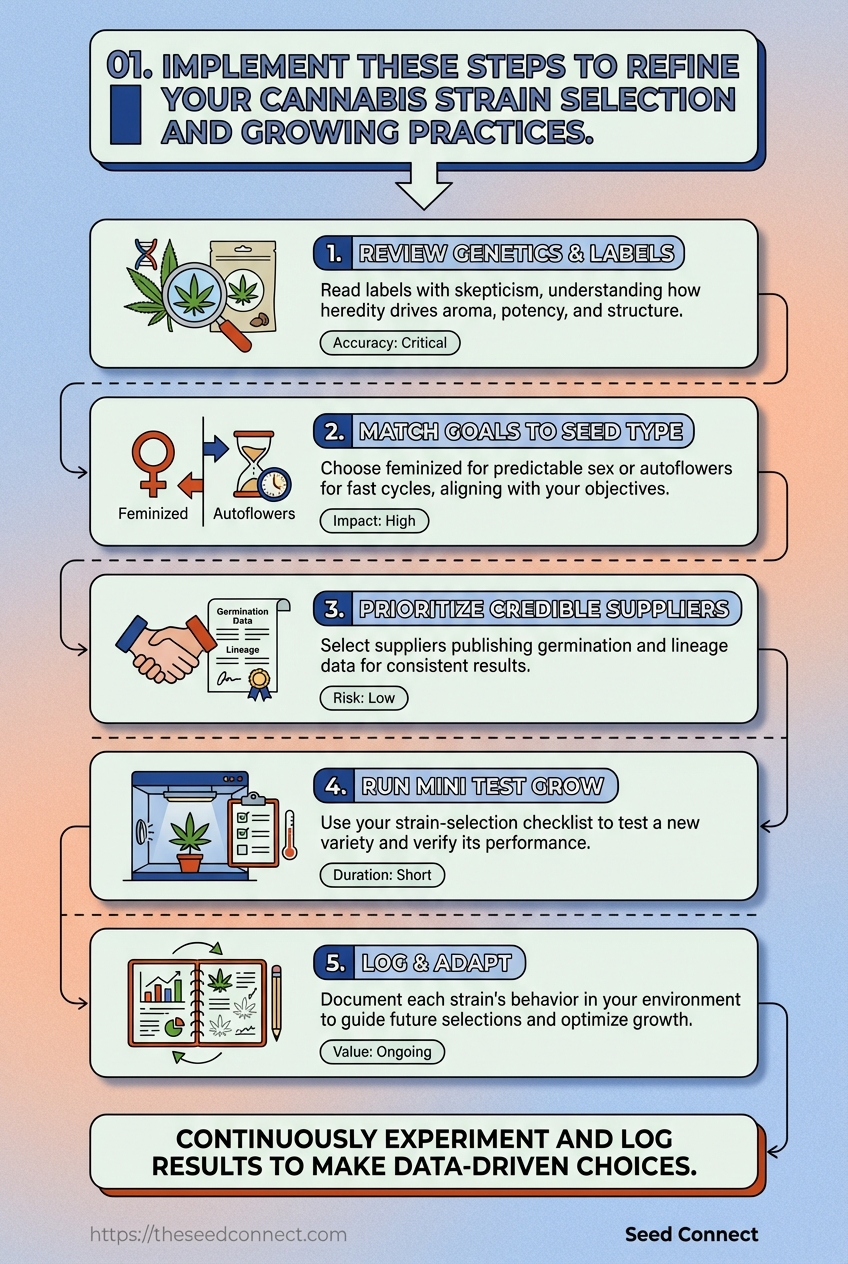
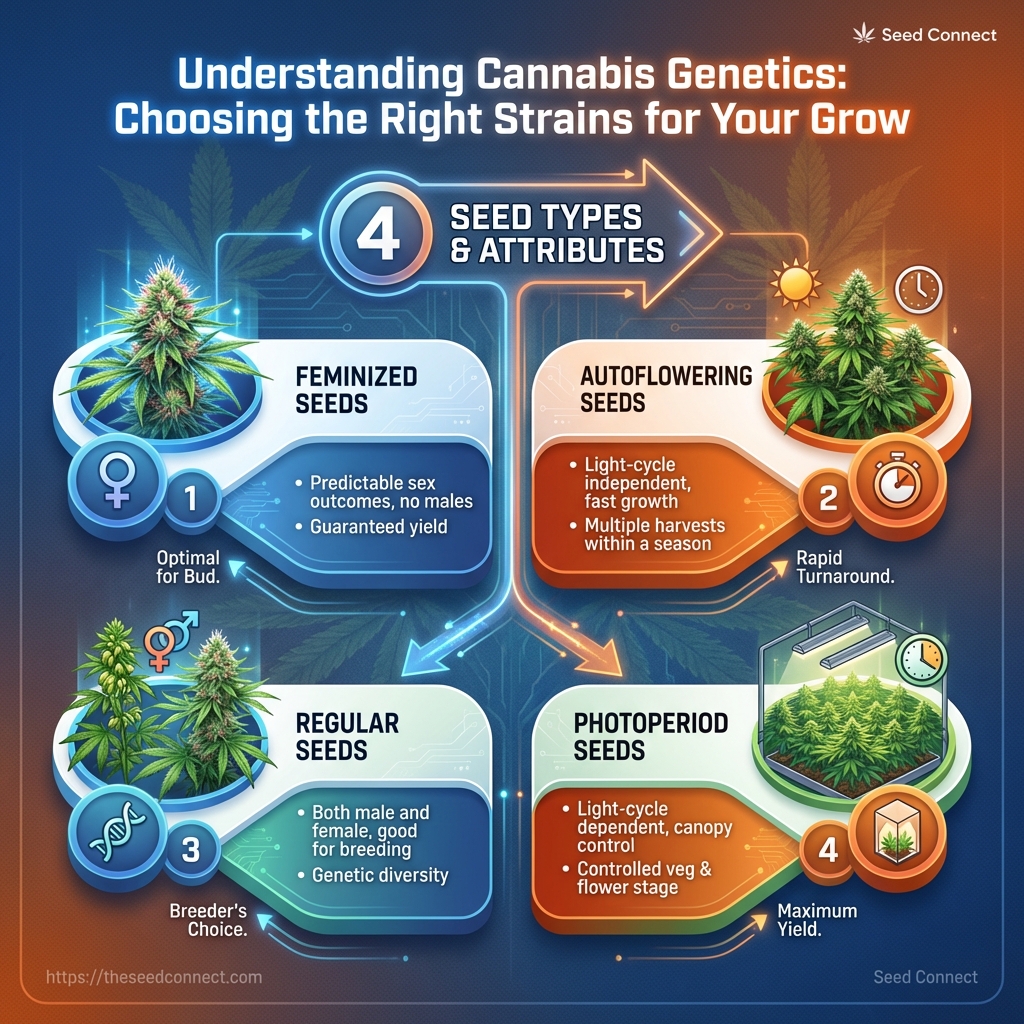
If a harvest has ever felt like a lottery, it’s because genetics and strain information were treated like marketing copy instead of lab data. Remember to ground decisions in basics — know the genetics, read labels with a skeptical eye, and match strain traits to your goals (yield, THC/CBD balance, growing window). Use the practical strain-selection checklist from earlier: it turns vague promises into measurable choices, and it helps avoid surprises like the labeling mismatch example or the autoflower-versus-feminized trade-offs discussed above.
Take action deliberately: run a small test grow, document phenotypes, and pick suppliers that stand behind germination and clear genetics. Platforms that publish provenance and offer germination guarantees make translating cannabis genetics into consistent results a lot easier. To streamline your next round of selections, consider browsing cannabis seeds for sale as a resource that combines clear strain info with guaranteed starts. Start small, keep detailed notes, and iterate — that’s how reliable knowledge about strain selection and growing cannabis strains turns into repeatable, satisfying harvests.