


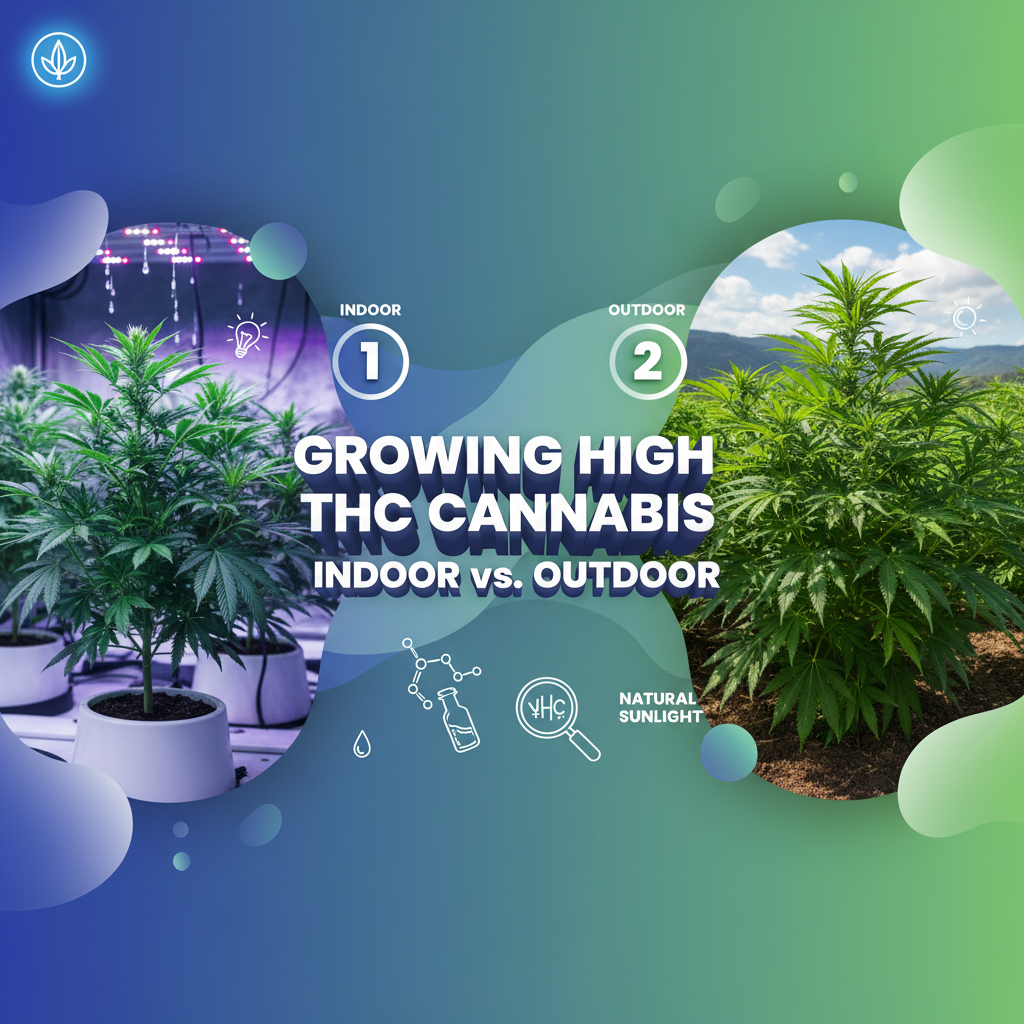
A plant can look perfect at week six and still miss the mark at harvest.
That is the part most growers learn the hard way when chasing high THC cultivation.
The real debate in indoor vs outdoor cannabis is not just light and space.
It is control versus freedom, and both growing methods can produce strong results when they match the plant and the grower.
Research from FreshBros in 2025 notes that indoor grows usually deliver tighter consistency and higher THC levels, while outdoor plants often stretch larger and cost less to run.
That tradeoff matters fast.
Indoor setups can dial in temperature, humidity, and light cycle with near-obsessive precision, which helps keep potency steady.
Outdoor grows lean on the sun, the seasons, and a little patience, which can mean bigger plants and more risk from weather, pests, and uneven flowering.
The smarter question is not which method is “better.” It is which one fits the kind of flower you want to harvest, the space you have, and how much uncertainty you can live with.
Quick Answer: For consistently high-THC harvests, indoor growing usually wins because you can tightly control light cycle, temperature, and humidity—helping reduce stress during flowering, when resin and potency are being built. That control also makes it easier to repeat the same results across runs. Outdoors can absolutely produce powerful, high-THC plants and often does so at a lower overall cost by relying on sun and natural seasonality. The tradeoff is that weather swings, pest pressure, and uneven flowering can make end potency less predictable.
FreshBros’ 2025 comparison is one example of a broader pattern: controlled environments tend to produce tighter consistency, while outdoor grows win when your climate lines up with the flowering window.
What if the best high THC harvest depends more on your grow environment than your strain?
A strain can promise big THC numbers, but the room or field often decides whether it gets there.
A plant with great genetics still reacts to stress, and stress changes resin, aroma, and yield.
That is why indoor vs outdoor cannabis is never just a style choice.
In FreshBros’ 2025 indoor vs outdoor cannabis comparison, indoor growing is described as the route that gives tighter control over conditions and more consistent potency.
Outdoor plants can still hit hard, but the environment has the final say on how cleanly they finish.
Light usually matters most.
Strong, well-timed light drives photosynthesis and resin production, while weak or uneven light leaves buds airy and less potent.
Temperature, airflow, pests, and timing sit right behind it.
Warm swings can slow growth or stress the plant, stagnant air invites mold, and pests chip away at plant health before harvest day ever arrives.
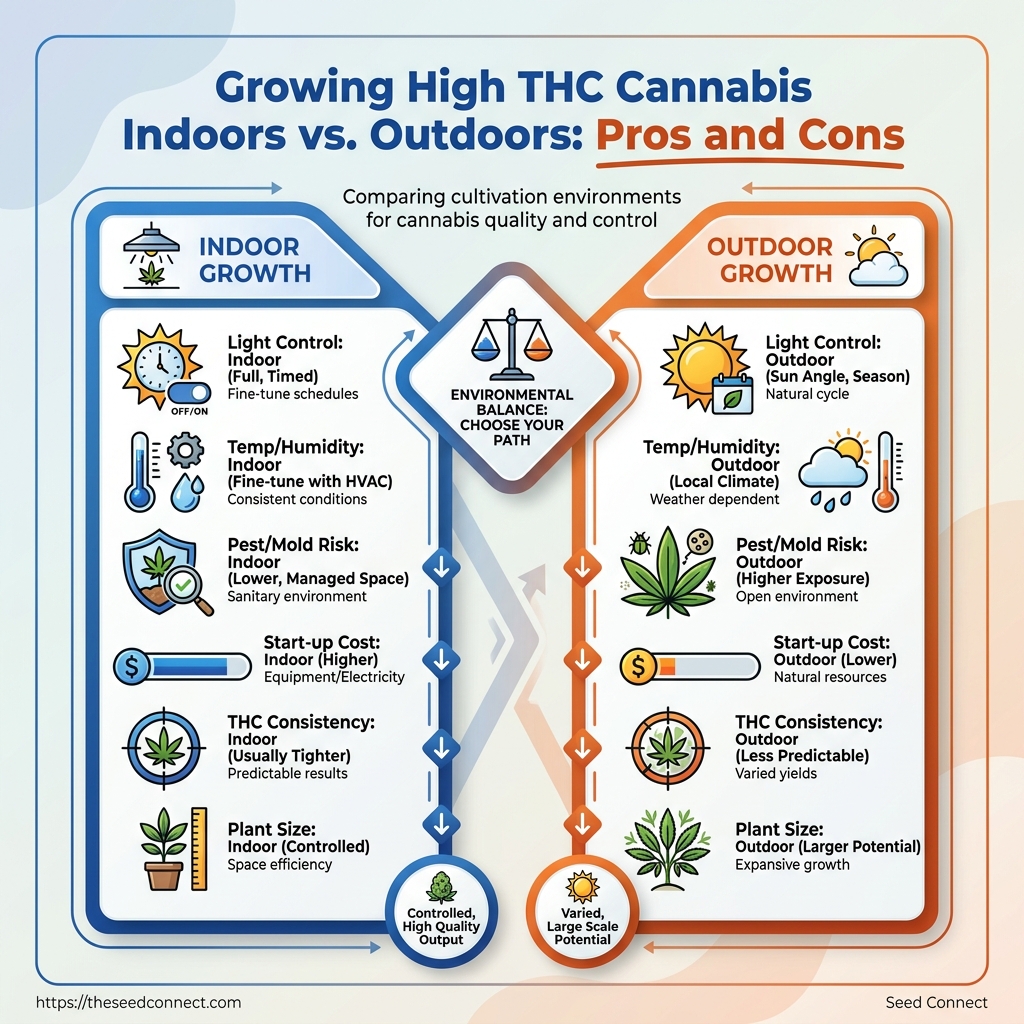
The five conditions that change the outcome
- Light: More consistent light exposure usually means denser flowers and better THC potential.
- Temperature: Stable day and night ranges help plants stay on track instead of fighting heat or chill.
- Airflow: Moving air reduces moisture pockets and lowers the risk of powdery mildew or bud rot.
- Pests: Fewer pest problems mean less damaged leaf surface and less stress during flowering.
- Timing: Harvesting too early or too late can flatten flavor and leave THC on the table.
A simple example makes this obvious.
Two growers can plant the same feminized seed and get very different results if one keeps steady airflow and a clean finish, while the other lets humidity swing all over the place.
The genetics matter, but the environment decides whether those genetics get to show off.
For high THC cultivation, that usually means treating the grow space like part of the plant, not just the container around it.
Good conditions do not just boost potency.
They also protect terpenes, keep buds healthier, and make the final harvest taste the way it should.
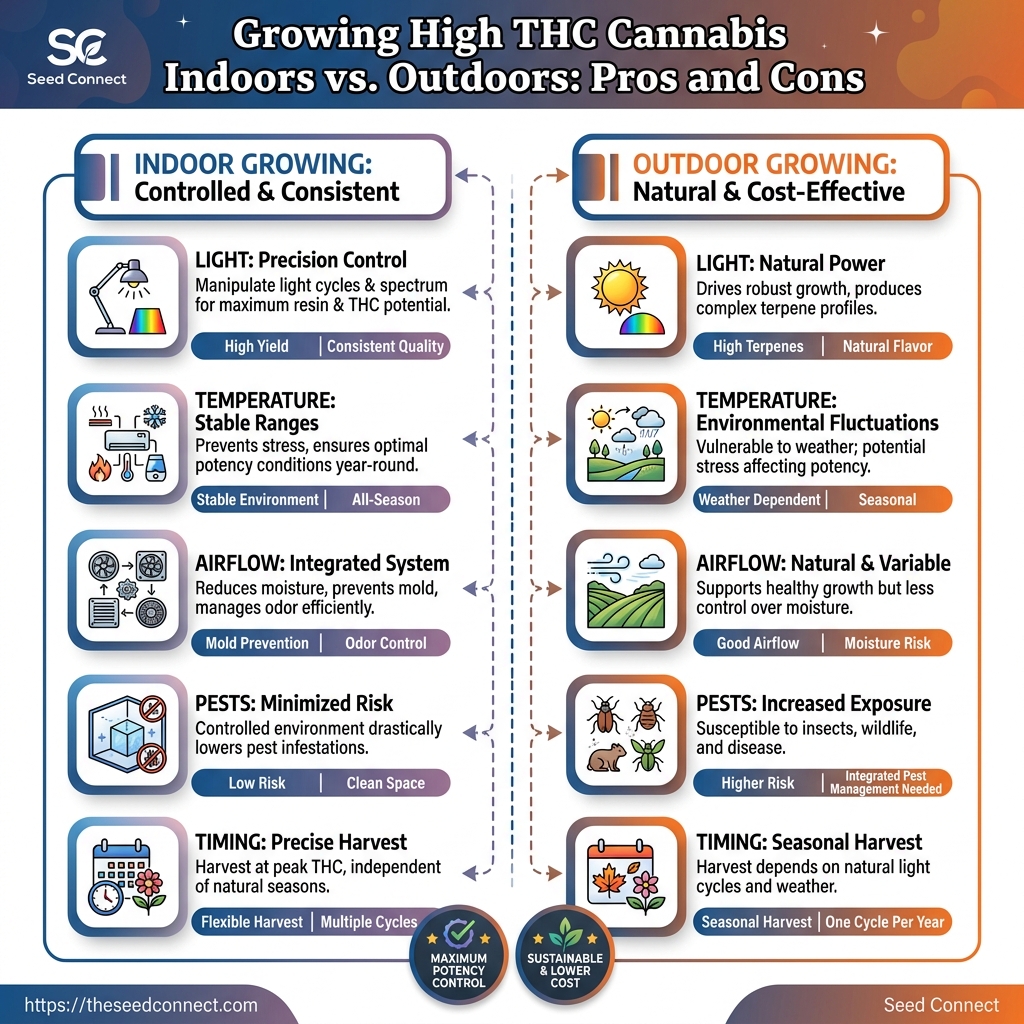
Indoor vs outdoor cannabis: a side-by-side comparison for high THC goals
If your target is high THC, you’re not only choosing between “indoor” and “outdoor”—you’re choosing which set of tradeoffs you can manage best.
Side-by-side comparison
| Factor | Indoor Growing | Outdoor Growing | Best For |
|---|---|---|---|
| Light control | Full control with timed lighting and intensity adjustments | Depends on sun angle, season, and cloud cover | Indoor when THC consistency matters most |
| Temperature and humidity control | Easy to fine-tune with HVAC, fans, and dehumidifiers | Limited to local climate and seasonal shifts | Indoor in hot, cold, or humid regions |
| Pest and mold risk | Lower with a sealed, managed space | Higher exposure to insects, rain, and mildew | Indoor for cleaner, tighter flower |
| Start-up cost | Higher because of equipment and electricity | Lower because sunlight does the heavy lifting | Outdoor for budget-first growers |
| Operating cost | Higher ongoing power and climate-control costs | Lower day-to-day input costs | Outdoor when keeping expenses down |
| Yield potential | Good yields in a small footprint, but plant size is limited | Often larger plants with bigger total harvests | Outdoor for volume-focused growers |
| THC consistency | Very consistent from run to run | More variable because of weather and season | Indoor for repeatable high THC cultivation |
| Privacy and security | Easier to control and conceal | More exposed and easier to spot | Indoor for discretion |
| Climate dependence | Minimal | Heavy dependence on local conditions | Indoor in unpredictable climates |
| Harvest timing | Flexible; multiple runs per year are possible | Seasonal, with harvest tied to daylight cycles | Indoor for year-round planning |
- If you need the same outcome as reliably as possible, prioritize the factors in the Indoor column.
- If your priority is maximizing plant potential with fewer equipment demands, prioritize the Outdoor column.
- If you’re undecided, don’t treat the choice as permanent—many growers do a staged approach (start in a controlled setting, finish when conditions suit their goals).
The “best” option is the one whose constraints match your space, budget, and risk tolerance—so you can bring your genetics to life instead of fighting your environment.
Which growing method gives you more control over high THC genetics?
Sometimes the real question isn’t “Which method produces the strongest plant?”—it’s “Which method lets you steer outcomes when things get stressful?” For high THC cultivation, that steering time matters.
Indoor growing wins when you want to actively manage the variables that can interrupt resin development and consistency. The key advantage is not just that conditions are controllable—it’s that they’re repeatable, so you can run the same genetics with fewer surprises.
Outdoor growing is different. You’re working with sunlight and natural seasonality, so results can still be excellent—especially when the local climate aligns with your desired flowering window and you’re prepared for pest/mold risk. In other words, outdoor can be powerful, but it usually demands better timing and more tolerance for variability.
How “control” changes what genetics can express
Indoor: You’re better positioned to prevent environmental swings from interrupting plant progress during critical periods—meaning the genetics you selected have a higher chance of reaching their intended ceiling.
Outdoor: You rely more on the season to cooperate. When your timing is right and your location stays within a workable range, genetics can express strongly. When weather turns, the same genetics can finish less cleanly.
Which setup fits which grower?
| Your Situation | Indoor Fit | Outdoor Fit | Why It Matters |
|---|---|---|---|
| You want precise environmental control | Strong | Weak | Indoor lets you manage environment and reduce major disruptions. |
| You have limited space | Strong | Weak | Indoor setups fit small rooms, tents, or closets. |
| You want lower ongoing costs | Weak | Strong | Outdoor usually avoids the largest ongoing equipment bills. |
| You live in a warm, stable climate | Fair | Strong | Outdoor plants can thrive when the season stays steady. |
| You want more privacy | Strong | Fair | Indoor grows are easier to keep discreet. |
| You are new to growing | Fair | Fair | Indoor often helps with monitoring; outdoor can be simpler if climate cooperates. |
| You want year-round harvests | Strong | Weak | Indoor is not tied to daylight seasons. |
| You want fewer setup demands | Weak | Strong | Outdoor requires less gear and fewer moving parts. |
For growers focused on high THC genetics, the method you pick shapes how consistently those genetics can perform—especially when stress shows up. That’s why the best match is a combined decision: genetics + grow method + your ability to maintain stable conditions.
How genetics, seed quality, and setup affect THC results
A plant’s genetics set the ceiling, but seed quality decides how close it gets to that ceiling.
Two seeds with the same strain name can still finish very differently if one is weak, unstable, or old.
The setup matters too, but it cannot rescue poor seed stock.
Indoor cultivation gives tighter control over light, temperature, and humidity, which is why guides from on indoor vs outdoor weed and FreshBros’ 2025 cannabis comparison both point to more consistent potency under controlled conditions.
That said, strong genetics still need the right home.
Project CBD’s look at sungrown versus indoor cannabis makes the same broader point from another angle: the environment changes how a plant expresses its potential, but the plant’s inherited traits still do the heavy lifting.
What to look for in high THC seeds before you plant
| Seed Trait | Why It Matters | What to Look For |
|---|---|---|
| Genetic stability | Stable lines produce more predictable THC levels and plant shape. | Reputable breeder notes, consistent phenotype descriptions, and fewer warnings about heavy variation. |
| THC potential | A high-ceiling cultivar only helps if the genetics are built for resin production. | Lab-tested parent lines, high-THC breeding focus, and clear potency ranges from the breeder. |
| Growth structure | Structure affects how well the plant handles light, airflow, and training. | Compact internodes for tighter grows or vigorous branching for wider space and stronger light capture. |
| Flowering time | Shorter finishing windows reduce the chance that late stress drags quality down. | Clearly stated flowering periods and stable finish times across breeder descriptions. |
| Resistance to stress | Stress can blunt cannabinoid expression and make results uneven. | Notes about heat tolerance, mold resistance, or strong performance in tougher conditions. |
| Adaptability to indoor or outdoor grows | Some genetics shine in controlled rooms, others handle open-air conditions better. | Breeder guidance that matches the line to your setup instead of vague “works anywhere” claims. |
A seed with a big THC claim but shaky stability can be a headache, while a more modest line with strong structure and good stress resistance often performs better in the real world.
Setup still decides how much of that potential shows up, but the seed sets the rules.
That is why we treat quality genetics and germination confidence as part of the same decision, not two separate problems, when we review our Cannabis Seeds.
A plant can look healthy and still miss its THC potential.
The usual culprits are classic cultivation errors: overfeeding, sloppy timing, weak airflow, and light schedules that don’t stay steady. Even with great genetics, these basics can derail resin development and leave buds less dense or less potent.
> Think of it this way: the environment influences expression, and these mistakes disrupt the conditions that support flowering quality.
The mistakes that hit THC in any setup
- Overfeeding late: Heavy nutrients in late flower can keep flowers leafy instead of dense and resinous.
- Poor timing: Feeding or changing routines too late can add stress right when the plant should be finishing cleanly.
- Weak airflow: Stagnant air increases the odds of mold/mildew—especially in thick canopies where moisture can get trapped.
- Inconsistent light schedules: Light leaks (indoor) or irregular timing (outdoor/cloudy stretches) can confuse flowering and reduce uniformity.
Picking the right growing method
Choose indoor when weather is unpredictable, pests are common, or you need a fixed finish window.
Choose outdoor when you have a long, sunny season, enough space for air circulation, and the patience to work with—rather than fight—nature.
A mixed approach often works best: start plants indoors (or in a greenhouse), harden them off properly, then finish outside once conditions are stable. Get the fundamentals right, and both methods can deliver strong results. Miss them, and even good genetics can underperform.
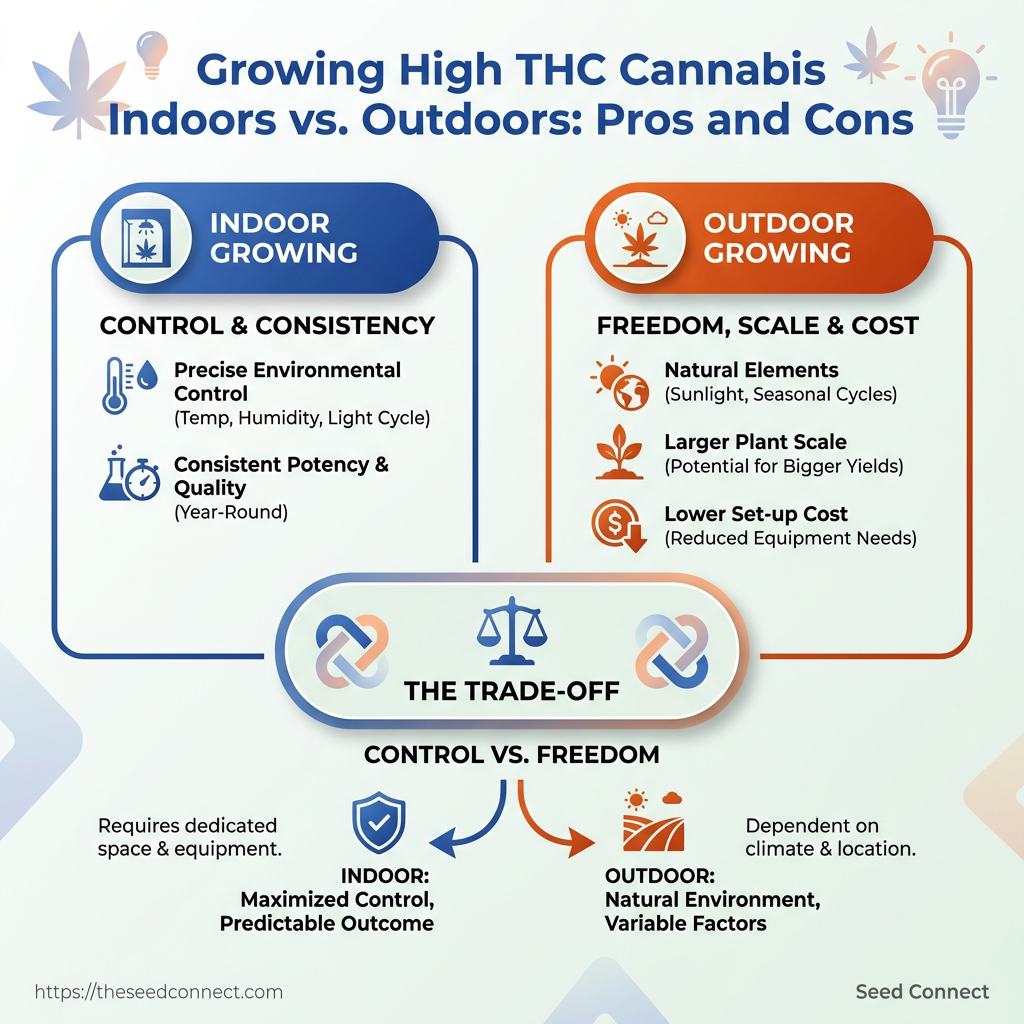
A grower in a cold apartment and a grower with a sunny backyard are not making the same decision.
That’s obvious—yet it’s where a lot of people waste time and money. For indoor vs outdoor cannabis, the smartest starting point isn’t the seed catalog.
It’s the reality of your climate, your budget, your privacy/security needs, and how much consistent attention you can actually give.
Indoor setups offer tighter control over light, temperature, and humidity—so they’re often better when you want repeatability.
Outdoor growing usually costs less and uses far fewer inputs, as long as your local season and weather pattern support flowering.
- Start with climate. Long, stable seasons favor outdoor. Short summers, heavy rain, or big temperature swings often push you toward indoor or a greenhouse.
- Then check your budget. Indoor usually requires more equipment (lighting, ventilation, dehumidification, backup planning). Outdoor is cheaper upfront, but weather can still force rework.
- Confirm legal options before you buy (and before you import). Make sure your location allows growing and possession of cannabis, and verify whether seed purchasing and shipping/import is legal where you live (including customs/receiving rules).
- Match the method to your experience. Beginners often do better with fewer variables to manage day-to-day; experienced growers may enjoy indoor control to fine-tune high-THC outcomes.
- Pick the seed type last. Photoperiod, autoflower, and feminized seeds behave differently—so choose based on your space and schedule, not just the THC label.
Before buying, a few questions save headaches:
- How much direct light do I really have? A shady yard isn’t a sun-grown setup.
- Can I keep temperature and humidity steady indoors? If not, the room may fight you.
- How much time can I give each week? Outdoor still needs regular checks (watering, pests, airflow, timing).
- Do I want a faster finish or more control? That answer changes the seed choice.
- Is my grow private and secure enough? Outdoor plants are easier to spot.
A clean first grow usually comes from matching the plant to the place, not chasing the flashiest strain name. That makes the next seed choice calmer, cheaper, and a lot more likely to pay off.
Choose the room before you choose the strain
The most useful thing to remember is simple: indoor vs outdoor cannabis is not just a flavor debate, it shapes how much control you actually have over the plant.
If your goal is high THC cultivation, the growing method matters as much as genetics, because light, temperature, and stress all push the final result in different directions.
That is why the best example from the earlier comparison was the grower who had strong genetics but weak results because the setup kept changing.
Good seed quality still matters, but it cannot rescue a messy environment or a rushed schedule.
Indoor growing usually wins when control is the priority, while outdoor growing can shine when the climate already matches the plant’s needs.
Pick one method, then commit to it for a full run. Start with a strain that fits that environment, keep notes on every change, and only adjust one variable at a time.
If you want a clean starting point, our feminized, autoflower, and high-THC seed options are built for growers who want fewer surprises and a stronger shot at a consistent harvest.