Table of Contents
What if the better seed is not the stronger one?
A seed with the biggest THC number on the pack is not always the best pick.
A grower chasing a smooth daytime harvest, a balanced profile, or a cleaner legal fit often wants something very different.
That split matters more now than most people expect.
Federal hemp rules have shifted again, and the legal line around cannabis seeds has become harder to read, as the Congressional Research Service note on the federal hemp definition and North Atlantic Seed Co.’s explanation of the 2026 seed-law shift both point out.
In plain English, high THC seeds are bred to produce plants that can hit harder. CBD seeds are bred for more cannabidiol, which usually means less intoxication and a calmer profile.
In a cannabis seed comparison, “better” depends on the end use, not the loudest claim on the label.
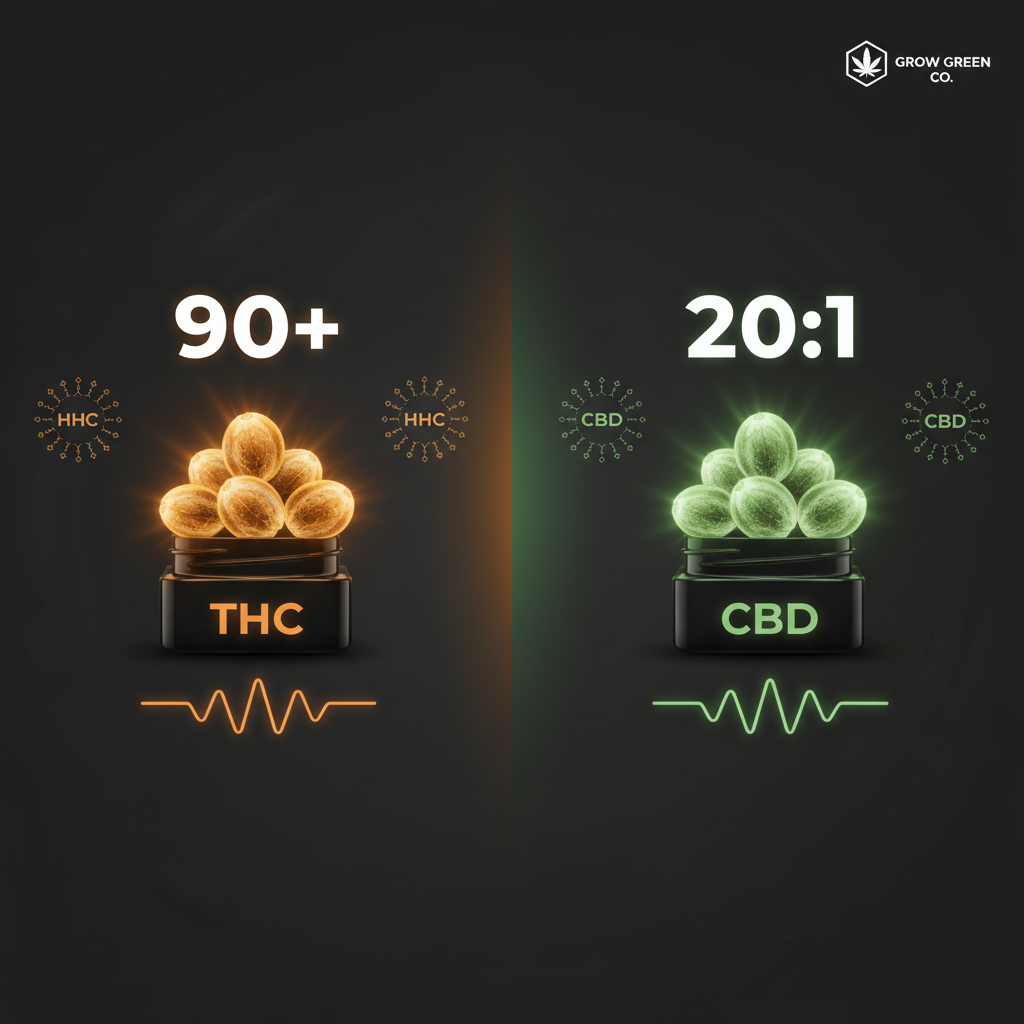
High THC seeds: Best when the goal is a stronger psychoactive effect and a more intense flower profile.
CBD seeds: Best when the goal is balance, lower intoxication, or a product built around CBD rather than a heavy high.
The real decider: Flavor, flowering time, plant structure, resistance, and how the final flower fits the grow plan.
A simple example helps.
A breeder might love a high-THC line for its punch, but a patient, a micro-grower, or anyone wanting a calmer profile may prefer CBD-leaning genetics instead.
That is why the smartest THC vs CBD choice starts with the job the plant has to do, not the bragging rights on the packet.
Seed choice becomes even more practical when you factor in how the market and laws keep moving.
The 2026 federal update tightened the conversation around what counts as hemp and what does not, which makes the old “stronger is always better” mindset feel pretty dated by now, as covered in GrowWeedEasy’s summary of the November 12, 2026 federal seed law change.
If the label says “strong,” pause for a second.
Strong for whom, and for what outcome? That question saves a lot of disappointment later, and it usually leads to the better seed.
How THC and CBD seeds differ at the plant level
A seed packet can look ordinary and still lead to very different chemistry later on.
That is the whole game with THC vs CBD genetics: the seed is just the starting code, while the mature plant decides how much of each cannabinoid gets made in the flowers.
The split happens in the plant’s biosynthesis machinery, especially in the resin glands where cannabinoids are produced.
In simple terms, THC-dominant plants are bred to push more of the precursor chain toward THCA, while CBD-dominant plants favor CBDA and the calmer profile people usually want from CBD-rich flower.
That distinction matters more than shape, color, or how fast a seed pops.
Federal guidance has also made the plant-level difference harder to ignore, since classification depends on the grown plant’s cannabinoid content rather than the seed alone, as explained in Congress’s 2026 CRS update on the federal definition of hemp and Grow Weed Easy’s 2026 hemp and cannabis seed law explainer.
THC-dominant seeds vs CBD-dominant seeds: side-by-side comparison
Feature
High THC Seeds
CBD Seeds
Best For
Primary cannabinoid focus
Bred to produce higher THCA/THC in the flowers
Bred to produce higher CBDA/CBD in the flowers
Growers choosing a specific chemotype
Typical user goal
Stronger intoxicating effect and fuller THC expression
Gentler effect, wellness-focused or balanced use
People matching flower to a clear end use
Psychoactive effect
Usually more noticeable after decarboxylation
Usually mild or minimal, depending on THC content
Buyers who care about experience first
Common growing intent
Potency-focused flower, concentrates, or breeding projects
Balanced flower, ratio strains, and non-intoxicating use cases
Planning the harvest around cannabinoid profile
Best fit for beginners
Good if the grower is already comfortable handling stronger flower
Often friendlier for new consumers who want a softer profile
First-time buyers who want less intensity
Best fit for experienced growers
Better for growers who like dialing in harvest timing and potency
Better for growers exploring ratio breeding or milder harvests
Growers with a specific cannabinoid target
The cleanest way to read that table is this: high THC seeds and CBD seeds are both cannabis, but they are bred for different chemical outcomes .
A 1:1 hybrid sits between those poles, while a THC-heavy line can still show very different terpene and flavor traits from another THC-heavy line.
That is why a cannabis seed comparison should start with chemotype, not just strain names.
A plant with the same leaf structure can finish with a very different effect if the cannabinoid ratio shifts from THC-heavy to CBD-heavy during flowering.
A practical example helps.
Consider two otherwise similar plants: one bred for a high-THC finish and one bred for CBD-rich flower.
The first usually matters more to someone chasing potency, while the second matters more to someone who wants a calmer profile without the same mental punch.
The ratio tells the whole story more than the label does.
Once you understand that, choosing between high THC vs CBD seeds gets a lot less fuzzy and a lot more useful.
Choosing based on your goal, not just the label
A grower hunting for a heavy evening harvest is solving a different problem than someone who wants a calmer, more flexible plant.
That is why a cannabis seed comparison works better when it starts with the end use, not the packet wording.
High THC seeds make sense when the goal is intensity, a stronger recreational experience, or a plant built around that direction.
CBD seeds are usually the better fit when balance, milder sessions, or a broader day-to-day use case matters more.
If legality affects what you can buy or grow where you live, treat that as a separate checkpoint before you order. (See Legal, buying, and shipping considerations for the practical checklist.)
When high THC seeds make more sense
High THC vs CBD seeds is really a question of intent.
If the grow is meant for evening use, a more pronounced effect, or a classic potency-first profile, high THC genetics usually fit better.
They also make sense for growers who care about strong terpene expression and a more familiar “cannabis-forward” result.
In our own Cannabis Seeds catalog, those are often the plants people look at first when they already know the experience they want.
When CBD seeds are the smarter pick
CBD seeds are the practical choice when the goal is a gentler plant profile.
They suit people who want lower intensity, more daytime flexibility, or a strain that feels less likely to overwhelm a cautious user.
They are also a safer starting point for growers who are still learning their preferences.
A balanced or CBD-leaning plant can be easier to read in the jar and easier to share without turning the whole evening sideways.
A simple way to choose:
Pick high THC seeds when the goal is stronger effects or a more classic recreational harvest.Pick CBD seeds when balance, ease, or a milder session matters more than punch.Pick based on use case when you are growing for breeding, experimenting, or learning plant behavior.Pick based on your space because tent size, outdoor climate, and flowering window all shape the result.
When the goal is clear, the label stops making the decision for you.
That is usually where the better grow starts.
Growing considerations that can change your result
A high-THC plant is not automatically a harder grow.
The real trouble usually comes from unstable genetics, sloppy climate control, or a setup that fights the plant instead of helping it.
CBD and THC lines can both be easy or fussy.
A cannabis seed comparison should look at structure, finish time, and odor before it gets hypnotized by the cannabinoid label.
And one more reality check: your local rules can affect what you can legally cultivate or which seed types are treated differently. If that applies to you, use the checklist in Legal, buying, and shipping considerations .
How growing difficulty compares between THC and CBD seeds
Growing Factor
High THC Seeds
CBD Seeds
What Growers Should Watch
Plant consistency
Can show wider phenotype variation if the line is not well stabilized
Often bred for more even medicinal-style output
Check breeder notes and choose stable lines over flashy names
Flowering expectations
Some strains stretch hard and finish with dense resin, but timing varies
Often selected for predictable maturity and cleaner ratios
Follow the breeder’s flowering window, not the label alone
Aroma intensity
Usually louder, with stronger odor management needs
Often milder, though some lines still smell strong
Plan filtration, airflow, and privacy early
Training needs
Stretchier plants may need topping, LST, and canopy control
Usually easier to shape, but still benefits from training
Start training early so the canopy stays even
Sensitivity to environment
Heat, humidity, and feeding mistakes can show up fast
Many CBD lines are bred for steadier performance, but not all are rugged
Keep temps, feed, and watering consistent
Harvest planning
Potency peak can be narrow, so timing matters
Harvest can aim for balance and consistency
Watch trichomes and ripening, then harvest by plant cues
Indoor rooms reward control.
Outdoor plots reward toughness.
Greenhouses sit in the middle, which is why they suit growers who want sun without surrendering to every weather swing.
For indoor grows, both high THC vs CBD seeds can do well when light, smell, and airflow are dialed in.
Outdoor grows punish weak genetics fast, so mold resistance, season length, and weather fit matter more than cannabinoid profile.
Greenhouses are a sweet spot for growers who want natural light with some protection from rain, heat spikes, and cold nights.
For most growers, the smarter comparison is not THC vs CBD alone.
It is how stable the line is, how much control the space offers, and how much weather the plant has to fight.
Legal, buying, and shipping considerations
What if the biggest risk in a seed order is not the genetics, but the paperwork around them?
That sounds dull until customs gets involved.
Federal rules changed in 2026, and the legal status of cannabis seeds now depends on more than a breeder’s label or a THC number on a product page.
The Congressional Research Service note on changes to the federal definition of hemp makes the core issue plain: federal law still splits cannabis into marijuana and hemp, and that line matters when seeds cross borders.
Legality can matter more than cannabinoid strength because a strong-looking pack is useless if it creates a shipping problem.
Current industry coverage from Barney’s Farm on buying cannabis seeds online in 2026 and GrowWeedEasy’s overview of the new federal hemp and cannabis seed law both point to the same reality: the rules changed, and buyers need to check where the seeds are going, not just what they are.
Before ordering internationally
Customs officers do not care that a strain has a great reputation.
They care about classification, paperwork, and whether the shipment matches local rules.
Check destination law first. Your country or state may treat seeds differently from dried flower.
Confirm the seller’s shipping policy. Look for tracking, discreet packaging, and destination restrictions.
Read import rules, not assumptions. Some places allow possession but still block import.
Watch payment and refund terms. A clear refund policy matters if a package is seized or delayed.
Save the product page. Listings can change after purchase, which makes your receipt useful.
Reading product listings with more confidence
A clean product page should answer basic questions without making you dig.
If you are comparing high THC vs CBD seeds, the listing should separate the cannabinoid profile from the plant type, because those are not the same thing.
Look for breeder details. Named genetics usually signal better traceability.
Check the seed type. Feminized, autoflower, or regular changes what you can expect.
Notice the flowering window. Vague timelines are a yellow flag.
Look for germination terms. A real guarantee is better than a vague promise.
Read the fine print on returns. Shipping mistakes happen, and policy clarity helps.
A useful cannabis seed comparison starts with legality, then shipping, then genetics.
That order saves time, money, and a lot of annoying email threads.
That is why we keep our own listings plain and the shipping details easy to follow.
Clear pages make better buying decisions, especially when the rules are moving under your feet.
Finding the right seed source for your plan
What if the safest choice is not the cheapest pack, but the seller who tells the truth upfront? In a cannabis seed comparison, that usually shows up in the boring details: germination help, strain notes, and replacement terms.
Fancy strain names are easy.
Honest policies are harder.
Because regulations and allowable seed types vary by destination, do a quick pass through Legal, buying, and shipping considerations before you order.
Then judge the seller like you’d judge any service: clarity, support, and what happens if things go wrong.
A grower choosing a daytime CBD-leaning line needs clear descriptions and real support, not just a glossy label.
What to Look For
Why It Matters
Questions to Ask
Germination guarantee
A seller that stands behind viability usually takes storage and handling seriously.
How long does the guarantee last, and what proof do you need if a seed fails?
Clear strain information
Good strain notes make THC vs CBD comparisons more honest and less guessy.
Do you list genetics, expected traits, and grow difficulty?
Expert cultivation support
Real support saves time when the first run gets messy.
Can I get help before and after the sale, and from someone who knows growing?
Shipping and customs guidance
Clear shipping windows and discreet packing reduce surprises.
Where do you ship, how is the order packed, and what happens if it is delayed?
Customer reviews
Recent feedback shows whether orders arrive fresh and support responds quickly.
Do buyers mention consistency, packaging, and response times?
Return or replacement policy
A fair policy lowers the risk of a first order.
What counts as a valid replacement claim, and how fast is it handled?
The strongest sellers make risk visible.
They tell you what happens if a seed fails, how fast orders move, and whether someone can answer grow questions without reading from a script.
That is the standard we keep in our own Cannabis Seeds selection, with a germination guarantee, expert support, and U.S.-based shipping that arrives fast and securely.
A good source should calm the decision down, not complicate it.
Choose the Plant That Matches the Plan
The smartest THC vs CBD choice is not about chasing the loudest label.
It is about matching the seed to the result you actually want, whether that is a stronger, more intense profile or a gentler, more balanced one.
That simple rule makes every cannabis seed comparison easier, because the plant, the grow space, and your end goal all line up before you spend a dime.
That was the real point behind the high THC vs CBD seeds discussion: two plants can look similar early on and still deliver very different outcomes later.
A grower with limited space, tighter legal limits, or a clear wellness focus will often get better results from a different seed than the one that looks “strongest” on paper.
When the goal is clear, the decision gets a lot less messy.
Start with the outcome you want, then check the rules, then choose the seed. If you want a practical place to compare options, our Why guess when a better match is sitting one filter away?