


Your ultimate guide to choosing, applying, and profiting from slow release fertilizer—plus three top picks to supercharge your garden.
If you’re frustrated by constant feeding, nutrient burn, or leaching that wastes money and harms the environment, slow release fertilizer is your solution.
Instead of quick-dissolving granules or liquids that vanish with the first rain, slow-release formulations meter out nutrients over weeks or months.
That steady supply promotes healthier roots, robust growth, and fewer applications—saving you time, water, and cash.
Ready to unlock fuss-free feeding? Let’s dive in.
Table of Contents
2. What Is Slow Release Fertilizer?

Slow release fertilizer (SRF) refers to products engineered to release N–P–K nutrients gradually—typically over 4 to 16 weeks—via coatings or organic matrices.
This differs from controlled-release fertilizers, which offer precise scheduling (e.g. time-release capsules that open at set intervals).
3. The Science of Nutrient Release
3.1 Coating & Matrix Technologies
- Polymer-Coated Granules: A polymer film surrounds urea or NPK granules. Moisture diffuses through the film, carrying nutrients out slowly.
- Sulfur-Coated Urea: A layer of sulfur (porous) plus sealant controls release—but can crack in cold soils.
- Nanocomposite Hydrogels: Advanced gels combine water retention with nutrient diffusion—ideal for potted plants and seed starting.
- Organic Matrices: Coconut coir, starch, or biosolids bind nutrients; soil microbes gradually break down the matrix.
3.2 Environmental Triggers
- Temperature: Higher soil temperatures speed up diffusion—perfect for warm-season gardens but less so in early spring.
- Soil pH & Moisture: Acidic soils or heavy rainfall accelerate breakdown; match your SRF type to your local conditions.
- Microbial Activity: Organic slow release (e.g., oyster shell calcined fertilizers) relies on microbial enzymes, so healthy soil microbiomes matter.
4. Key Benefits of Slow-Release Fertilizers
- Reduced Leaching & Runoff
- Up to 60% less nitrogen runoff compared to granular urea – protects streams & lakes.
- Fewer Applications
- Feed your garden once at the season’s start instead of weekly doses—save labor.
- Consistent Growth
- Steady nutrient levels support uniform flowering, fruiting, and root development.
- Environmental Stewardship
- Lower greenhouse-gas emissions from nitrous oxide spikes when fertilizers dissolve too quickly.
Pro Tip: For vegetable beds, one SRF application can replace 4–6 conventional feedings—ideal for busy gardeners.
5. How to Choose the Right Slow-Release Fertilizer

5.1 Match Release Duration to Crop Cycle
- Short-term crops (lettuce, herbs): 4–8 week SRF maintained via hydrogels.
- Medium-term (annual flowers, vegetables): 8–12 week polymer-coated granules.
- Long-term (shrubs, lawns): 12–16 month controlled-release options.
5.2 Reading the Label
- Guaranteed Release Period: Indicates the timeframe over which ≥90% of nutrients release.
- N–P–K Ratio: Match to plant needs (e.g. 14-4-10 for foliage, 5-10-10 for bloom).
- Application Rate: Usually expressed in lb per 100 ft² or g per pot.
5.3 Soil & Climate Considerations
- Cold climates: Choose “cold-start” formulas designed for slower early-season release.
- Sandy soils: Use hydrogels or high-retention coatings to prevent leaching.
- High-rainfall areas: Opt for moisture-triggered polymer coatings; avoid sulfur-only.
6. Application Best Practices for Slow Release Fertilizer
- Soil Preparation: Loosen soil to 6–8″ deep; remove debris for uniform distribution.
- Timing: Apply at planting or early growth stage; water in lightly to activate coatings.
- Placement: Side-dress around root zones for established plants; mix into topsoil for new beds.
- Safety: Wear gloves, avoid inhaling dust, store in a dry place below 85 °F.
- Compatibility: Pair with compost or mycorrhizal inoculants to boost microbial breakdown.
7. Common Myths & FAQs ON Slow Release Fertilizer
Myth 1: “Slow-Release Means Slower Growth”
Fact: Early growth is comparable; SRF prevents nutrient spikes and dips, leading to healthier plants over time.
Myth 2: “SRFs Are Always Expensive”
Fact: While per-lb cost is higher, one SRF application replaces multiple feeds, often saving money in labor and total fertilizer.
8. Top 3 Slow-Release Fertilizers
1. Osmocote Smart-Release Plant Food
Best For: Flower beds, vegetables, shrubs.
Why We Love It: 5–6 month release; polymer-coated for uniform feeding; easy-spread granules.

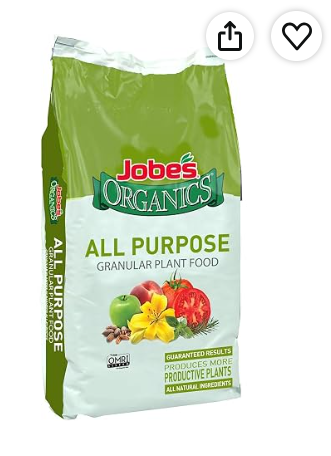
2. Jobe’s Organics All-Purpose Fertilizer
Why We Love It: 4-month release; 100% natural ingredients (feathers, bone meal, compost); OMRI-listed for organic gardening.
Best For: Vegetable gardens, container plants, raised beds.
3. Down to Earth All-Natural Fertilizer
Why We Love It: 3-month release; fish bone meal + kelp; great calcium & micronutrient profile.
Best For: Fruit trees, perennials, heavy feeders.
9. Sustainability & Future Trends of Slow Release Fertilizer
- Bio-Based Coatings: Chitosan & lignin films that fully decompose, leaving zero microplastics.
- Smart Fertilizers: pH- or moisture-responsive polymers that adjust release rate in real-time.
- Regenerative Agriculture Integration: SRFs combined with no-till & cover crops for soil health synergy.
10. Conclusion ON Slow Release Fertilizer
Switching to slow release fertilizer transforms your gardening from constant micro-feeding to a “set it and forget it” system—promoting stronger root systems, greener foliage, and bigger harvests with less work.
Next Step: Download our Free SRF Application Planner & Calculator to tailor your feeding schedule
Ready to start? Grab your first bag of Osmocote Smart-Release Plant Food below and revolutionize your growing routine!
Buy Osmocote on Amazon »