


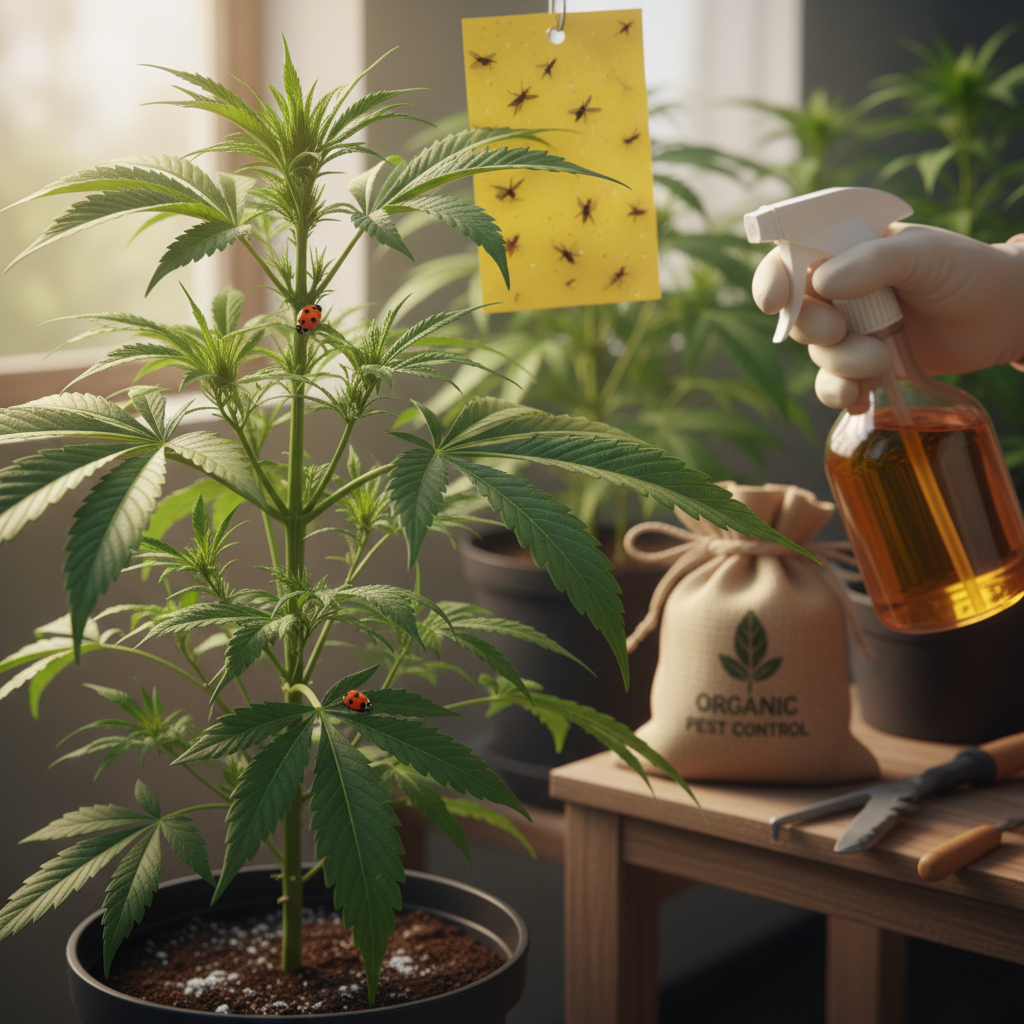
Have you ever spotted fading leaves before noticing any insects? That’s often the first sign of cannabis pests.
A few pale specks, fine webbing, or curled growth can signal an infestation before the damage becomes obvious.
Many growers use the strongest spray available.
That approach often creates new problems.
Some products can harm beneficial insects, stress plants, leave harmful residues, or may not work if the pest has spread.
Effective pest management starts earlier.
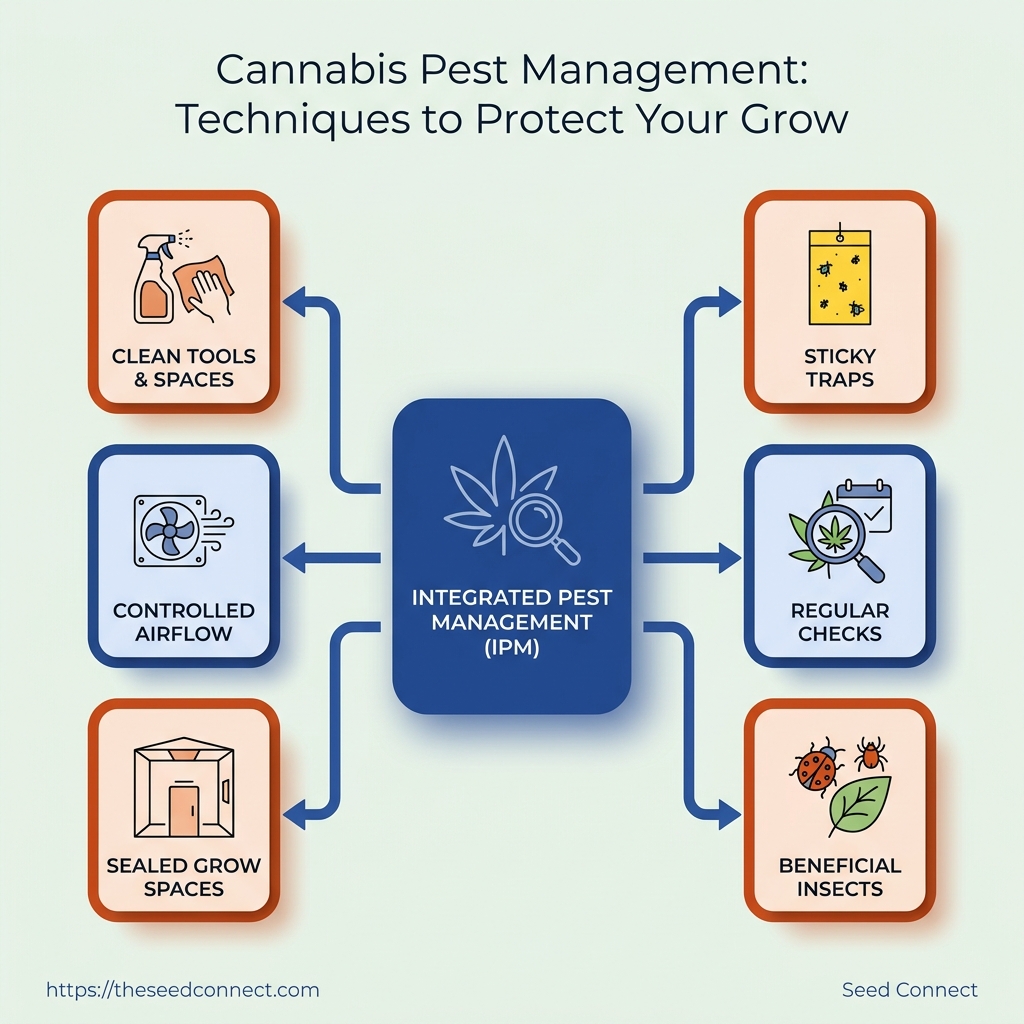
Clean tools, controlled airflow, sealed growing spaces, and sticky traps can reduce the chances of pests entering and help reveal activity quickly.
Regular checks are important because aphids and spider mites can quietly multiply, especially in heat or dry conditions.
Organic pest control works best as part of an integrated plan rather than a single emergency treatment.
Beneficial insects, companion plants such as basil or lavender, good sanitation, and careful monitoring can work together to keep pest pressure manageable.
The goal is not to create a sterile garden.
It is to build a growing environment where pests are noticed early, natural controls have room to work, and healthy plants can keep developing without unnecessary stress.
To manage cannabis pests effectively, adopt an integrated pest management (IPM) approach that combines prevention, monitoring, and targeted control.
Regular inspections and cleaning help reduce infestations because pests often enter unnoticed through tools, new plants, or open vents.
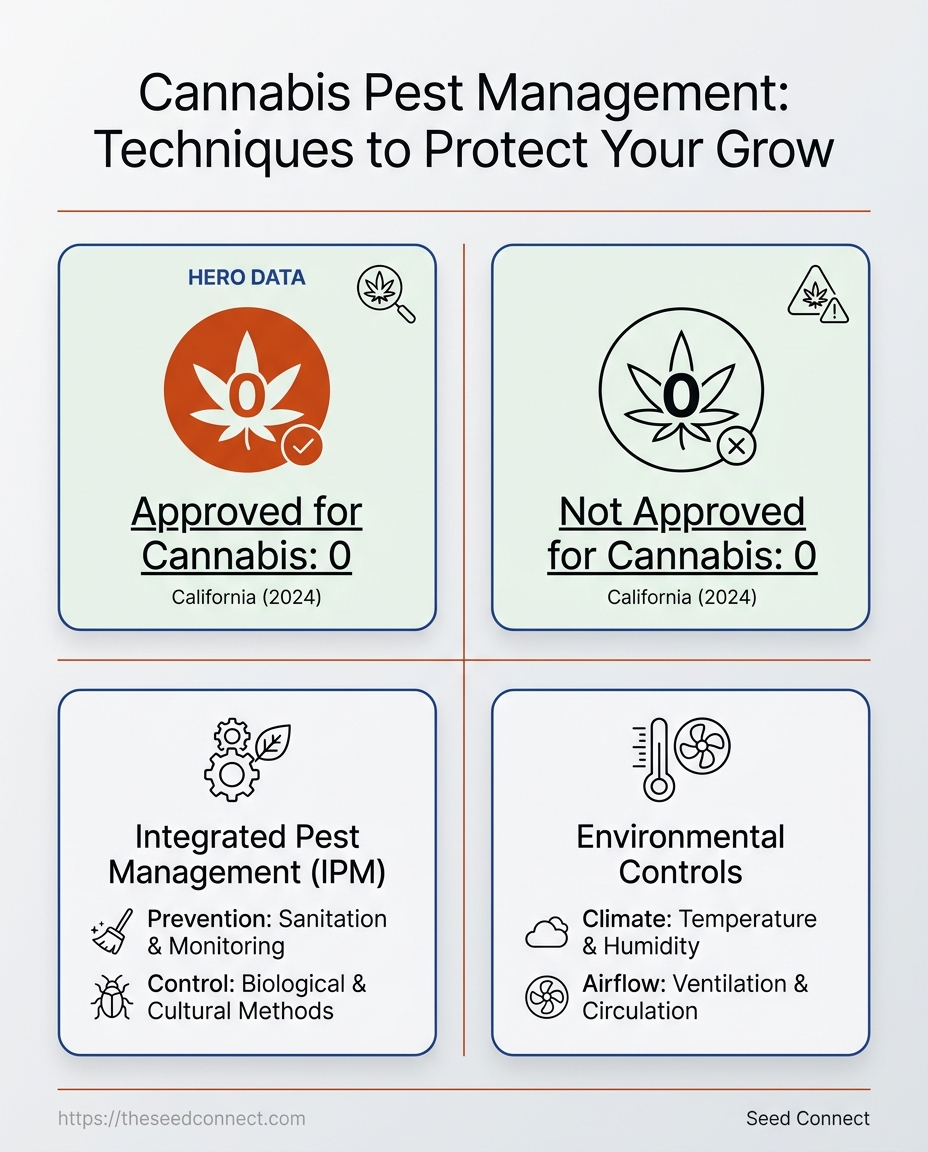
By December 2024, only 100 out of 300 assessed pesticide products will meet California’s legal criteria for cannabis, emphasizing the need for effective pest management techniques.
1. Start With Prevention Before You See Cannabis Pests
Cannabis grows rarely become vulnerable due to a single dramatic mistake.
1. Start With Prevention Before You See Cannabis Pests
Cannabis grows rarely become vulnerable due to a single dramatic mistake.
1. Start With Prevention Before You See Cannabis Pests
Cannabis grows rarely become vulnerable due to a single dramatic mistake.
Pests often enter through new plants, dirty tools, reused soil, pets, clothing, or open vents.
They can spread before anyone notices.
Warm temperatures, dense foliage, dry air, and standing moisture can make the problem worse.
Spider mites often favor dry conditions, while aphids may gather beneath leaves and cause yellowing or transmit plant viruses.
A clean growing area gives pests fewer places to hide.
Remove dead leaves promptly, keep the floor free of spilled soil, and avoid touching healthy plants after handling a suspect one.
Wash hands between plants, sanitize pruning tools, and clean trays before reuse.
Integrated pest management, or IPM, combines prevention, monitoring, and targeted control rather than relying on routine spraying.
The California Department of Pesticide Regulation’s cannabis cultivation guidance emphasizes IPM and notes that, As of December 2024, 100 pesticide products met California’s legal criteria for cannabis, while 200 assessed products did not meet those requirements.
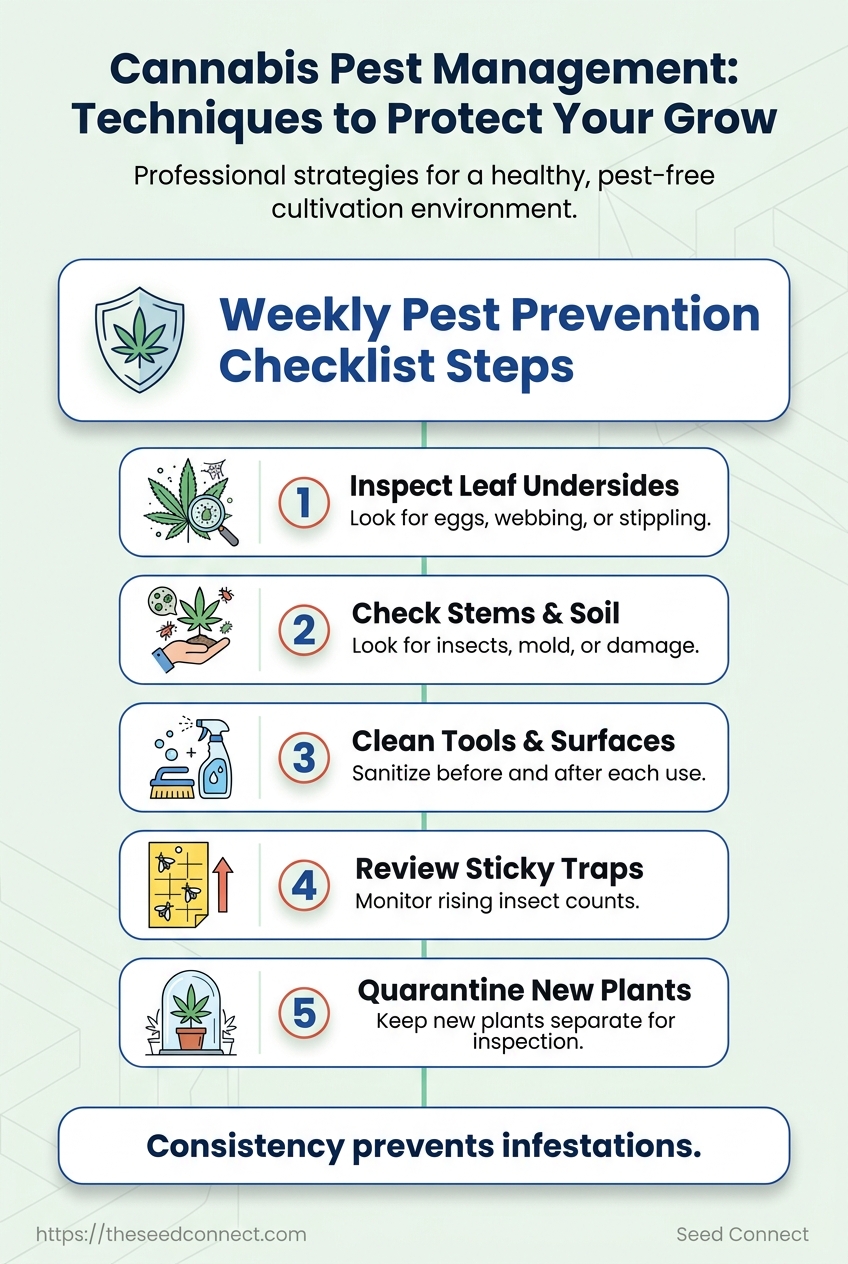
Build a Weekly Pest Prevention Checklist
Use the same inspection route each week.
Consistency helps you notice small changes before a few insects become an infestation.
Table: 1.
Start With Prevention Before You See Cannabis Pests — Task, Frequency, What to check & more
| Task | Frequency | What to check | Action if a problem appears |
|---|---|---|---|
| Inspect leaf undersides | Weekly | Eggs, webbing, aphids, stippling, or pale patches | Isolate the plant and identify the pest before treatment |
| Check stems and soil surface | Weekly | Crawling insects, mold, wilt, damaged stems, or larvae | Remove debris, improve airflow, and inspect nearby plants |
| Clean tools and surfaces | Before and after each use | Sap, soil, plant residue, and standing water | Wash and sanitize tools, trays, shelves, and work areas |
| Review sticky traps | Weekly | Rising insect counts or new pest types | Record the trend and inspect plants more closely |
| Quarantine new plants | Every arrival | Hidden insects, eggs, disease symptoms, or soil pests | Keep new plants separate until repeated inspections show no issue |
Companion plants such as basil or lavender may support organic pest control, while beneficial insects such as ladybugs and lacewings can help in suitable environments.
A weekly routine turns pest management into maintenance instead of emergency response.
Clean habits, early detection, and careful plant isolation protect the crop before cannabis pests gain momentum.
2. Identify the Most Common Cannabis Pests
Just because it’s organic doesn’t mean it’s risk-free.
A plant-based spray can still burn leaves, harm beneficial insects, or create a safety issue when used incorrectly.
Effective pest management combines methods such as prevention, monitoring, and well-chosen treatments.
These are key principles of Integrated Pest Management (IPM).
The California Department of Pesticide Regulation highlights these principles, stating that by December 2024, only 100 pesticide products will meet the state’s legal requirements for cannabis.
Before applying organic pest control, inspect your plants carefully.
Ensure they aren’t already stressed due to other factors, like heat or water issues.
Always test new treatments on a small area first.
Follow label instructions closely, keeping in mind specific application guidelines, timing, and the need to protect flowers from unwanted residues.
Various organic methods can be employed, including insecticidal soap, horticultural oil, and beneficial insects.
However, local regulations regarding these can vary, so familiarity with them is crucial.
Maintain thorough records of your treatments and their effects, and always follow up to adjust your strategies as needed to ensure healthy plants and a successful yield.
3. Make a Fast, Proportionate Response
What should you do when one plant shows a few pale specks but the rest looks healthy?
3. Make a Fast, Proportionate Response
What should you do when one plant shows a few pale specks but the rest looks healthy?
3. Make a Fast, Proportionate Response
What should you do when one plant shows a few pale specks but the rest looks healthy? Resist the urge to treat the entire room immediately.
A small, localized response can protect unaffected plants while giving you time to confirm whether the problem is active.
Move the plant away from the main group before handling anything else.
Place it in a separate area with dedicated gloves and tools, then inspect both leaf surfaces, stems, and nearby plants.
Count affected leaves and note whether damage appears limited to one branch, one plant, or several plants.
Contain the problem before choosing treatment
A measured response works best when each action answers a specific question: Where is the pest, how far has it spread, and is the plant still worth saving?
- Isolate the plant: Keep it away from healthy plants, shared fans, and common work surfaces. Avoid moving directly between the isolated plant and the rest of the grow.
- Assess the scale: Inspect neighboring plants under good light. Look for fresh damage, live insects, webbing, residue, or repeated signs across new growth. A single affected plant calls for containment and close monitoring; multiple affected plants may require a wider pest management plan.
- Remove severe damage: Cut away heavily affected leaves and badly damaged sections with clean, dedicated snips. Seal the material in a bag before carrying it through the grow area, and clean the tools afterward.
- Choose a suitable response: Match the treatment to the confirmed pest, plant stage, and local rules. Organic pest control may involve biological controls or other approved methods, but “natural” does not automatically mean safe for cannabis, beneficial insects, people, or harvest quality.
- Record the decision: Write down the date, plant location, suspected pest, affected area, action taken, and follow-up date. A simple log prevents repeated treatments and reveals whether the problem is shrinking or spreading.
Treatment decisions also need a legal check.
The California Department of Pesticide Regulation’s cannabis cultivation guidance explains that only products meeting specific criteria may be used on cannabis in California; rules differ elsewhere.
Know when removal is safer
Discard a plant when the infestation keeps expanding despite isolation, damage reaches much of the canopy, or the plant repeatedly exposes nearby plants to risk.
Bag it while still inside the isolated area, remove it from the grow space, and clean the surrounding surfaces.
Fast action does not mean treating everything.
It means containing the risk, removing clear sources of spread, and using written observations to guide the next decision.
4. Apply Organic Pest Control Carefully
%% Insert the rewritten content that consolidates the points about organic pest control, emphasizing its importance and highlighting unique methods and considerations that have not been discussed elsewhere in the article.
5. Use Beneficial Insects and Integrated Pest Management
The best pest management plan is not the one that sprays most often.
The best pest management plan is not the one that sprays most often. It is the one that uses the least disruptive response capable of keeping cannabis pests below a damaging level. Integrated pest management, or IPM, combines monitoring, sanitation, physical barriers, biological controls, and carefully selected treatments. The approach works as a sequence: observe first, reduce the pest’s opportunity to spread, introduce a suitable natural enemy, then treat only when the population crosses a planned threshold. The California Department of Pesticide Regulation’s cannabis cultivation guidance also places IPM among the accepted approaches for managing pests. Beneficial organisms work best when they match both the pest and its life stage. A predator suited to leaf-dwelling mites will not solve larvae developing in damp growing media. Use the following pairings as a starting point, then confirm the organism’s label, temperature range, humidity needs, and release rate with the supplier:5. Use Beneficial Insects and Integrated Pest Management
A biological release should never replace inspection.
Record pest counts, plant locations, crop stage, and beneficial activity during each check.
Then establish an action threshold before emotions take over—for example, a defined increase in affected leaves, repeated pest captures, or visible spread across plant sites.
When a threshold is reached, select the least disruptive response that fits the problem.
Avoid broad treatments that could kill the same predators controlling the infestation.
The Cannabis Science and Technology guidance on ecosystem-based IPM describes this combination of biological control and habitat management as part of a broader system.
One application rarely covers every pest life stage.
Repeat inspections at intervals that fit the pest’s life cycle, and continue checking after numbers fall.
A successful IPM program creates a feedback loop: monitor, respond, reassess, and adjust before the next generation builds.
6. Protect Future Crops From Reinfestation
Imagine finishing a successful harvest, then discovering the same pest issue during the next cycle.
Eggs, pupae, mites, and plant debris can remain in trays, corners, filters, or nearby storage areas long after the plants leave.
A proper reset stops that cycle.
Remove all plant material, empty growing containers, wash hard surfaces, and clean tools before bringing new plants or seeds into the space.
Pay attention to areas that are easy to miss, including tent seams, shelving joints, saucers, intake screens, and floor edges.
Reset the space between cycles
Use a clean, labeled set of tools for the grow area, and avoid moving equipment directly from outdoor plants into the room.
Growing media should not be reused after a serious infestation unless it can be safely treated under local rules and the crop’s requirements.
Strong starting material also reduces stress during the next run.
Begin with healthy Cannabis Seeds from a reputable source, then establish steady watering, suitable airflow, and consistent environmental conditions.
Stressed plants often struggle more when pest pressure returns.
Biological controls require the same planning.
Predatory insects may need specific humidity, temperature, and prey conditions to survive, while some products can harm them.
The California Department of Pesticide Regulation explained that, as of December 2024, only 100 pesticide products met its criteria for legal cannabis use, while 200 assessed products did not meet those requirements.
Check the current rules in your location before importing beneficial insects or purchasing pest-control products.
Build a record that improves each cycle
A pest log turns scattered observations into useful growing history.
Record the location, symptom, response, environmental conditions, and follow-up result rather than relying on memory.
Reusable cannabis pest log
Table: 6.
Protect Future Crops From Reinfestation — Date, Plant or area, Pest or symptom & more
| Date | Plant or area | Pest or symptom | Severity | Action taken | Follow-up date | Result |
|---|---|---|---|---|---|---|
| First sighting | Lower leaves, Plant 2 | Fine stippling; possible spider mites | Low | Isolated plant and recorded leaf condition | 3 days later | No new stippling observed |
| After initial response | Plant 2 and adjacent plants | Two additional affected leaves | Moderate | Rechecked nearby plants and used the permitted control | 5 days later | Activity reduced |
| After pest life-cycle interval | Lower canopy, entire tent | No visible pests; inspected leaf undersides | Moderate, under review | Continued monitoring and cleaned nearby surfaces | 7 days later | No fresh damage |
| Before flowering | All plants | No active signs; older damage remained | Low | Completed plant-by-plant inspection | 7 days later | Growth remained clean |
| Before harvest | Canopy and containers | No active pests detected | None observed | Final inspection and documented outcome | Next cycle | Reset completed |
The California Department of Pesticide Regulation describes integrated pest management as a suitable approach for cannabis cultivation, and records make that approach more consistent from one cycle to the next.
Clean the room, start with healthy material, and preserve what you learn.
That routine makes future pest management more deliberate and helps prevent one difficult crop from becoming a repeating problem.
What to use to keep bugs away from cannabis plants?
To keep bugs away from cannabis plants, an integrated pest management (IPM) approach which includes clean tools, controlled airflow, sealed spaces, and sticky traps.
Regular inspections and maintaining clean environments can significantly reduce pest entry and visibility.
What is the most effective organic pesticide?
The most effective organic pesticide is not specified, but effective pest management should combine biological control, habitat changes, monitoring, and carefully selected treatments.
Ensure any organic pesticide used is appropriate for the specific pest and plant stage, and always test on a small area first.
How do you prevent pests in cannabis cultivation?
Preventing pests in cannabis cultivation involves maintaining a clean growing area, sanitizing tools, and regularly inspecting plants for signs of pest activity.
Also, ensure that ventilation is controlled and eliminate standing moisture and dead plant material to reduce pest attraction.
What insects are commonly found on cannabis plants?
Common insects found on cannabis plants include aphids and spider mites.
Aphids can cause yellowing and transmit viruses, while spider mites thrive in dry conditions and can lead to significant plant stress if not addressed promptly.
Protect the Next Harvest Before It Starts
Sometimes, a fading leaf reveals more than an insect ever could.
Pale specks, curled growth, or fine webbing may signal cannabis pests before an infestation spreads, which makes regular inspection the most valuable habit in effective pest management.
Early identification allows you to choose a measured response instead of using harsh treatments too soon.
The same principle applies to organic pest control: careful does not mean careless.
Confirm the pest, isolate affected plants when possible, remove damaged growth, and apply a suitable treatment according to its label and timing requirements.
Beneficial insects and integrated pest management can support recovery, while cleaning containers, tools, plant debris, and nearby surfaces helps prevent the same problem from returning in the next crop.
Today, inspect the undersides of leaves and the newest growth on every plant, then record what you find with a dated photo.
Check your plants twice this week and act at the first confirmed sign, rather than waiting for widespread damage.
That small routine turns pest control from an emergency reaction into a steady growing practice—and gives each future harvest a cleaner start.