


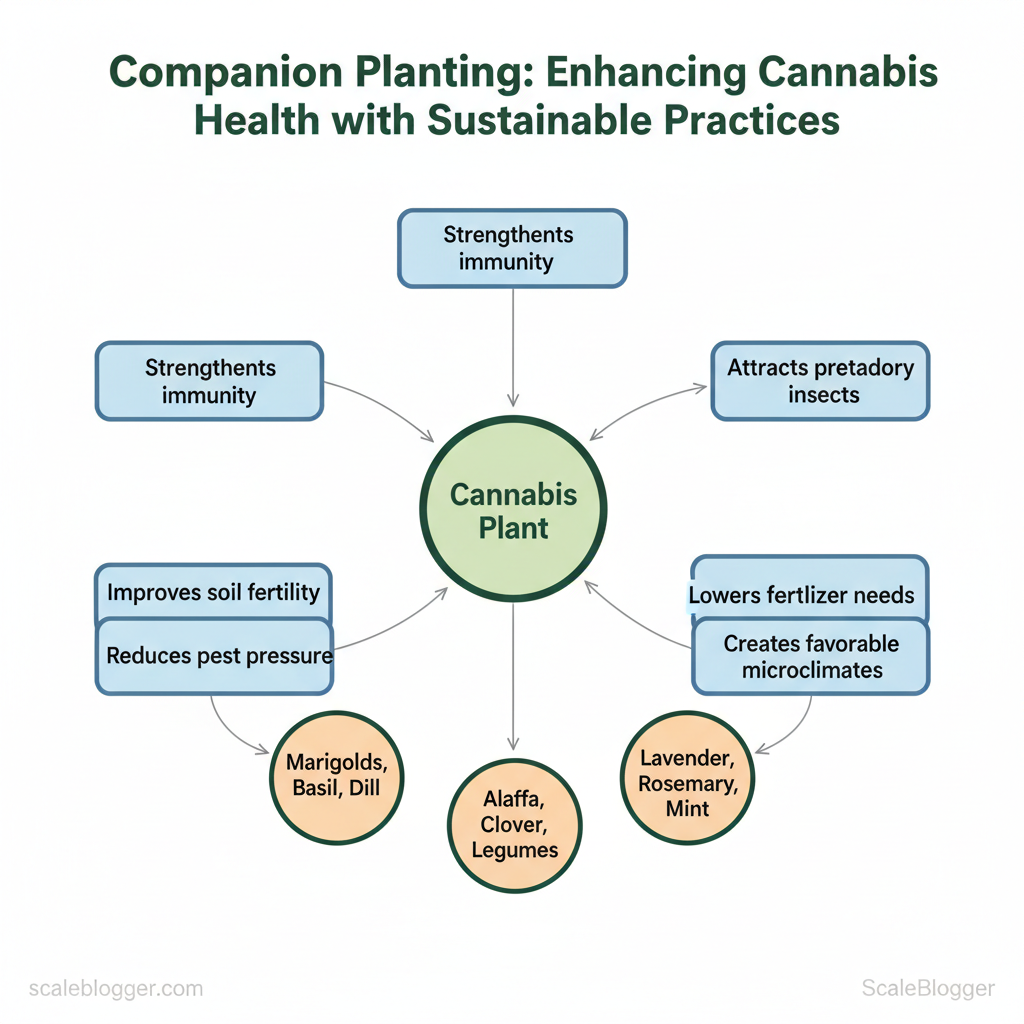
Companion planting cannabis delivers measurable health gains: pairing cannabis with the right beneficial plants strengthens immunity, reduces pest pressure, and improves soil fertility through simple, sustainable practices. By designing plant communities that provide `nitrogen-fixing` support, attract predatory insects, and create favorable microclimates, growers cut reliance on synthetic inputs while boosting yield resilience.
Industry growers and experienced cultivators observe that diverse plantings stabilize ecosystems and make natural pest control more reliable across seasons. Picture basil and marigolds around a flowering canopy: they deter aphids and root pests while drawing pollinators and predatory wasps that keep pest outbreaks in check. Interplanting leguminous cover crops supplies steady nitrogen and organic matter, lowering fertilizer needs and improving root health.
This introduction outlines practical steps and design principles for effective companion planting with cannabis. It prioritizes actionable choices that scale from a single backyard tent to larger greenhouse operations. Expect guidance on plant pairings, spatial planning, and seasonal timing that translate into healthier plants and fewer chemical interventions.
- What companion planting cannabis achieves for pest suppression and soil health
- Which beneficial plants reliably pair with cannabis in different climates
- How to implement `nitrogen-fixing` covers and flowering attractors step by step
- Strategies for integrating companion plants into existing grow spaces
Companion Planting Basics for Cannabis
Companion planting uses deliberate plant pairings to improve soil health, reduce pests, and boost vigor in cannabis crops. By combining species that provide complementary functions—nutrient cycling, insect habitat, pest repellence, or microclimate moderation—growers create a small ecosystem that sustains healthier cannabis plants with fewer external inputs. This works because plants and soil organisms interact through root exudates, pollinator attraction, and habitat structure; when those interactions are intentionally aligned, cannabis benefits from improved resilience and resource availability.
What is Companion Planting and Why It Works
Companion planting is the practice of placing specific plants together so their biological functions support each other. Core ecological interactions include:
- Nutrient facilitation: Legumes fix atmospheric nitrogen that neighboring plants can access.
- Pest management: Flowering herbs attract predatory insects and parasitoids that suppress pests.
- Allelopathy and competition: Some species produce chemicals or aggressively compete for resources—use cautiously.
- Microclimate modification: Taller plants provide light filtering or windbreaks, reducing stress on cannabis.
- Improved nutrient availability from green manures and nitrogen fixers reduces fertilizer needs.
- Reduced pest pressure when beneficial insects are supported by nectar and pollen sources.
- Stronger root zones where cover crops reduce erosion and increase microbial diversity.
- Companion planting is not a quick fix; it requires planning, timing, and monitoring.
- Not every “good” garden plant is compatible—`allelopathy` and water competition can harm cannabis.
- A companion strategy complements, not replaces, proper soil testing, irrigation, and cultivar selection.
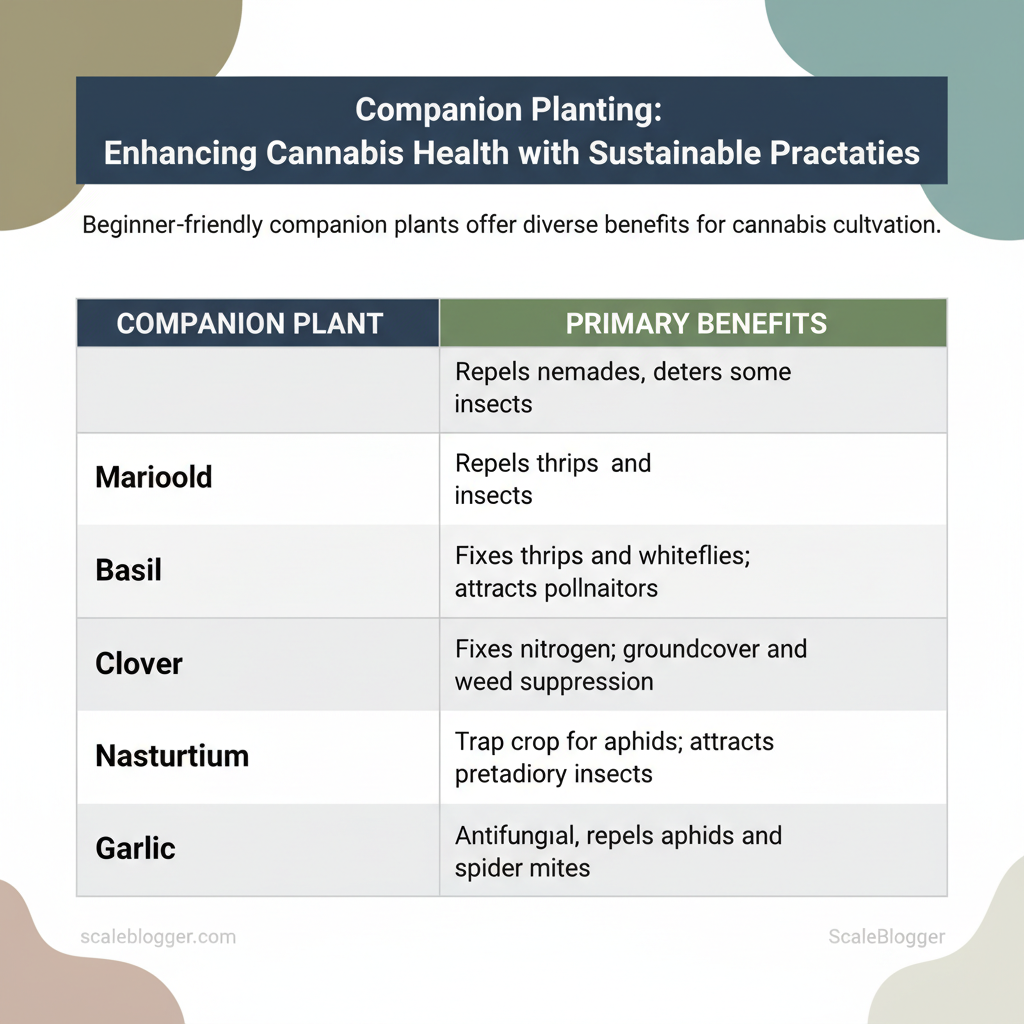
Quick-Start Companion Plant List for Beginners
| Companion Plant | Primary Benefit | Best Time to Plant | Care Level |
|---|---|---|---|
| Marigold | Repels nematodes, deters some insects | After last frost / throughout growing season | Low |
| Basil | Repels thrips and whiteflies; attracts pollinators | Spring to early summer | Low |
| Clover | Fixes nitrogen; groundcover and weed suppression | Early spring or fall (cooler soil) | Low–Medium |
| Nasturtium | Trap crop for aphids; attracts predatory insects | Spring to summer | Low |
| Garlic | Antifungal, repels aphids and spider mites | Plant autumn (bulbs) or spring cloves | Low |
Practical planning steps:
Experienced growers often source reliable seeds—premium feminized or autoflower varieties can be paired with these companions for predictable growth. When executed thoughtfully, companion planting reduces inputs and builds a more resilient crop ecosystem. This approach speeds problem detection in the canopy while giving plants natural supports that lower long-term maintenance.
Designing Your Companion Planting Plan
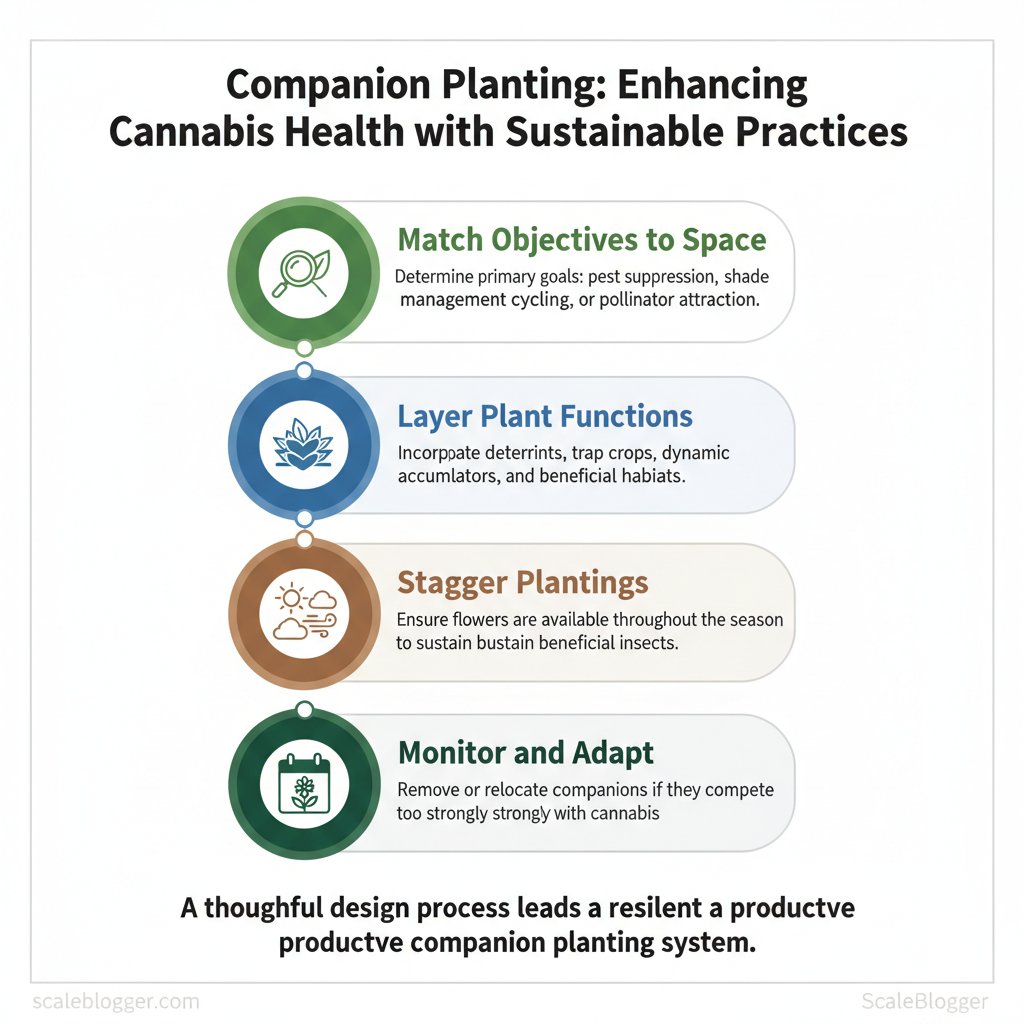
Start by matching objectives to the realities of the space: pest suppression, shade management, nutrient cycling, or pollinator attraction each demand different companion choices and timings. Build the plan around what the grow space can reliably support, then layer plant functions — deterrents, trap crops, dynamic accumulators, and beneficial habitat — into a coherent layout and schedule. Practical checks up front save months of corrective work.
Assessing Space, Goals, and Constraints
Begin with a short checklist that converts intent into constraints and opportunities.
- Grow space audit: measure usable area, canopy height, light hours, and air circulation.
- Objective clarity: choose primary goals (pest control, humidity moderation, yield enhancement).
- Resource limits: water budget, soil depth for containers, and legal/odor constraints.
- Maintenance capacity: how often can plants be pruned, replaced, or harvested?
- Pest suppression: use aromatic deterrents (e.g., basil, marigold) near vulnerable plants.
- Trap cropping: plant sacrificial species at garden margins to intercept pests.
- Soil building: sow legumes or comfrey at off-cycles to fix nitrogen and mine nutrients.
- Indoor: prioritize compact, low-transpiration companions and avoid tall, competitive species; `30x30cm` spacing often too tight for large herbs.
- Outdoor: use larger dynamic accumulators and staggered canopy layers; windbreaks and trap crops work better.
- Containers/Balconies: choose shallow-rooted companions and monitor moisture closely.
| Grow Environment | Key Constraints | Best Companion Traits | Recommended Plant Examples |
|---|---|---|---|
| Small indoor tent | Limited light, height, odor | Compact, low-transpiration, non-invasive | Basil, chives, dwarf marigold |
| Large outdoor garden | Weather, pests, space | Taller trap crops, deep roots, pollinator attractors | Sunflower, comfrey, clover |
| Balcony/container | Shallow soil, wind, runoff | Shallow roots, drought-tolerant, low maintenance | Oregano, thyme, nasturtium |
| Greenhouse | High humidity, disease pressure | Fungus-resistant, high-benefit flowers, spaced planting | Lavender, alyssum, buckwheat |
Layout Templates and Planting Schedules
Three practical layouts with timing and trade-offs:
Sample planting timeline and cues:
- Week 0: sow green manure or legumes off-cycle to build soil.
- Weeks 2–4: transplant fast-establishing companions (basil, alyssum) for early protection.
- Weeks 6–8: stagger sowings of trap crops to match pest lifecycles.
- Ongoing: replace short-lived companions every 6–10 weeks for continuous coverage.
- Plant in waves: repeat sowings every 3–6 weeks for annuals.
- Alternate lifespans: pair quick-maturing herbs with perennial attractors.
- Monitor cues: begin trap crops when local pest scouting shows first adults.
Natural Pest Management with Companion Plants
Companion planting is a practical, low-cost layer of pest control that reduces reliance on chemicals by using plant chemistry and habitat design to repel pests and support predators. When done deliberately—choosing the right repellent species, timing blooms to match pest life cycles, and avoiding dense monocultures—companion planting turns the grow space into a self-regulating ecosystem. This section explains which plants work best as deterrents, how to deploy them without creating new problems, and how to design insectary pockets that sustain beneficial predators through the season.
Repellent and Deterrent Plants
Companion species produce volatiles or structural barriers that interfere with pest host-finding or feeding. Plant them in perimeter rows, intercrops, or as under-plantings depending on space and light. Avoid overcrowding: too many strong aromatics can stress target plants or create humidity pockets that encourage fungal disease. Also be cautious about chemical interference—some aromatic herbs can inhibit beneficial microbial sprays or mask pheromone trap signals.
| Plant | Targets (pests) | Planting Tips | Effectiveness |
|---|---|---|---|
| Garlic / Onion | Aphids, spider mites, general chewing insects | Plant as border rows or in 3–6” clusters; trim to reduce shading | High against early-season aphids; reduces mite settlement ✓ |
| Basil | Whiteflies, thrips, mosquitoes | Intercrop in pots or near canopy gaps; harvest to keep vigor | Moderate for whiteflies; best as a localized repellent ✓ |
| Pyrethrum (Chrysanthemum cinerariifolium) | Beetles, caterpillars, leaf miners | Grow in full sun; allow flowers to go to seed for naturalized control | High—contains natural pyrethrins; effective when flowering ✓ |
| Mint | Aphids, flea beetles, ants | Contain in pots to prevent invasiveness; plant near walkways and pots | Moderate; strong scent deters many crawling pests but can be aggressive ✗ (needs containment) |
| Rosemary | Cabbage moths, carrot fly, some beetles | Place near soil edges and in windward positions; drought-tolerant companion | Moderate; works well in mixed hedgerows and dry sites ✓ |
Attracting Beneficial Insects and Pollinators
Provide continuous floral resources and shelter to build predator populations that keep pest outbreaks below economic thresholds. Focus on staggered bloom times and structural diversity: low-growing umbels for hoverflies, tall composites for parasitic wasps, and dense foliage for ladybugs.
- Continuous bloom: Plant mixes that flower sequentially from early spring to late summer to support multiple predator generations.
- Diverse structure: Combine `Apiaceae` (carrot family) umbels, Asteraceae (daisies), and small-flowered legumes for nectar access.
- Avoid pesticides: Even low-toxicity products reduce beneficial survival; shift to spot treatments or physical removal.
Practical examples: Alyssum*: attracts hoverflies that feed on aphids. Coriander (when it bolts to flower)*: draws parasitic wasps that attack caterpillars. Yarrow*: provides nectar and shelter for lacewings and syrphids.
Creating insectary pockets and timing blooms around pest life cycles turns natural enemies into a persistent control force rather than an occasional visitor. Seed Connect’s expert grower support can help tailor plant mixes and timing for specific strains and climates, ensuring companion plantings enhance, not hinder, crop performance. Understanding these planting strategies reduces chemical dependence and stabilizes insect populations across the season.
Soil Health, Nutrient Management, and Water Conservation
Healthy soil, targeted nutrient management, and intentional water conservation work together to reduce inputs while improving yield consistency. Begin by rebuilding soil biology with legumes and cover crops that fix nitrogen and increase organic matter; follow with mulches and low-growing companions that cut evaporation and moderate soil temperature. Together these practices decrease fertilizer dependency, buffer moisture fluctuations, and create a more resilient root zone for cannabis plants.
Nitrogen Fixers and Cover Crops
Select legumes based on how much nitrogen you need, the rooting depth of the crop, and when you can turn it into the soil. Plant shallow-rooted, quick-establishing species for short windows; choose deep-rooted legumes for loosening compacted layers and longer-term N release. Incorporate green manures when plants are at peak biomass but before seed set to maximize nitrogen return and prevent volunteer weeds. Allow 2–3 weeks of decomposition (or longer in cool weather) before planting cannabis to avoid N immobilization by microbes.
| Cover Crop | Estimated N Contribution (lbs/acre or qualitative) | Root Depth | Incorporation Timing |
|---|---|---|---|
| Clover (red/white) | 50–120 lbs/acre (typical range) | 6–12 inches (shallow) | Incorporate at flowering or mow as living mulch 2–3 weeks pre-plant |
| Hairy vetch | 60–150 lbs/acre | 8–14 inches (moderate) | Terminate at early bloom; incorporate 2–3 weeks before transplant |
| Field peas | 40–80 lbs/acre | 6–10 inches (shallow-moderate) | Incorporate at early pod formation; good for spring windows |
| Fava bean (broad bean) | 80–200 lbs/acre | 12–24 inches (deep) | Best winter/spring; incorporate at early bloom, allow longer decomposition |
| Buckwheat | Low N contribution (scavenger, ~10–30 lbs/acre equivalent) | 6–10 inches (shallow) | Terminate at flowering; used for P scavenging and biomass, not primary N source |
Mulching, Water-saving Plants, and Microclimate Management
Mulch choices and low-growing companions control evaporation and moderate soil temperature without competing aggressively with cannabis. Use heavy organic mulches to retain moisture, and integrate drought-tolerant groundcovers in strips to shade soil.
- Mulch choices: wood chips for long-term moisture retention, straw for seasonal beds, compost for nutrient release.
- Low-growing companions: clover as living mulch (nitrogen and groundcover), thyme/oregano for thin groundcover that won’t outcompete roots, strawberry in greenhouse margins for dense cover.
- Balancing competition: Plant companions in rows or alternating beds; maintain a 12–18 inch weed-free radius around transplant crowns during establishment to protect water access.
Practical adjustments: with a 3–4 inch organic mulch, check soil moisture at `2 inches`—allow top `1–2 inches` to dry before irrigating; under drip, run longer, less frequent cycles to push roots deeper. Understanding these principles helps teams move faster without sacrificing quality. When implemented correctly, water and nutrient inputs drop while soil resilience increases.
Troubleshooting and Advanced Strategies
Start by looking for clear signals: companion-planting failures usually show as visible plant stress, unexpected pest pressure, or poor yield despite otherwise correct inputs. Rapid corrective steps focus on isolating the problem and applying targeted fixes; longer-term solutions redesign bed composition, timing, and spatial relationships to reduce recurrence. Troubleshooting pairs observation with small, controlled interventions so that a single change can be measured. Below are practical diagnostics, immediate actions, and durable design changes that shift the system back toward resilience.
Troubleshooting Common Problems
Symptoms that indicate companion-related issues, short-term corrective actions, and long-term design changes:
- Yellowing or nutrient deficiency: Test pH and run a quick `EC` check; flush and correct pH to 6.0–6.5 for soil mixes, 5.5–6.2 for soilless.
- Unexpected pest outbreaks: Remove heavily infested material, release targeted biological controls (e.g., predatory mites), and apply neem or kaolin as a short stopgap.
- Crowding and shading: Prune or thin weaker plants to restore airflow and light; stake tall companions to reduce competition.
- Allelopathy or growth suppression: Identify likely allelopathic species (garlic mustard, black walnut) and remove; replace with neutral groundcovers.
- Poor flowering or stunted yield: Check root space and adjust interplant spacing; confirm companion root architecture isn’t choking crown development.
Long-term design changes include increasing spatial buffers, rotating companion species seasonally, and choosing polyculture mixes with complementary root zones and allelochemical profiles. These reduce single-point failures and produce more stable pest suppression and nutrient cycling.
Advanced Tactics: Trap Cropping, Push-Pull, and Intercropping Ratios
| Strategy | Mechanism | Ideal Pairings | Space/Scale |
|---|---|---|---|
| Trap Cropping | Attracts pests away from focal crop by offering preferred host | Nicotiana/Brassica as sacrificial rows near cannabis border | Small to medium plots; 1–2 sacrificial rows per bed |
| Push–Pull | Repels pests from crop (`push`) and lures them to borders (`pull`) | Chrysanthemum/Tagetes (push) + Sunflower/Desmodium (pull) | Field-scale; alternating strips, 0.5–2 m buffer zones |
| Intercropping | Spatial mixing reduces pest spread and increases resource partitioning | Basil, clover, marigold interplanted with cannabis | Bed-scale; 1:3 to 1:6 cannabis:companion ratios |
| Temporal Staggering | Timing plantings so peak attractiveness differs, interrupting pest life cycles | Early-sown trap crop followed by main crop | Seasonal planning; stagger by 2–6 weeks |
| Polyculture Mixes | Multiple functional species deliver nutrient cycling, pest suppression, pollinator support | Legumes + deep-rooters + aromatic herbs | Small to large; layered canopy, 30–50% companion cover |
Practical trial design requires replication and measurable endpoints: insect counts, percent leaf damage, and yield per plant. Run randomized blocks with 3–5 replicates, keep one untreated control, and measure weekly. Use simple metrics (`mean pests/leaf`, `flower biomass/g`) and compare effect size after one full pest generation to assess efficacy.
Understanding and applying these tactics reduces dependence on reactive pesticides and produces more predictable results over multiple seasons. When correctly implemented, these strategies shift management from firefighting to system-level prevention.
📥 Download: Companion Planting Checklist for Cannabis (PDF)
Sustainable Sourcing, Legal Considerations, and Ethical Practices
Sourcing companion plants and seeds responsibly affects crop resilience, ecosystem health, and regulatory risk. Prioritize suppliers with transparent provenance, proven germination rates, and clear pest-management policies; when those signals are missing, assume higher downstream costs in time and crop loss. Practical choices—local nurseries for genetic adaptation, certified-organic seed houses for low-chemical inputs, and community seed exchanges for genetic diversity—each carry trade-offs in price, reliability, and suitability for companion planting.
Where to Source Companion Seeds and Plants
Start with a short checklist to evaluate vendors:
- Vendor transparency: seed origin, germination rate, and testing practices.
- Certification: organic or ecological certifications where applicable.
- Return or germination guarantee: financial or replacement protections.
- Local adaptation: evidence of regional trialing or provenance.
- Pest-management policy: non-neonicotinoid stance, beneficial-insect protection.
| Source Type | Average Cost Range | Quality/Reliability | Best For |
|---|---|---|---|
| Local nursery | $3–$12 per plant/start | High – regionally adapted, staff expertise | Fast starts, regional varieties |
| Specialized organic seed supplier | $4–$15 per packet | Very high – certified seed, clear provenance | Heirlooms, certified organic crops |
| General big-box retailer | $2–$6 per packet/start | Medium – variable germination, limited provenance | Convenience, low-cost trials |
| Seed exchanges/community swaps | Free–$3 per packet | Variable – community-tested, not guaranteed | Genetic diversity, rare varieties |
| Online bulk seed suppliers | $0.05–$1 per seed (bulk pricing) | Medium–high – cost-effective, large quantities | Cover crops, mass sowing projects |
Market trends show growers increasingly value provenance and ecological certification over lowest upfront cost when long-term crop health is the goal.
Legal and Ethical Considerations
Understand regional laws on cannabis cultivation, transport, and seed possession—these vary widely and ignorance is not a defense. Ethically, favor pest-control regimes that protect pollinators and beneficial insects: use IPM (integrated pest management), trap crops, and biological controls before broad-spectrum insecticides. Privacy and security matter: minimize identifiable metadata when purchasing and storing digital records, use encrypted storage for grow-site plans, and apply access controls to limit who knows cultivation details.
Practical ethics checklist:
- Comply with locality-specific cannabis laws and verify seller licensing.
- Avoid neonicotinoids and broad-spectrum insecticides that kill pollinators.
- Implement non-chemical IPM steps first: cultural controls, habitat for predators, targeted treatments.
- Protect grower privacy with password-protected files and limited sharing.
Conclusion
Companion planting transforms cannabis beds from isolated crops into resilient miniature ecosystems: pairing marigolds and nasturtiums to deter pests, interplanting legumes to boost nitrogen, and using aromatic herbs to confuse insect pests all contribute to stronger plants and healthier soil. Those practical examples—marigolds reducing nematode pressure and clover increasing available nitrogen—show how relatively small adjustments to plant mix and timing deliver measurable gains in vigor and yield. Questions about when to seed or how close to plant often boil down to timing and spacing: sow cover crops in fall or early spring, and keep companion rows at least one foot from canopy to avoid shading young plants.
Start with a simple trial plot: select two companions, map their spacing, and monitor pest incidence and vigor for one season. Track soil changes and adjust cover-crop timing in subsequent cycles. For seed sourcing and variety advice, consult the Seed Connect germination & varieties guide for reliable cultivars and a germination guarantee. Next steps: plan a 10 x 10 ft companion plot, record one pest or soil metric weekly, and rotate cover crops annually to sustain benefits. These small, deliberate actions convert companion-planting theory into repeatable improvements in plant health and yield.