

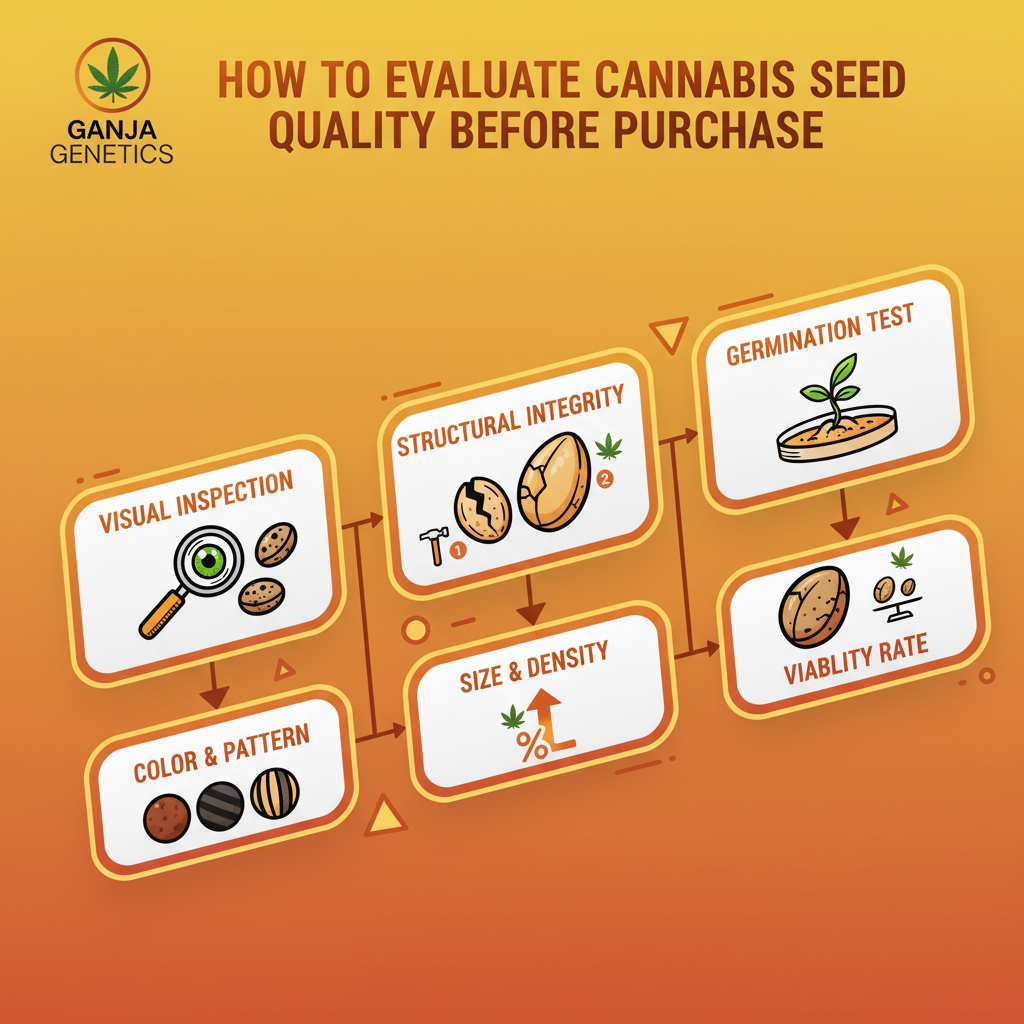
Learning How to Evaluate Cannabis Seed Quality Before Purchase means looking beyond color, size, or a glossy shell. Physical appearance can provide useful clues, but genetics, storage history, freshness, breeder information, and seller transparency often tell you much more about the quality of a seed lot.
In this guide, The Seed Connect explains the practical checks buyers can use before ordering, including what to look for in seed listings, which questions to ask sellers, and the red flags that may indicate poor storage, weak traceability, or questionable quality.
Key Take Away
- Don’t judge quality by appearance alone.
- Check breeder and lineage information.
- Ask about storage and freshness.
- Look for batch or lot traceability.
- Review germination and replacement policies.
Table of Contents
Start Here: What Good Cannabis Seed Quality Actually Looks Like
What if the seed in your hand already tells you most of the story? A good one usually looks calm, finished, and hard to fake. A weak one tends to give itself away fast. Seed quality matters before you buy because it shapes everything that follows.
Strong genetics, proper age, and good storage all affect viability, and poor handling can undo even decent genetics. Seed testing guidance also notes that seed health checks can help explain weak germination and poor establishment, not just confirm whether a seed sprouts (International Rules for Seed Testing 2026). Healthy seeds usually have a few things in common. They feel firm, look mature, and show no obvious damage.
A 2025 guide on spotting quality cannabis seeds notes that mature seeds often appear dark brown, light brown, or gray, with a glossy sheen from their natural wax coating (How to Spot Quality Cannabis Seeds: A Beginner’s Guide to Avoiding Duds). A seed can also look fine and still be poor if it was stored badly. Humidity, temperature, oxygen, light, genetics, age, and storage all affect germination chances, which is why evaluating seed quality is more than a quick glance (Guide to germinating cannabis seeds).
-
Firm shell: Good seeds resist gentle pressure and do not feel brittle.
-
Mature color: Dark brown, gray, or mottled tones usually beat pale green ones.
-
Glossy finish: A natural sheen often signals a well-formed shell.
-
No cracks or dents: Damage can mean dehydration or rough handling.
-
Uniform shape: Extremely flat, tiny, or shriveled seeds often underperform.
Simple checks like the float test and paper towel test are often used to screen older seeds before planting, but they are not perfect proof of quality (How to Test Cannabis Seed Viability 2026).
Low-quality seeds usually look pale, soft, cracked, or oddly misshapen. They may also feel lightweight, which is a bad sign when you are doing basic cannabis seed checks. A careful look saves a lot of disappointment later. Good seeds are not mysterious; they just look finished, sound, and worth the space in your tray.
Use a Simple Seed Check Before Purchase
A seed listing with no breeder name is already a yellow flag.
The fastest way to avoid a bad buy is to check the listing before you ever click checkout.
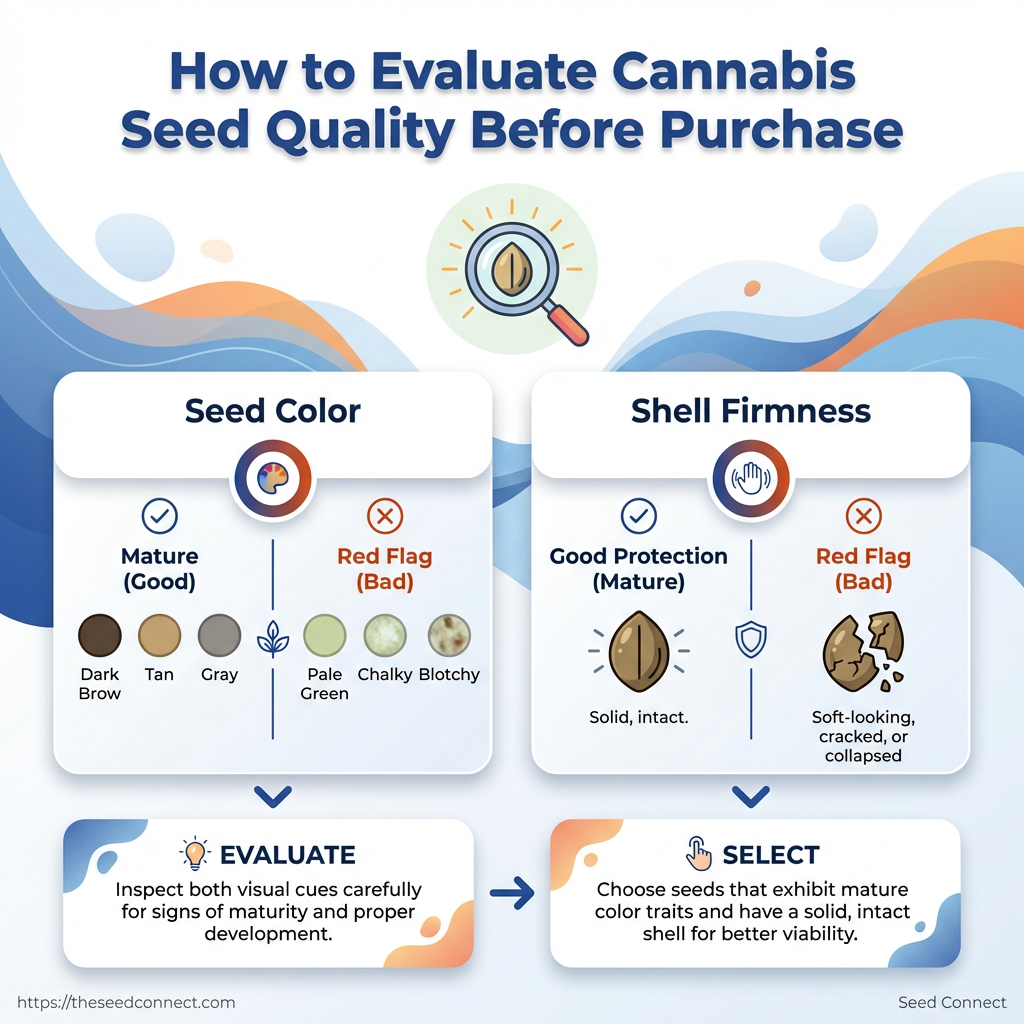
Color, shell condition, and size consistency tell a useful story when they show up together.
Dark brown, tan, or gray seeds with a natural sheen usually look more mature, while pale, soft, or uneven seeds deserve a second look.
Simple cannabis seed checks work even better when the seller also gives breeder notes and batch details, because seed records help explain why one batch performs well and another does not—especially when germination goes sideways.
That matters because storage can undo good genetics fast.
Well-kept seeds hold up better than seeds exposed to heat, light, or moisture, and poor storage is one of the easiest ways to lose viability before planting ever starts.
When we list Cannabis Seeds, the details that matter most are the ones a buyer can verify in seconds: strain name, breeder, lot information, and how the seeds were handled.
Quick pre-purchase checklist
|
Check |
What to look for |
Why it matters |
Red flags |
|---|---|---|---|
|
Seed color |
Dark brown, tan, or gray tones with an even look |
Usually points to a more mature seed |
Pale green, chalky, or blotchy color |
|
Shell firmness |
A solid, intact shell in listing photos and seller description |
Suggests better protection for the embryo |
Soft-looking, cracked, or collapsed shells |
|
Shape and size |
Fairly uniform seeds within the same batch |
Batch consistency helps with evaluating seed quality |
Wildly mixed sizes with no explanation |
|
Visible damage |
No chips, dents, splits, or missing shell pieces |
Damage often hurts germination odds |
Broken shells or heavily scuffed surfaces |
|
Strain details |
Clear strain name and traits |
Helps confirm the seed matches the label |
Vague names or no strain info at all |
|
Breeder notes |
Breeder name, lineage, or growing notes |
Strong breeders usually document their work |
No breeder listed, or copy-paste descriptions |
|
Batch information |
Lot number, harvest window, or batch notes |
Makes quality assurance easier if issues appear |
No batch record or traceability |
|
Germination guarantee |
A written policy with clear terms |
Shows the seller stands behind the seeds |
Hazy promises with no actual policy |
|
Storage and packaging |
Sealed, light-protected, and clearly packed |
Better storage protects viability in transit |
Loose packaging or no storage details |
This kind of review takes less than a minute once it becomes habit.
The best listings make the check easy, because they do not hide the basics.
If a seller is vague on the simple stuff, that usually says more than the photos do.
A clean listing with clear strain, breeder, and batch details is the kind of small signal that saves a lot of hassle later.
Judge the Seller, Not Just the Seed
A decent-looking seed can still come from a sloppy seller. That matters because the real risk often sits behind the listing, not inside the shell. Professional sellers do not hide the process. Quality control often includes cleaning, size sorting, drying, and germination testing, which lines up with the steps outlined in Royal Queen Seeds’ cannabis seed quality control overview.
Trustworthy sellers also talk about what happens when a batch underperforms. The International Rules for Seed Testing 2026 notes that seed health testing can supplement germination testing and help explain poor establishment, which is the kind of detail serious buyers should expect to hear. The sellers worth trusting usually make these details easy to find. The page should feel specific, not slippery.
The details honest sellers put on the page
-
Batch or lot information: A seller should be able to tie seeds back to a batch, not just a pretty strain name.
-
Storage and handling notes: Cool, dry storage tells you someone understands seed longevity.
-
Testing language that means something: Words like germination-tested are better when paired with method details.
-
Clear replacement terms: A real policy explains what fails, when it counts, and how the fix works.
-
Fast, plain-language replies: Good support answers the actual question instead of tossing out canned lines.
Imagine two sellers with the same star rating. One answers a bad germination report with batch details and a replacement path. The other sends a copy-paste shrug. Most buyers can spot which one took quality assurance cannabis seeds seriously.
Reviews matter for the same reason. Look past the score and read the response quality, especially when people mention slow sprouting, damaged packaging, or missing replacement help. A thoughtful reply usually says more about a seller than ten shiny five-star blurbs. That is why we back our seeds with a germination guarantee and real grower support.
It keeps the focus where it belongs: on accountability, not guesswork.
Compare Genetics, Freshness, and Storage Conditions
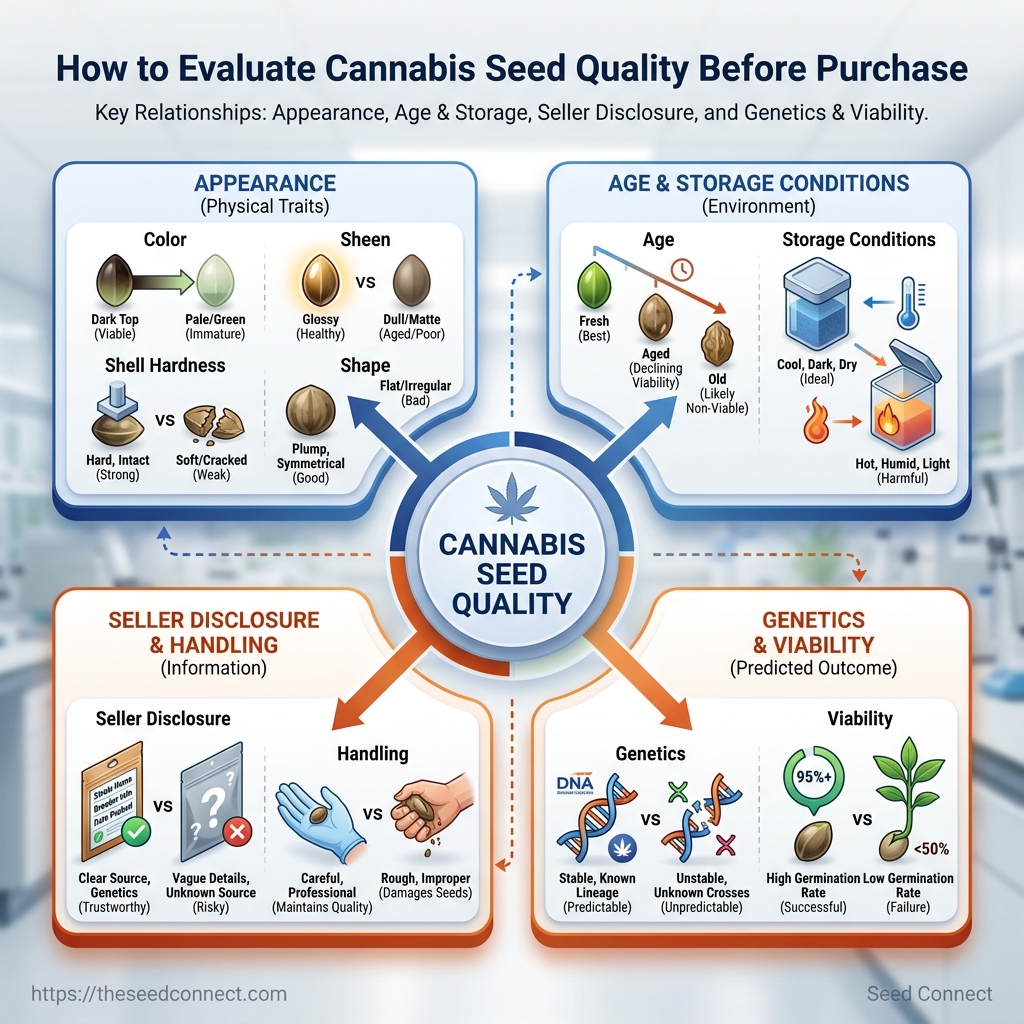
What if the cheapest pack is the most expensive mistake? A seed can look fine and still underperform if the genetics are unstable, the stock is old, or the storage was sloppy. That is why evaluating seed quality goes beyond the shell. Genetics set the range of what the plant can become, while freshness and storage decide how much of that potential is still alive when the seed reaches you.
Genetics tell you how predictable the plant will be
Stable genetics usually mean more even germination, more similar plant structure, and fewer weird surprises later on. A solid line gives you a better chance of consistent growth, while shaky breeding can turn the same order into a mixed bag. Seed guides also point out that genetics and age both shape germination results, not just the way a seed looks on the outside. The Canatura guide on germination factors notes that genetics, age, and storage all play a role, and the Cannabis Seed Viability Testing Guide puts those factors right alongside moisture and handling.
Freshness and storage change the odds fast
Old seeds do not always fail, but they need better conditions to wake up well. Heat, light, and humidity slowly chip away at viability, which is why storage notes matter so much in cannabis seed checks. The International Rules for Seed Testing 2026 also treat seed health as separate from germination testing, which is a useful reminder: a seed can still be alive and still be compromised. A good How to Preserve Weed Seeds: A 2026 Storage Guide reinforces the same idea by focusing on cool, dry, dark storage for better long-term viability.
Stock details usually beat price tags
A low price is not much comfort if the stock has been sitting around for months. Better signs are plain and boring: harvest or packing dates, storage method, turnover rate, and whether the seller shares testing or batch notes.
-
Recent stock notes: Fresh batches usually give you a clearer read on viability.
-
Storage info: Cool, dry, sealed storage tells you more than flashy discounts.
-
Batch or lot details: These help you trace consistency across packs.
-
Testing language: Real quality control talk sounds specific, not vague.
That is the heart of quality assurance cannabis seeds: not just what the packet costs, but how well the seed was bred, kept, and handled before sale. When those details line up, the odds of a clean start get much better.
Make a Better Buying Decision for Your Growing Goals
A seed that works beautifully for one grower can be a headache for another. A beginner usually wants fewer moving parts, while a more experienced grower may care more about specific traits, stretch, or THC potential. That is why evaluating seed quality is only half the job. The other half is matching the seed to your setup, your patience level, and how much room you have to correct mistakes.
Simple viability checks still matter, too. Quick pre-germination screening can help flag weaker seeds before they become a waste of time, and formal seed health testing can help explain poor germination and weak seedlings rather than leaving you to guess at the cause.
Match the seed to the grower, not the hype
A seed choice should fit the person running it. For a first indoor run, a forgiving option often beats a flashy one.
-
Beginner setup: Choose stable genetics with simple needs and a clear grow plan. Less guesswork usually means fewer expensive lessons.
-
Intermediate setup: Look for strains that suit your light, space, and feeding rhythm. At this stage, you can handle a little more personality from the plant.
-
Advanced setup: Pick genetics for a specific goal, such as stronger potency, faster finish, or a tighter canopy. That is where experience starts paying off.
Questions worth asking before you place the order
A smart buyer asks a few plain questions before clicking through checkout. Those questions save more money than a discount code ever will.
-
Will this seed fit my environment? Indoor tents, balconies, and outdoor plots all reward different traits.
-
How much risk can I handle? If the room for error is small, favor seeds that are easier to start and manage.
-
What kind of support comes with the order? A seller that talks about germination, storage, and seed health is doing more than shipping a packet.
-
How should I store extras? Cool, dry, dark storage helps preserve viability over time.
That last question matters more than people think. A seed can be fine on arrival and still age badly after a sloppy storage plan.
Where Seed Connect fits
That is where we keep things simple with a germination guarantee and expert grower support. If you want quality assurance on cannabis seeds without the usual runaround, our Cannabis Seeds collection is built for that kind of buyer. A better purchase usually comes from a better match, not a louder promise. When the seed fits the grow and the seller backs it up, the whole process gets a lot calmer.