

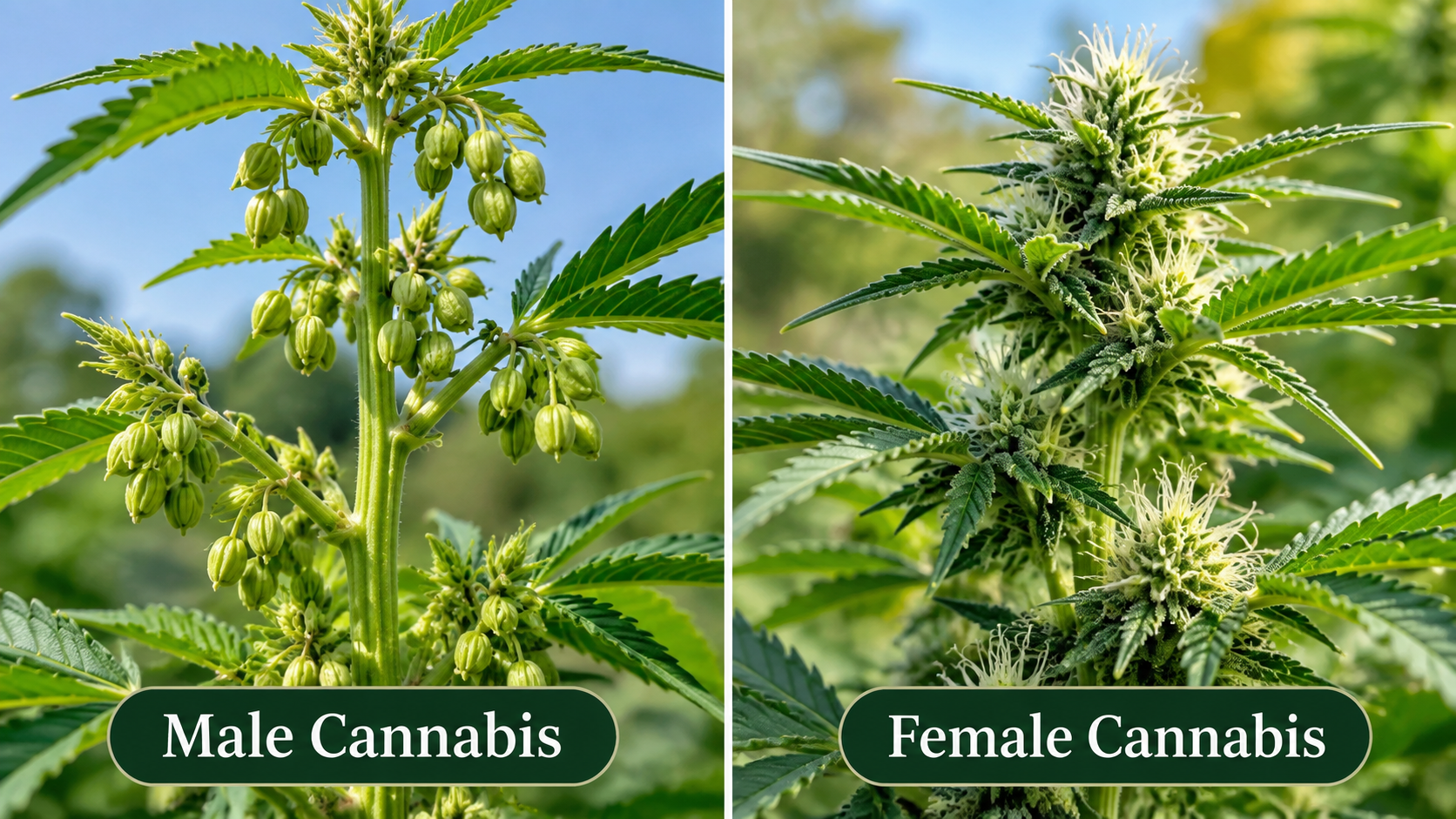
Learning how to tell male from female cannabis plants becomes much easier once you know exactly where to look.
Start by inspecting the nodes, where branches meet the main stem. Male plants usually develop small round or oval pollen sacs without white hairs. Female plants develop teardrop-shaped bracts that typically produce one or two fine white stigmas.
This distinction matters because male plants produce pollen, while female plants produce the flowers most growers want to protect from pollination.
Cannabis is predominantly a dioecious species, meaning male and female flowers usually develop on separate plants. However, cannabis sex expression can also be influenced by genetics, hormones, development, and environmental conditions.
Key Takeaway
- Check the nodes first. Early reproductive structures develop where branches meet the main stem, making this the best place to identify plant sex.
- Male plants form pollen sacs, while female plants form bracts with stigmas. Round sacs without white hairs suggest a male; fine white hairs emerging from a bract strongly suggest a female.
- Don’t rely on leaf shape, height, or overall plant structure alone. Wait until you can identify actual reproductive structures before deciding whether a plant is male or female.
Male vs Female Cannabis Plants at a Glance
| Feature | Male Cannabis Plant | Female Cannabis Plant |
|---|---|---|
| Early pre-flower | Round or oval pollen sac | Teardrop-shaped bract |
| White hairs | Usually absent | Usually present |
| Location | Nodes | Nodes |
| Mature structure | Clusters of pollen sacs | Resinous flowers |
| Reproductive role | Produces pollen | Receives pollen and forms seeds |
| Main concern | Can pollinate females | Usually retained for flower production |
If you’re growing from regular marijuana seeds, identifying plant sex is an important part of managing the grow.
Where Should You Look to Identify Plant Sex?
The best place to determine cannabis sex is at the nodes.
A node is the point where a branch or leaf stem meets the main stalk. As cannabis plants mature, small reproductive structures begin appearing around these points.
Inspect several nodes rather than making a decision from one tiny bump.
A jeweler’s loupe or small magnifying glass can help when the pre-flowers are still very small.
You are looking for two main signs:
- rounded pollen sacs with no white hairs
- pointed or teardrop-shaped bracts with fine white hairs
If the structures are still too small to identify confidently, wait a little longer.
Removing a plant too early because of an unclear pre-flower can cost you a healthy female.
What Does a Male Cannabis Plant Look Like?
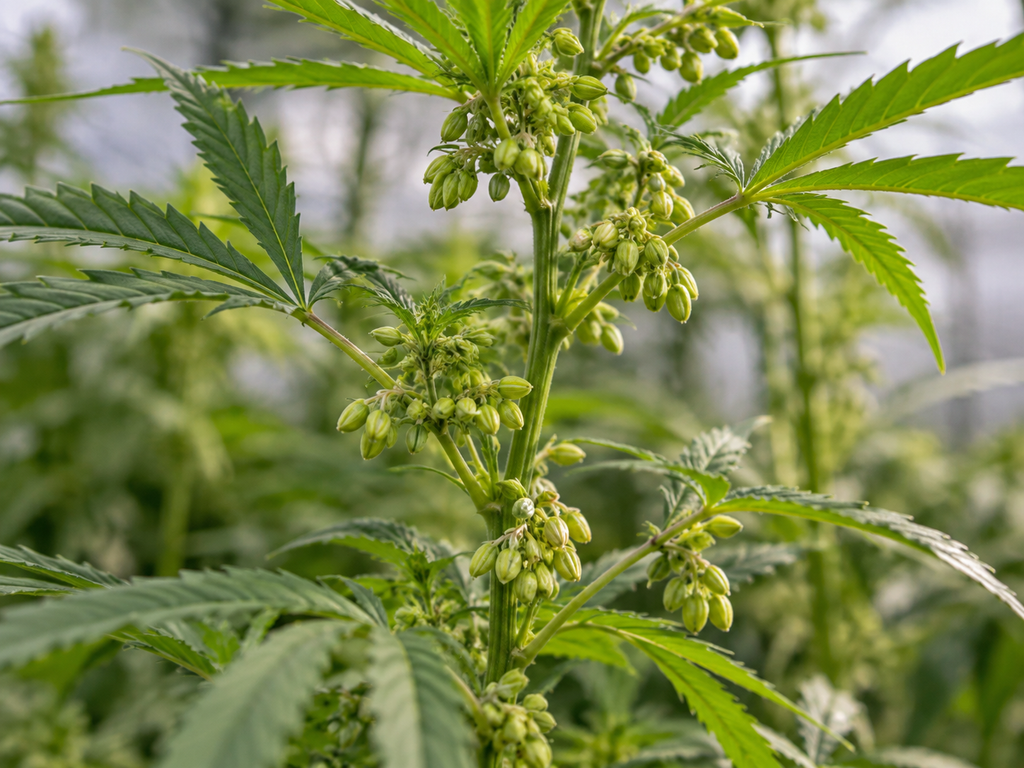
A male cannabis plant develops pollen-producing flowers.
The earliest visible sign is usually a small, smooth, rounded or oval structure at the node. This structure eventually develops into a pollen sac.
At first, you may see only one.
As the plant matures, more sacs can develop into clusters that sometimes resemble tiny bunches of grapes.
The clearest identifying feature is simple:
Male pollen sacs normally do not produce the fine white stigmas seen on female flowers.
As male flowers mature, the pollen sacs open and release pollen. Cannabis relies heavily on wind pollination, which means pollen can travel from a male plant to nearby females without direct contact.
If your goal is producing seedless female flowers, you’ll generally want to identify males before their pollen sacs open.
Do not rely on claims such as:
- tall plants are always male
- thin plants are male
- males grow faster
- fewer leaves mean male
Those traits can vary because of genetics and environmental conditions.
Pollen sacs are far more reliable than overall plant shape.
What Does a Female Cannabis Plant Look Like?
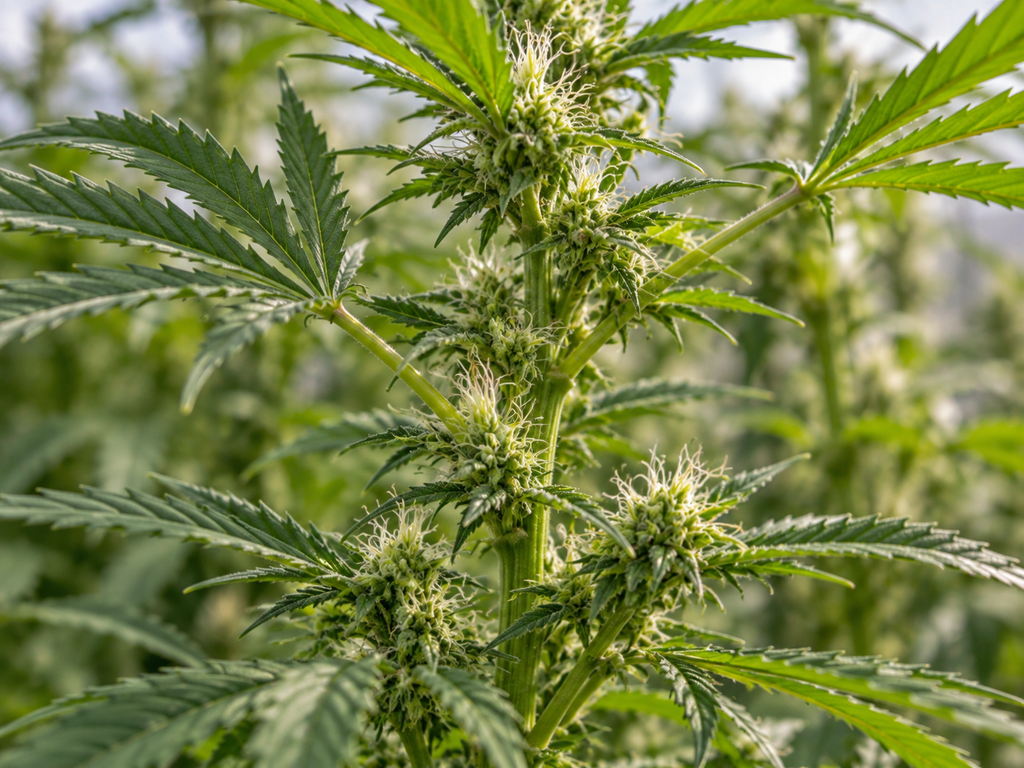
A female cannabis plant develops pistillate flowers.
Early female pre-flowers usually look like small, pointed or teardrop-shaped bracts at the nodes.
From these bracts, one or two fine white hairs typically emerge.
Growers often call these hairs “pistils,” although they are more accurately stigmas, which form part of the female reproductive flower.
Research describing cannabis reproductive biology confirms that female and male plants form distinct reproductive structures, with female plants producing pistillate flowers and males producing staminate flowers.
One important detail is that the bract may become visible before the white stigmas are obvious.
So don’t immediately classify a plant as male simply because you can’t see white hairs yet.
Give the structure time to develop.
When Can You Tell if a Cannabis Plant Is Male or Female?
You usually cannot reliably identify cannabis sex from the seed or from a very young seedling.
Pre-flowers begin appearing as plants mature, often during later vegetative growth or as flowering approaches.
Timing varies according to:
- genetics
- plant age
- photoperiod
- growing conditions
- cultivar
Rather than relying on a specific week number, inspect the plant itself.
Cannabis researchers have shown that sex determination in cannabis involves genetic and developmental factors, which helps explain why plants may not all reveal their sex at exactly the same time.
The safer approach is:
Use time as a clue, but use reproductive structures as confirmation.
Don’t Confuse Stipules With Female Pistils
This is one of the most common beginner mistakes.
Cannabis plants develop stipules around the nodes, and both males and females have them.
Stipules are usually:
- green
- narrow
- pointed
- relatively stiff
Female stigmas look different.
They are usually:
- fine
- soft
- white or cream-colored
- hair-like
- emerging from a bract
A simple way to remember the difference is:
Green pointed spike = likely a stipule.
Fine white hair emerging from a bract = strong female sign.
Don’t use stipules to determine plant sex.
If you’re unsure, inspect again after a few days.
What Does a Hermaphrodite Cannabis Plant Look Like?
Cannabis sex expression isn’t always strictly male or female.
Some plants can develop both male and female reproductive structures.
Scientific literature recognizes monoecious and intersex expression in cannabis, meaning reproductive development can sometimes differ from the typical separate male and female pattern.
An intersex plant may show:
- female bracts and white stigmas
- male pollen sacs somewhere else
- yellow exposed anthers developing within female flowers
Growers often call the exposed yellow anthers “bananas” because of their elongated appearance.
These structures matter because they may produce pollen capable of fertilizing female flowers.
It’s also too simplistic to say stress is always the cause.
Genetics, hormones, and environmental factors can all influence cannabis sex expression.
That’s why it’s worth continuing to inspect flowering sites even after you initially identify a plant as female.
What Should You Do If You Find a Male Plant?
What happens next depends on your goal.
If you’re growing for seedless female flowers, confirmed males are usually separated from females before the pollen sacs open.
That reduces the chance of unwanted pollination.
But male cannabis plants aren’t useless.
They can be valuable for:
- breeding new cultivars
- seed production
- maintaining genetic lines
- selecting breeding traits
If your goal is breeding, the male may be important.
If your goal is unseeded flower production, you’ll usually want to prevent that male from pollinating females.
Knowing what you’re growing before planting marijuana seeds makes these decisions much easier later.
Can Feminized Seeds Produce Male Plants?
Feminized marijuana seeds are bred specifically to produce overwhelmingly female plants.
That makes them popular with growers who don’t want to sort through as many typical male plants.
By comparison, regular marijuana seeds can produce both male and female plants.
Research into feminized cannabis seed production explains how breeders can induce genetically female plants to produce pollen. Because both parents contribute female sex chromosomes, the resulting seeds overwhelmingly develop as female plants.
Still, feminized doesn’t mean you should stop checking your plants.
Intersex expression can still occur, so growers should continue inspecting flowering sites as plants mature.
Common Mistakes When Sexing Cannabis Plants
Guessing From Leaf Shape: Wide or narrow leaves don’t reliably tell you whether the plant is male or female.
Assuming Tall Plants Are Male: Height depends heavily on genetics and environment.
Mistaking Stipules for Pistils: Both sexes have stipules. Look for reproductive structures instead.
Removing Plants Too Early: Wait until you can clearly identify pollen sacs or female bracts.
Checking Only One Node: Inspect several areas of the plant before deciding.
Waiting Until Pollen Sacs Open: If you’re trying to prevent pollination, identifying males before pollen release is much safer.
How to Tell Male From Female Cannabis Plants: Final Check
If you’re still learning how to tell male from female cannabis plants, ignore most of the myths about plant height, leaf shape, or growth speed.
Focus on the reproductive structures.
A male cannabis plant typically develops round or oval pollen sacs at the nodes without white hairs.
A female cannabis plant develops teardrop-shaped bracts, usually followed by one or two fine white stigmas.
And if you see both male and female structures on the same plant, you may be looking at intersex expression.
The most reliable approach is simple:
Inspect several nodes, wait until the reproductive structures are clear, and then manage the plant according to your growing goal.