


If you’re wondering how to treat powdery mildew on cannabis, the first step is to act early and correct the conditions allowing the fungus to spread. Powdery mildew usually appears as white or gray powdery patches on leaves and thrives where airflow is poor and humidity stays elevated.
Organic treatment options can include potassium bicarbonate, biological controls such as Bacillus subtilis, careful removal of infected material, and better environmental control. The goal is not only to remove visible mildew but also to reduce the chance of it returning.
Key Takeaway
Prevention matters after treatment. Sanitation, spacing, airflow, and humidity management help reduce reinfection and should remain part of the grow routine. include improving air circulation, maintaining humidity below 50%, and regularly cleaning grow spaces. Choosing disease-resistant cannabis strains, such as sativa-dominant hybrids, can also reduce the risk of mildew. Start with high-quality seeds from trusted suppliers to build a strong foundation for healthy plants.
Treat visible mildew early and improve the environment at the same time. Removing affected foliage, increasing airflow, and controlling humidity are more effective together than relying on a spray alone.
Organic treatments should be used carefully and according to product directions. Potassium bicarbonate and biological fungicides are commonly used options, but treatment choice should depend on growth stage and severity.
How to Identify Powdery Mildew on Cannabis Plants
Spotting powdery mildew early can save your cannabis plants from serious harm. Recognizing the signs and understanding the conditions that encourage its growth are key to keeping your crop healthy.
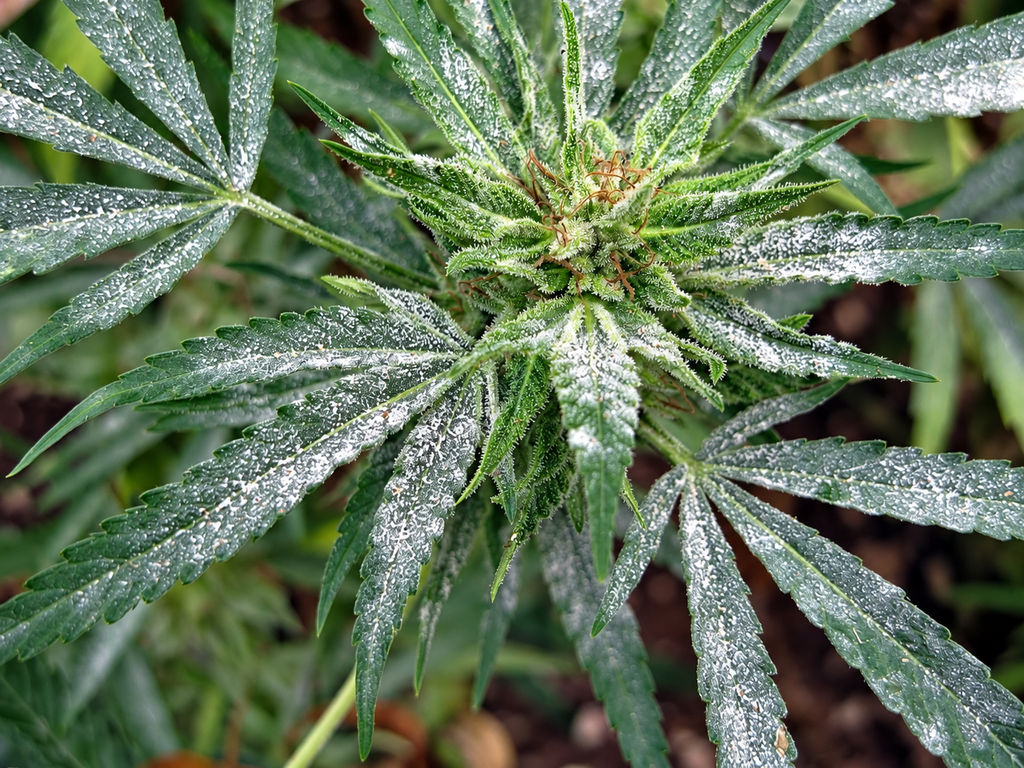
Signs of Powdery Mildew
Powdery mildew often begins as small, white or grayish spots on the leaves, resembling a light dusting of flour. These patches typically show up on the lower, older leaves first, where moisture tends to linger. Both the upper and lower surfaces of the leaves can be affected, so a thorough inspection is crucial.
To tell powdery mildew apart from dust or nutrient residue, check its texture – it easily wipes off when rubbed between your fingers. Pay close attention to new growth and fan leaves for any discoloration or tiny bumps, as these can indicate an early infection.
The fungus tends to start in areas with poor airflow, like corners of grow spaces or spots where leaves overlap. These conditions allow stagnant air to collect, creating a perfect breeding ground for spores. Daily inspections of your plants can help you catch powdery mildew before it spreads.
What Causes Powdery Mildew to Grow
Spotting powdery mildew is just one piece of the puzzle. To prevent it, you need to understand the conditions that encourage its growth. The Trichome Team at Trichome Analytical explains:
“Powdery mildew is particularly common in cannabis plants because it thrives in the warm and humid microclimates often found in cultivation environments.”
High humidity combined with poor airflow provides the perfect setting for powdery mildew, even when there’s no standing water. As NPK Industries points out:
“Unlike many fungi, PM doesn’t need standing water to thrive. It’s opportunistic, flourishing in warm, humid conditions with inadequate airflow.”
Temperature swings can also play a role, as they create humidity spikes that encourage spore germination. Crowded plants and overlapping leaves make things worse by blocking airflow and creating pockets where spores can settle and grow.
Powdery mildew spreads easily – through air currents, water droplets, and even human touch. With over 400 species of this fungus capable of infecting nearly 10,000 plant types, cannabis plants are constantly at risk. Understanding these environmental triggers is your first line of defense against a widespread infestation.
Organic Treatments for Powdery Mildew
Catching powdery mildew early is key, and acting quickly with organic solutions can safeguard your cannabis plants. These natural treatments target the fungus while keeping your plants healthy and thriving.
Milk Spray Treatment
Milk isn’t just for your morning coffee – it doubles as a natural fungicide against powdery mildew. When exposed to sunlight, the proteins in milk create an antiseptic effect, making it particularly effective for outdoor gardens or indoor setups with strong lighting. Studies have shown that weekly milk sprays can combat powdery mildew as effectively as synthetic fungicides. A 10% milk solution (1 part milk to 9 parts water) has been proven to reduce infection severity by up to 90%.
To make your milk spray, mix skim milk with water at the recommended 1:9 ratio in a spray bottle or garden sprayer. Skim milk is ideal to prevent clogging. Apply the solution in direct sunlight, ensuring all surfaces – especially the undersides of leaves – are thoroughly coated. Reapply every 10 to 14 days, even if the mildew seems to disappear.
Potassium Bicarbonate Treatment
Potassium bicarbonate is a fast-acting, organic-friendly fungicide that disrupts fungal cells, causing them to collapse. Unlike baking soda, which is less effective, potassium bicarbonate is a better choice for tackling active infections.
To prepare the solution, mix 1 tablespoon of potassium bicarbonate with ½ teaspoon of liquid soap (make sure it’s soap, not detergent) in 1 gallon of water. The soap helps the mixture stick to plant surfaces for better coverage. Spray the solution generously on affected areas, focusing on the undersides of leaves where mildew tends to thrive. Repeat the application every 7 to 10 days until the mildew is under control.
Natural Fungicides and Beneficial Microbes
For a longer-term solution, natural fungicides and helpful microbes can work alongside your plants’ natural defenses. For example, Bacillus subtilis, a beneficial bacterium, acts as a biocontrol agent against powdery mildew. Products like Serenade® use this bacterium to create a protective barrier, especially when applied preventatively before the disease takes hold.
Another option is Trichoderma, a beneficial fungus that competes with powdery mildew for space and nutrients, effectively crowding it out. Neem oil is also a reliable choice, managing various diseases without harming helpful organisms. These methods not only combat mildew but also help maintain a balanced, healthy growing environment. Regular applications during the vegetative stage can provide lasting protection for your cannabis plants.
How to Prevent Powdery Mildew from Coming Back
Getting rid of powdery mildew is just the beginning. To keep it from returning, you’ll need to create conditions that discourage its growth and stick to a routine of regular upkeep. Here’s how you can make sure powdery mildew doesn’t make a comeback.
Improve Air Circulation
Good airflow is your best weapon against powdery mildew. When air stands still, it creates humid, warm pockets – just the kind of environment that fungi love. Keeping the air moving helps plants release moisture properly and stops spores from settling.
To achieve this, try installing wall-mounted fans to keep air moving at all times. Place air intakes near the ground and exhaust vents higher up to take advantage of natural warm air movement. This setup creates a continuous flow of air. Also, make sure your plants aren’t overcrowded – leave enough space (around 4–5 plants per light) to allow proper airflow between them. Overcrowding traps moisture, which can lead to reinfection.
You might also want to invest in a dehumidifier with built-in air circulation. These devices not only reduce moisture but also help maintain consistent temperature and humidity levels. With better airflow in place, you’ll be one step closer to keeping powdery mildew away.
Stick to a Regular Cleaning Routine
Even after you’ve treated visible signs of powdery mildew, spores can linger in your grow area, waiting for the right conditions to thrive again. A thorough and regular cleaning routine can eliminate these hidden threats.
Sanitize all surfaces and tools, including pruning shears, watering cans, and plant supports, using a diluted hydrogen peroxide solution after each harvest. Clean walls, floors, and equipment frequently, and don’t forget about air ducts. Both intake and exhaust ducts can harbor spores, so be sure to decontaminate them between each growth cycle.
Use Organic Preventative Treatments
Alongside cleaning, organic treatments can provide an extra layer of protection. When used regularly, they create a barrier that makes your grow space less inviting for powdery mildew.
Apply light organic treatments, like neem oil or potassium bicarbonate sprays, every 7–10 days. Neem oil works well during the vegetative stage by coating leaf surfaces and boosting plant health. Potassium bicarbonate helps maintain a leaf surface pH that’s less favorable for mildew growth.
The trick is to apply these treatments lightly and consistently. Heavy, infrequent applications can stress your plants, but a steady, gentle routine supports their natural defenses while keeping fungal spores in check.
Choosing Disease-Resistant Cannabis Seeds
Starting with cannabis seeds that naturally resist powdery mildew can give you a head start in protecting your plants. These disease-resistant strains are specifically bred to fend off threats like powdery mildew, setting you up for success right from the beginning.
Why Disease-Resistant Strains Are a Smart Choice
Disease-resistant cannabis strains are the result of selective breeding, designed to enhance their natural ability to fight off fungal infections. These plants possess specific genetic traits that make them less vulnerable to powdery mildew, significantly lowering the risk of infection.
Sativa strains are often better at resisting mold compared to indica varieties. Their tall stature and well-spaced leaves promote better air circulation, which helps prevent the damp conditions that powdery mildew thrives in. However, their longer flowering cycle might expose them to adverse conditions for a longer period.
Hybrid strains, especially sativa-dominant ones or those with smaller, less dense buds, are another great option. They often combine mold resistance with shorter flowering times, reducing the period during which plants are susceptible to disease.
Some cannabis families, like Kush, Skunk, and Haze, are known for their mold resistance. Additionally, strains such as White Widow and Northern Lights have earned a reputation for thriving in humid environments, making them reliable choices for growers dealing with moisture issues.
In a 2025 study published in Frontiers in Plant Science, researchers analyzed 510 cannabis genotypes and discovered a novel powdery mildew resistance locus (PM2) in the cannabis genome. Led by Seifi et al., the study revealed that powdery mildew resistance is controlled by a single dominant genetic locus, proving that resistance is both measurable and achievable through genetics.
Beyond genetics, plant nutrition plays a critical role in building disease resistance. Adequate levels of calcium and silicon, for example, help strengthen cell walls, providing plants with better natural defenses against fungal infections. Together, strong genetics and proper nutrition create a powerful shield against powdery mildew.
Choosing the right seeds is the first step in creating a healthy, resilient garden.
Seed Connect‘s Premium Seed Selection

When it comes to investing in disease-resistant cannabis strains, high-quality seeds are key. Seed Connect offers a wide range of premium cannabis seeds, including feminized, autoflower, indica, sativa, hybrid, medicinal, and high-THC varieties. They back their seeds with a germination guarantee and provide fast U.S. shipping (3–5 days), free shipping on orders over $100, and expert grower support.
What makes Seed Connect stand out is their germination guarantee, ensuring the seeds you receive are viable and ready to grow into healthy plants. Their extensive selection allows you to find the perfect disease-resistant strain to match your growing environment – whether you’re looking for a mold-resistant sativa for outdoor cultivation or a tough hybrid for indoor setups.
Their expert grower support team is ready to assist you in selecting strains best suited for your specific conditions. They can recommend varieties that are naturally resistant to powdery mildew and offer tips on how to further protect your plants using organic treatments.
You can explore their full seed collection online at their marijuana seeds collection or visit their store in Tempe, Arizona, for one-on-one guidance.
Starting with disease-resistant genetics isn’t just about avoiding issues – it’s about building a strong foundation for a successful grow. By pairing resilient strains with effective growing practices, you can create a multi-layered defense system that keeps powdery mildew at bay.
Conclusion
Managing powdery mildew doesn’t have to mean resorting to harsh chemicals. Organic solutions provide a safer way to protect your cannabis plants while keeping your health in mind.
Early detection is key to staying ahead of this common issue. Organic treatments like milk sprays and potassium bicarbonate have shown promising results. For instance, a weekly application of a 10% milk solution (a 1:9 milk-to-water ratio) not only fights the fungus but may also enhance your plant’s natural defenses. Potassium bicarbonate, on the other hand, is effective at wiping out mildew spores without compromising the organic nature of your grow.
Prevention, however, is your best defense. By keeping humidity levels under 50%, ensuring good airflow, and maintaining a clean growing space, you create an environment where your plants thrive and mildew struggles to survive.
Starting with strong genetics can give you an edge. Disease-resistant strains, particularly sativa-dominant varieties, often encourage better airflow, reducing the chances of mildew taking hold. Pairing these genetics with organic practices creates a multi-layered shield for your crop.
Organic methods work in harmony with your plant’s natural defenses, avoiding the residues and chemical alterations that synthetic fungicides can leave behind. This ensures your cannabis stays clean, potent, and true to its natural quality.
FAQs
Why should I use organic methods to treat powdery mildew on cannabis plants instead of chemical fungicides?
Using natural remedies like neem oil, potassium bicarbonate, or milk sprays to combat powdery mildew comes with some clear advantages. These options are much safer for both you and the environment since they don’t leave behind the harsh chemical residues often associated with synthetic fungicides. That means a healthier outcome for both your plants and the people consuming the final product.
For growers focused on eco-friendly practices or working toward organic certification, these methods are a perfect fit. They’re typically gentler on cannabis plants, helping to preserve their health without the risk of chemical buildup that could harm the crop or its users. Opting for organic treatments not only promotes sustainable cultivation but also ensures your plants stay strong and healthy in a more natural way.
How can I add disease-resistant cannabis strains to my grow setup?
To make disease-resistant cannabis strains a part of your grow setup, start by choosing varieties known for their ability to withstand common problems like mold and powdery mildew. Trusted seed banks, such as Seed Connect, offer a range of high-quality strains specifically bred for this purpose, making them a great place to begin.
After selecting your strains, focus on creating the right environment for healthy growth. Keep air circulating properly, manage humidity levels, and ensure your setup has good drainage to reduce the risk of disease. On top of that, maintain cleanliness by regularly sanitizing your tools and equipment. Combining these practices with resilient strains will set you up for a strong and successful cultivation experience.
How can I adjust the environment to prevent powdery mildew on cannabis plants?
To keep powdery mildew at bay on your cannabis plants, focus on maintaining the right growing conditions. Aim for humidity levels between 50–60%, as higher humidity creates the perfect environment for fungal growth. Good air circulation and ventilation are also essential – use fans and give your plants enough space to prevent overcrowding.
Steer clear of damp, low-lying areas, and make it a habit to clean your grow space regularly. This helps reduce the presence of mildew spores. By keeping humidity steady and prioritizing cleanliness, you can create conditions that help your plants stay healthy and mildew-free.