
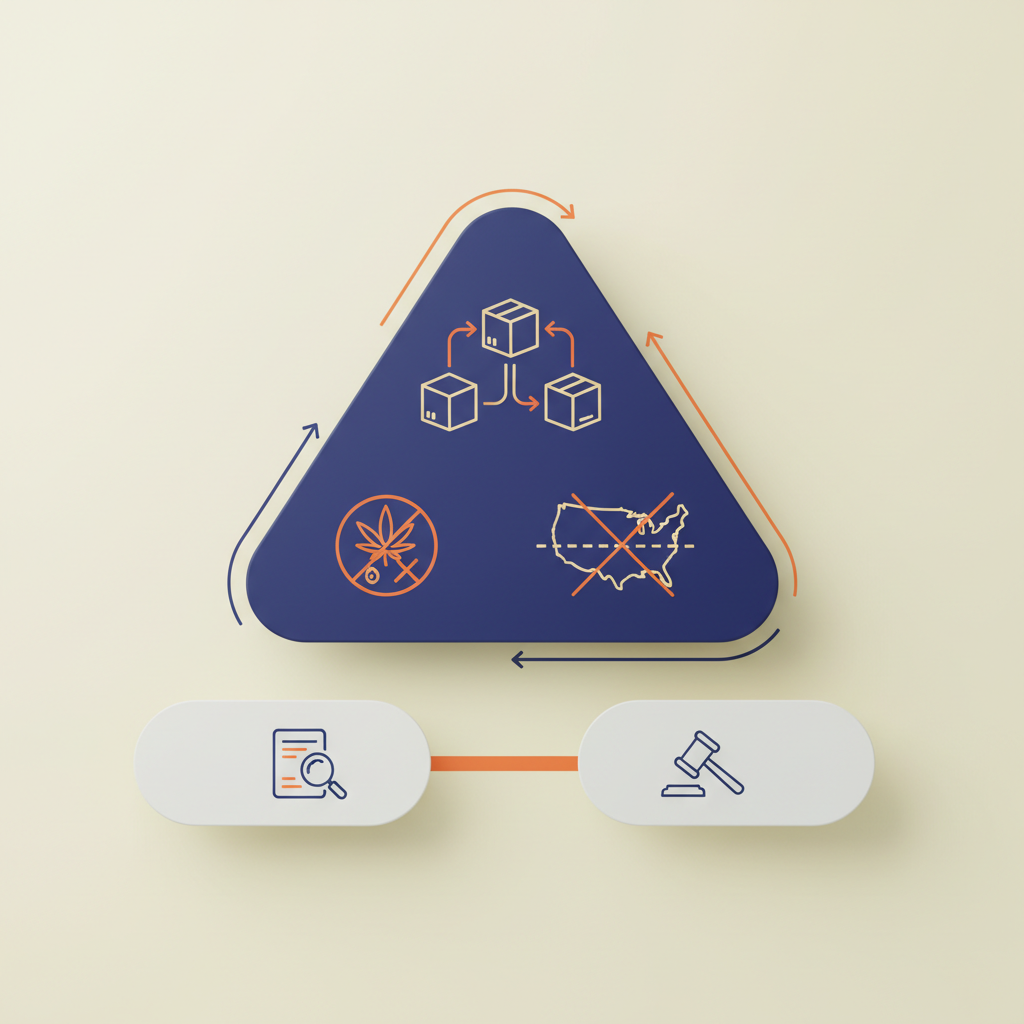
Can you really mail cannabis seeds across state lines if their THC content is low? This assumption is common, but it overlooks a more complex issue: seed classification does not automatically determine if a shipment is legal.
Currently, seeds with less than 0.3% THC may be considered hemp under federal rules.
This status is important, but it does not allow you to ship them anywhere without restrictions.
That picture is changing.
A 2023 North Atlantic Seed report states that Section 781 will take effect on November 12, 2026. After this date, high-THC cannabis seeds may lose their hemp classification.
Even before this date, state laws can control how you possess, sell, label, test, and grow seeds.
Carrier policies and local laws may add extra barriers, even if federal rules seem positive.
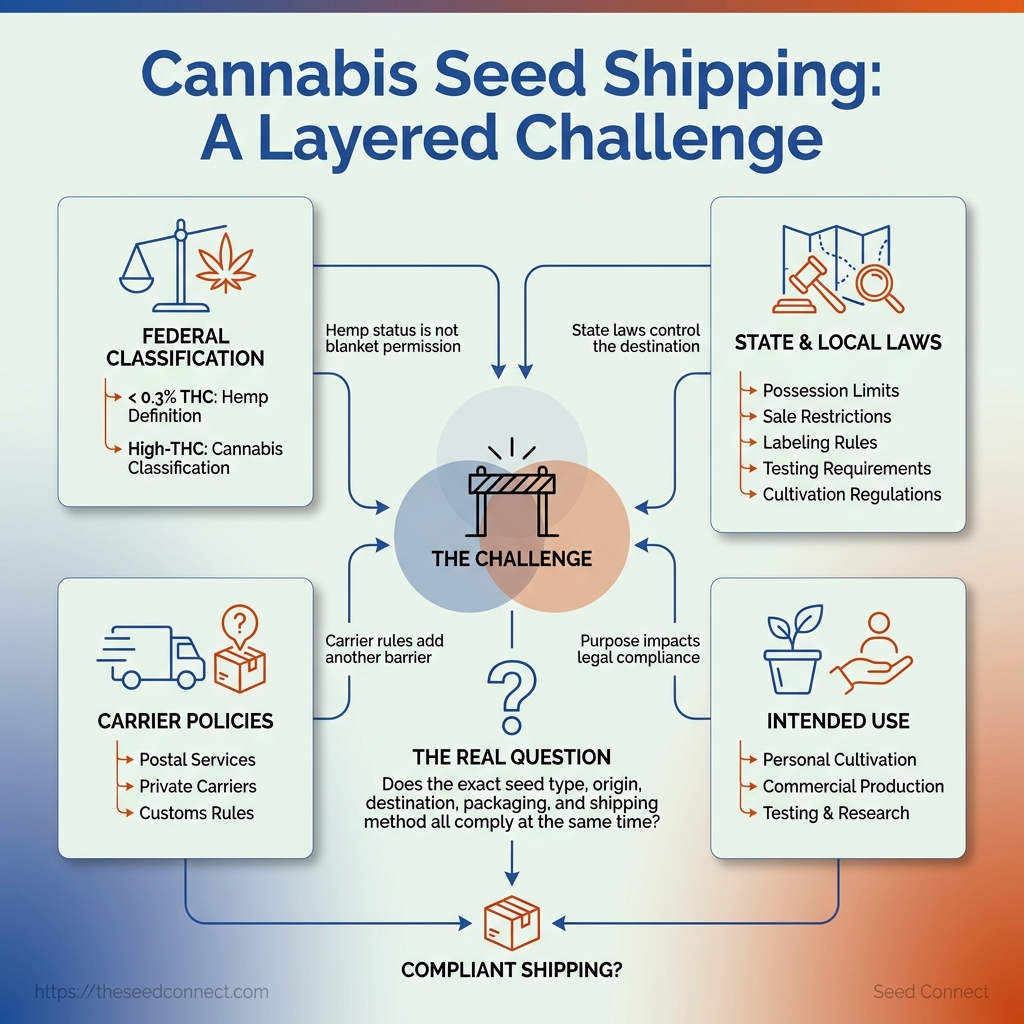
The key question is if the type of seed, where it comes from, where it’s going, how it’s packaged, and the shipping method all comply.
To understand cannabis seed shipping regulations, you must look at all these aspects instead of relying on just one THC threshold.
Quick Answer: Yes, you can mail cannabis seeds across state lines if they are classified as hemp, containing less than 0.3% THC, but this does not guarantee legality due to varying state laws, carrier policies, and specific seed regulations. Since federal guidelines are changing with Section 781 on November 12, 2026, it’s crucial to verify the legality and compliance of each shipment beforehand. Always check state laws and carrier terms before sending seeds.
The Short Answer: Federal Rules Do Not Make Every State-to-State Shipment Legal
Can you legally mail cannabis seeds across state lines? The answer isn’t straightforward. There’s no single federal rule that applies to every shipment. The answer hinges on the type of seed, the sender’s state, the destination state, the carrier’s rules, and the recipient’s ability to legally possess or grow them.
“Cannabis seeds are federally legal” is not the full answer. Some people see seeds with less than 0.3% THC as hemp by federal law. But Section 781 might change that in 2026. Current guidance on Section 781 and cannabis seeds indicates that federal rules could change.
Check the rules before you order, especially with changes expected in November 2026.
Federal classification
Federal classification identifies what the seeds are legally considered.
It does not automatically authorize mailing them everywhere.
State and local law
One state may allow you to possess seeds but limit cannabis growing, sales, imports, or deliveries.
Local laws can create additional rules.
Possession, mailing, importing, and germinating are separate legal questions.
Carrier policy
Even if a shipment is legal, a postal or private carrier might have stricter rules.
Review the carrier’s current cannabis-related policy before relying on a seller’s shipping statement.
Intended use
A buyer in a state that allows adult-use cultivation can order seeds for personal growing. However, the shipment can still be stopped if the destination state restricts possession, the carrier denies the package, or the buyer does not have the necessary permissions.
- Do: Check federal classification, state laws, local rules, carrier terms, and limits on cultivation.
- Do not: Think that just because a seller can ship, it means possession or growing is legal.
Reliable cannabis seed shipping requires checking all four layers because rules can change quickly.
What Federal Law Says About Cannabis Seeds and Interstate Shipping
You might think a seed is low-risk under current federal rules, but it can still lead to shipping problems down the road.
Can you mail cannabis seeds across state lines? Under current rules, federal classification might allow it, but it does not make every shipment legal.
Seeds often have very low THC levels, which helps classify them as hemp under federal rules.
However, seeds from high-THC plants could change under Section 781, set for November 12, 2026.
Since published interpretations vary on timing and scope, check current federal rules before ordering, as this explanation of Section 781 and cannabis-seed rules indicates.
A legal seed can leave a state where sales are allowed. But the destination state may limit possession. The carrier may also have extra rules. Additionally, growing the seed may be subject to other regulations.
One package may pass through one checkpoint but get stopped at another.
The Separate Questions Behind One Shipment
| Legal question | What to check | Why it matters | Where to verify |
|---|---|---|---|
| Federal seed classification | Current THC and hemp definitions | Determines federal treatment | Current federal statutes and agency guidance |
| Sender-state rules | Sale, possession, and outbound shipment rules | Origin law may restrict the seller | State cannabis or agriculture agency |
| Destination-state rules | Import, possession, and seed restrictions | Delivery may be prohibited locally | Destination cannabis or agriculture agency |
| Carrier policy | Current mailing terms and prohibited items | A carrier may refuse lawful goods | Carrier’s current terms |
| Cultivation and germination rules | Plant-count, licensing, and home-grow limits | Germination can create separate duties | State and local regulators |
- Do verify each jurisdiction and the carrier on the order date.
- Do not treat shipping availability as legal clearance.
- Do save the agency pages and terms you checked.
- Do not assume federal classification overrides state law.
Federal classification is one checkpoint among several.
Reliable cannabis seed shipping requires matching it with state, carrier, and cultivation rules.
State Laws Can Change the Answer at the Destination
There is no single rule for cannabis seeds that applies to all 50 states.
Even if federal rules seem fine, destination states may manage possession, delivery, labeling, testing, or growing differently.
Some states may let adults own cannabis seeds but limit growing, plant counts, or home cultivation.
Some states may allow growing only with medical regulations.
These differences can change the legal risks for the same package before it reaches the buyer.
Check These Five Questions Before Ordering
- Can residents possess cannabis seeds? Check if the state treats unused seeds differently than other cannabis products or plants.
- Can seeds enter through shipment? Possession may be allowed while delivery from another state remains restricted.
- Does the recipient need a license? Commercial growers, dispensaries, and breeders may face requirements that do not apply to personal gardeners.
- Are there limits on germination? Review plant-count rules, medical-use conditions, and home-cultivation restrictions.
- Do local rules add limits? Counties and cities may impose rules that are stricter than statewide requirements.
State agencies and current laws are more important than old blog posts.
Start with the state cannabis regulator, agriculture department, and legislative code.
Search each site for terms such as cannabis seed, cultivation, delivery, and hemp; then record the page date and any license conditions.
California illustrates why similar destinations can still differ.
Its seed testing and labeling requirements add detail beyond the basic question of whether a seed may be possessed.
A neighboring state may use a different agency, define seeds differently, or provide no comparable labeling framework.
Do: save the current statute, agency guidance, and local rule you checked.
Do not: treat a retailer’s shipping list as proof that possession or cultivation is lawful at your address.
Federal changes expected in 2026 make dated verification even more important, as current cannabis seed guidance on Section 781 explains.
Check the destination before ordering, not after delivery.
Postal Services, Private Carriers, and Customs Add Another Layer
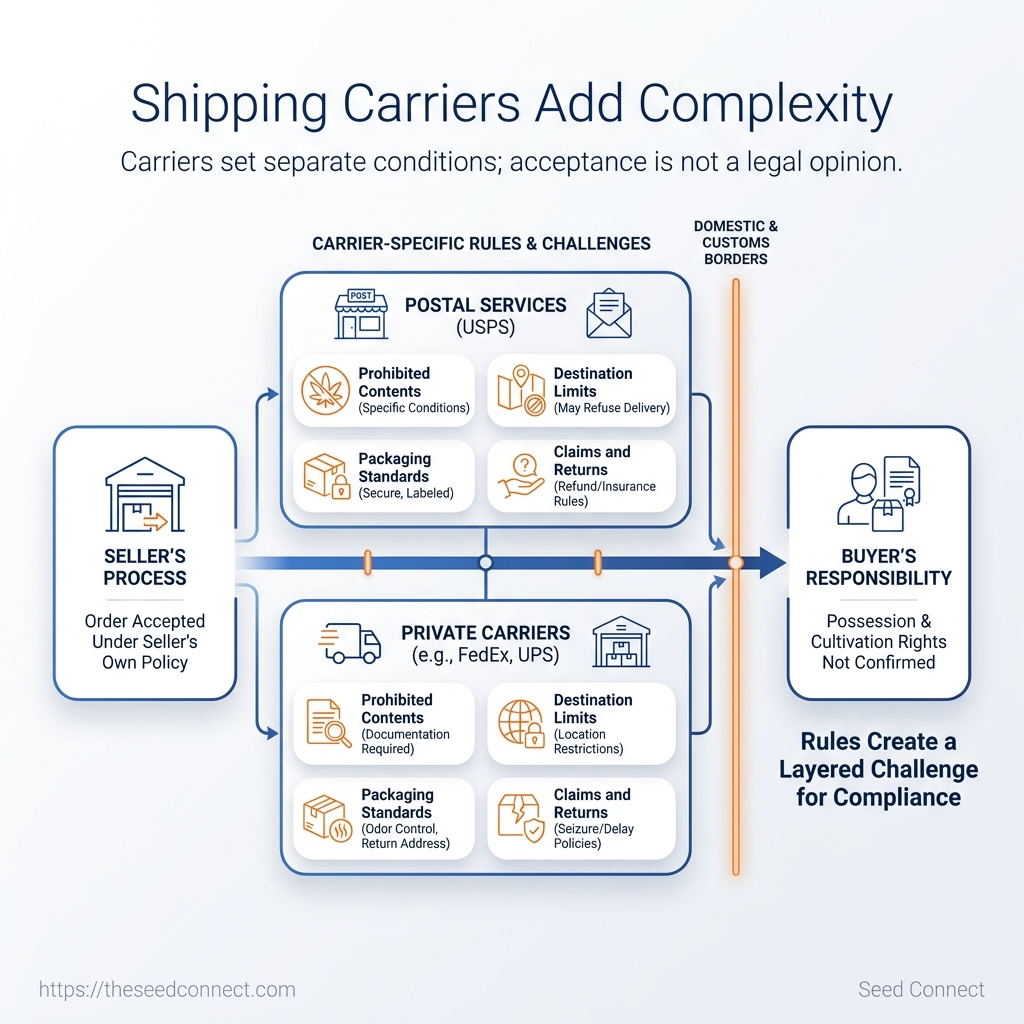
Can a seller’s shipping policy prove your order is legal? No. It shows only that the seller accepts the order under its own process; it does not confirm your rights to possess or cultivate the product in the destination state.
Carriers set separate conditions
USPS and private carriers each have their own rules for cannabis shipments.
Before you order, check the current rules for:
- Prohibited contents: Determine whether cannabis, hemp-derived goods, or seeds require specific conditions or documentation.
- Packaging rules: Review what is needed for secure packaging, odor control, labeling, and return addresses.
- Destination limits: A carrier may refuse delivery to locations where the product is lawful elsewhere.
- Claims and returns: Check if a lost, delayed, or seized package can get a refund or insurance claim.
One seller may use USPS while another uses a private carrier, but neither choice guarantees your package is allowed.
Just because a carrier accepts your package doesn’t mean it’s legal.
For example, a grower in one state may order seeds from a seller in another.
The checkout system can accept the address even if the destination restricts possession, requires specific labeling, or prohibits cultivation.
An order can pass the seller’s screening process and still create a problem for the buyer.
Domestic borders are not customs borders
Crossing a state line usually involves different issues than entering another country.
Domestic delivery can depend on federal classification, state law, and carrier terms.
International shipping adds customs declarations, import permits, agricultural controls, inspections, and the destination country’s cannabis rules.
A package legal to send within the United States may still be refused or seized abroad. International cannabis seed shipping and compliance guidance explains why customs requirements require separate research.
Save the carrier terms, destination rules, and product description you reviewed.
Ask which carrier will handle the package and whether restrictions apply.
Do not treat checkout approval or a tracking number as proof of legality, change labels, misstate contents, or assume domestic rules apply internationally.
Verify the seller, carrier, state, federal, and customs requirements before ordering.
A Responsible Pre-Order Checklist for Cannabis Seed Buyers
Can we order cannabis seeds without ensuring delivery is allowed? Not if we’re being responsible.
First, separate shipping permission from your right to own, sprout, or grow seeds in your state.
Picture this: you find the perfect strain, only to realize that our state has limits on possession or cultivation.
Before you pay, take five minutes to check these five points:
- Federal status: Review the current federal framework and any scheduled changes, including Section 781’s November 12, 2026 effective date. Current Section 781 guidance explains why older assumptions may not remain reliable.
- Destination rules: Check your state cannabis regulator, agriculture department, and relevant statutes. Confirm rules for possession, delivery, labeling, and germination—not only adult-use status.
- Local limits: Verify county or city restrictions, plant-count limits, and home-cultivation rules. State permission may not settle every local question.
- Carrier terms: Read the carrier’s current cannabis and agricultural-material policies. A tracking number confirms movement, not legal permission.
- Supplier records: Save the product page, shipping policy, order details, and the date you checked each rule. Regulations can change before delivery.
Ask the supplier:
- Does the company ship to your exact state and ZIP code?
- What carrier handles the package?
- Are restrictions or return limits disclosed before checkout?
- What does the germination guarantee cover?
- Can support explain genetics, storage, and cultivation basics without presenting legal advice?
That last answer is important.
A responsible supplier should give clear product information and support without claiming that checkout approval means cultivation is legal.
For buyers comparing genetics and support, Those benefits help evaluate seed quality; they do not replace state, federal, local, or carrier verification.
Check every layer before ordering, then keep your notes.
A careful pre-order review protects both your purchase and your expectations.
Will cannabis seeds face stricter regulations in 2026?
Cannabis seeds may face stricter regulations starting December 11, 2026, when Section 781 takes effect. This new framework may remove high-THC cannabis seeds from the hemp classification, affecting their legality.
Can cannabis seeds be shipped in the US?
Cannabis seeds can potentially be shipped across state lines if they are classified as hemp, containing less than 0.3% THC. However, state laws, carrier policies, and the specific classification of the seeds must be verified for legality.
What states allow cannabis delivery?
Cannabis delivery regulations vary by state, with some states allowing delivery and others implementing strict rules. Always check local laws on cannabis delivery as they can differ widely.
Is it legal to send cannabis seeds in the mail?
Sending cannabis seeds in the mail may be legal if the seeds meet the federal hemp definition, containing less than 0.3% THC. However, legality also depends on state laws and carrier regulations.
Will cannabis seeds be banned in 2026?
Cannabis seeds are not outright banned in 2026, but changes with Section 781 may disqualify high-THC seeds from hemp status. This could impose new regulations that affect how seeds can be shipped and possessed.
Treat the Destination as the Deciding Test
The classification of a seed is only the first step.
A low-THC level does not automatically make an interstate shipment legal.
The complete answer depends on federal rules, the laws where the package starts and where it arrives, and the carrier’s rules.
That’s why a shipment that seems legal under federal definitions can still be risky if the destination state bans possession, import, or delivery.
Treat cannabis seed shipping regulations like a chain: one weak link can change the result, regardless of how compliant the other links appear.
Before you order, check the current destination and local rules, review the carrier’s policy, and save the sources you checked.
Do that today, then decide if the purchase matches your findings—not just an assumption about THC content.