

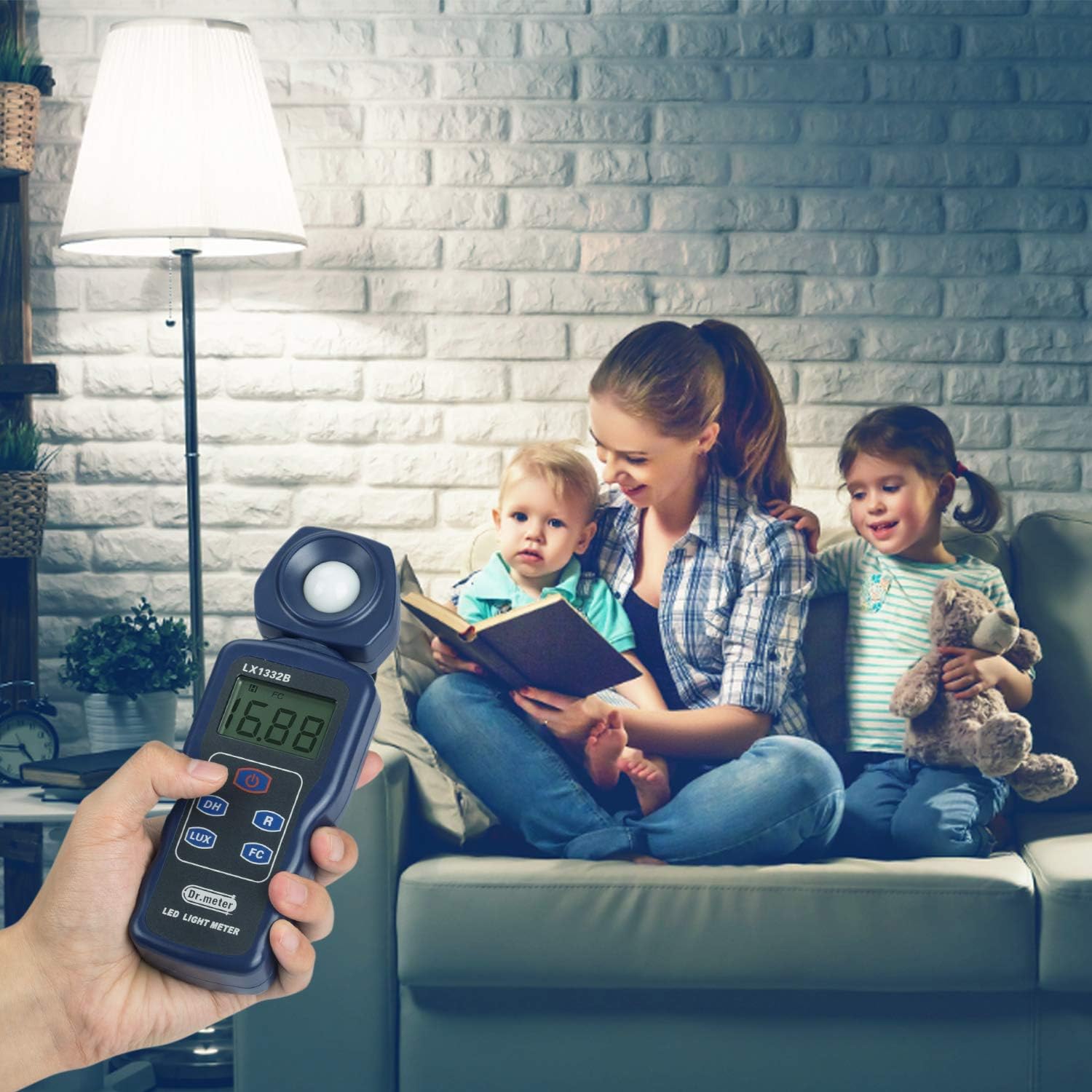
Ever wonder why your cannabis plants stretch like noodles or your buds turn out airy no matter how much light you throw at them?
You’re not alone—and the problem isn’t your grow light. It’s how you’re measuring it (or not measuring it).
A light meter is a grower’s secret weapon.
While your eyes might think things “look bright enough,” your plants need precise, measurable light intensity—especially the PAR and PPFD.
Guessing won’t cut it if you’re chasing thick colas and resin-rich buds.
If you’re growing cannabis indoors, a light meter isn’t a luxury—it’s a must.
Light intensity doesn’t just influence plant growth—it defines it.
Let’s get your plants growing smarter—not harder.
Table of Contents
Light Intensity Makes or Breaks Your Yield
Cannabis is far pickier about light than your average houseplant.
In fact, research shows cannabis yield increases directly with light intensity—up to 1,500–1,800 μmol/m²/s.
That’s twice the light most home growers are actually delivering.
And here’s the catch:
- Too little light = stretchy stems, slow growth, low yields
- Too much light = light burn, reduced photosynthesis, and stressed plants
This is where PPFD (Photosynthetic Photon Flux Density) comes in.
It tells you exactly how much usable light hits your canopy every second.
The result? No more guesswork. No more wasted power. Just data-backed decisions for dialed-in growth.
What Do Cannabis Plants Actually Need?
To grow healthy, high-yielding plants, you need to hit the sweet spot:
| Stage | Ideal PPFD (μmol/m²/s) |
| Seedlings | 200–400 |
| Vegetative | 400–600 |
| Flowering | 600–900 (can push 1,200–1,800 with CO₂) |
If you’re just eyeballing it, chances are you’re off—and your plants are paying for it.
Why PAR and DLI Matter
- PAR (Photosynthetically Active Radiation) covers the 400–700nm range your plants use to photosynthesize.
- DLI (Daily Light Integral) measures how much PAR your plant gets per day—critical for planning light duration and intensity.
As one cannabis researcher puts it:
“We don’t just care about momentary photons—we care about the total light dose your plants receive in 24 hours. That’s what drives growth and yield.”
What a Light Meter Fixes Instantly
A quality light meter helps you:
- Pinpoint underlit zones in your grow space
- Set your light height with precision
- Balance PPFD for better resin, flavor, and yields
- Avoid wasting electricity on overkill light setups
Bottom line? A light meter gives you control—and that’s the difference between a good harvest and a great one.
How to Use a Light Meter for Cannabis Plants
If you’re growing cannabis indoors and want bigger buds, fewer issues, and better harvests—stop guessing and start measuring.
A light meter helps you dial in your grow like a pro, giving your plants exactly what they need at every stage.
Lux vs PAR vs PPFD: What Do These Readings Mean?
Not all light meters are created equal. Here’s a quick breakdown:
| Type | Measures | Best For | Limitation |
| Lux Meter | Brightness as seen by human eyes | Budget-friendly guidance | Doesn’t measure blue/red light well—what plants actually use |
| PAR Meter | PAR (Photosynthetically Active Radiation, 400–700nm) | Measures photosynthetic light | Doesn’t show photon quantity |
| PPFD Meter | PAR + Photon Count (μmol/m²/s) | 💥Best for cannabis grows | More expensive, but gives exact usable light info |
TL;DR:
- Lux meters are fine for light positioning on a budget.
- PAR/PPFD meters give real growing data that improves yields.
Where to Place Your Light Meter (Don’t Just Point and Click)
Light intensity can vary wildly in your tent—get multiple readings!
- Place it at canopy level: This is where your plants “see” the light.
- Move it around: Corners and edges often get less light.
- Take 4–6 readings across the grow space.
- Re-check weekly as plants grow and canopy rises.
Pro Tip: Watch for hot zones (PPFD > 1200) near the light center—they can cause bleaching or stress if not managed.
Ideal PPFD for Cannabis Growth Stages
Use this chart to set the right PPFD levels for every stage:
| Stage | Ideal PPFD (μmol/m²/s) | What Happens |
| Seedlings | 100–300 | Prevents stretch & stress |
| Veg (Early) | 200–400 | Healthy leaf expansion |
| Veg (Late) | 400–600 | Fast structure growth |
| Flowering | 600–900 | Big buds, dense resin |
| Advanced Flower | 900–1200+ (w/ CO₂) | Max yield—but needs extra CO₂ |
Above 1000 μmol/m²/s, you’ll hit the “carb wall”—plants can’t use the extra light without CO₂ help.
What to Do With Your Readings
- PPFD too low? Lower the lights (carefully).
- PPFD too high? Raise the lights or dim them (if adjustable).
- Uneven light? Rotate your plants and check reflector angle.
Bonus Tip: A $30 lux meter will help, but a quality PPFD light meter will change your grow game completely.
Top 3 Light Meters for Cannabis Growers in 2025
Light intensity can make or break your cannabis yields.
The right light meter helps you optimize your grow lights for every phase—veg to flower.
Below are the top picks for every kind of grower.
1. Dr.meter Digital Light Meter (LX1330B)
Best For: Budget-conscious indoor growers
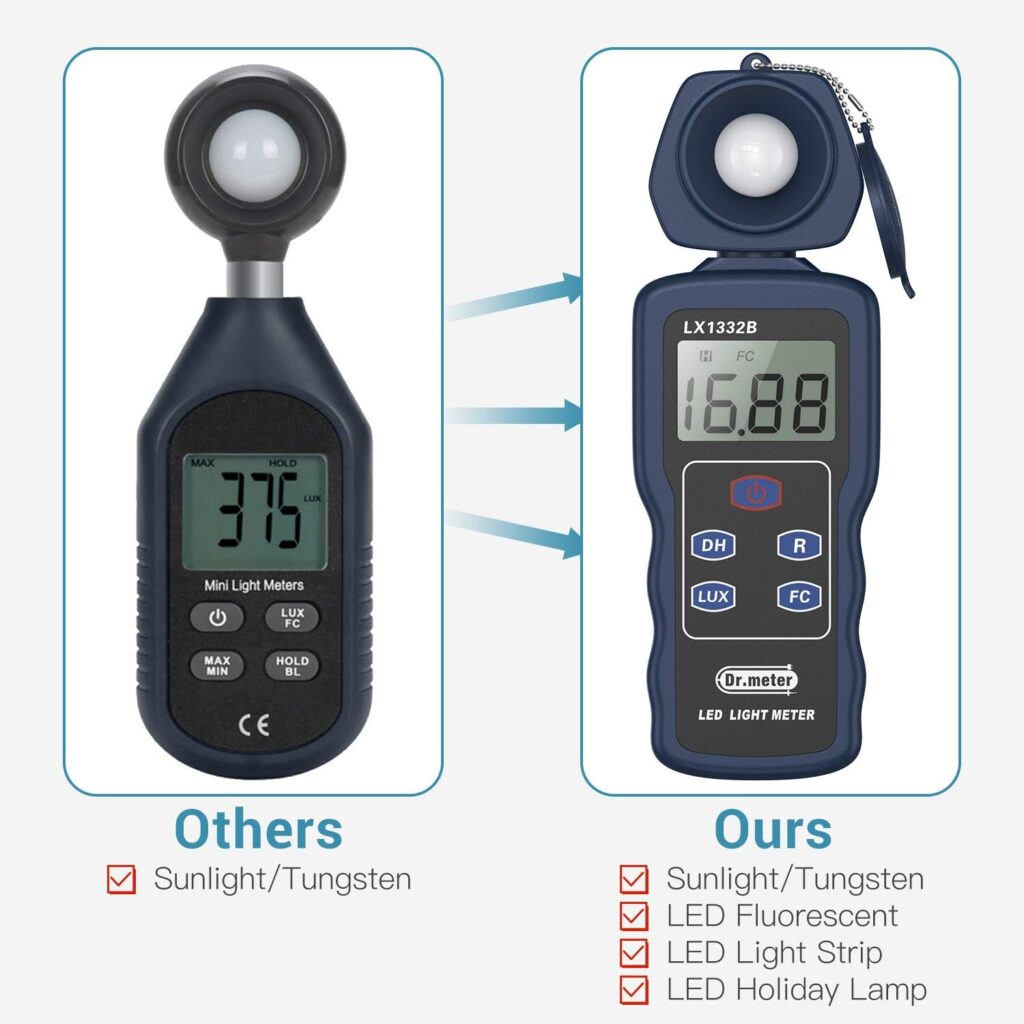
If you’re looking to step up your grow without spending hundreds, this is the tool for you.
Why It’s Great:
- Measures up to 200,000 lux — perfect for LED, HPS, and natural light setups.
- Fast sampling rate (2–3x/sec) lets you adjust lights on the fly.
- Includes lux/foot-candle toggle, data hold, and max/min memory.
- Comes with carrying case + 9V battery — plug and grow.
Grower Tip: While it doesn’t show PAR/PPFD, it’s still super helpful for checking uniformity and light drop-off across your canopy.
2. Extech LT300 Light Meter
Best For: Advanced growers & controlled environments
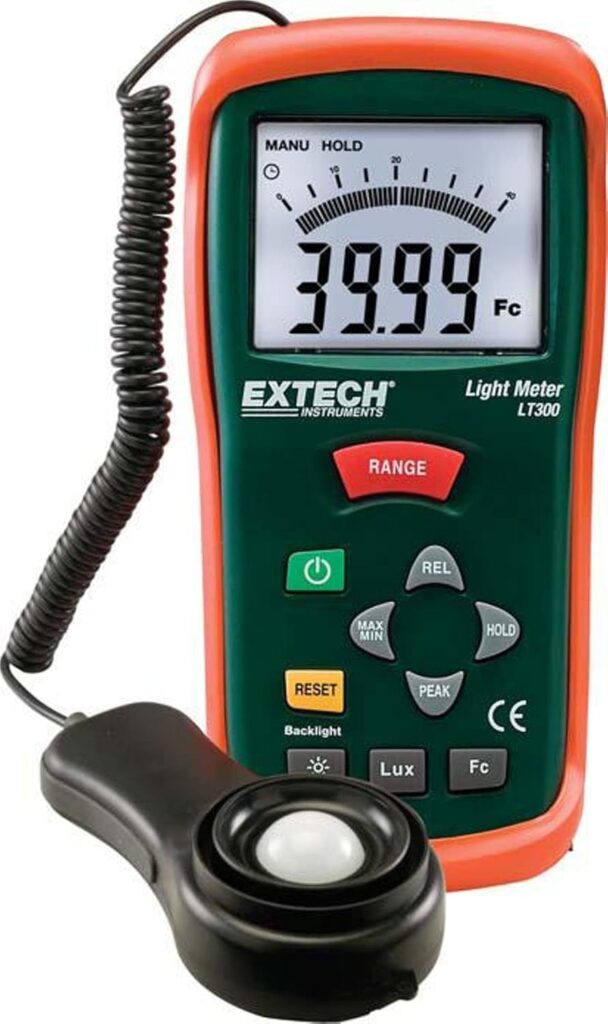
If you’re managing a large grow tent or commercial space, the Extech LT300 is built to give you lab-grade accuracy.
Why It’s Great:
- Remote sensor with 24-inch cable lets you measure PPFD at canopy level—without blocking light.
- High precision diode with spectral correction gives true plant-relevant readings.
- Includes peak/relative/reset modes to track light changes throughout the day.
- Backlit screen — great for low-light grow rooms.
Grower Tip: This is your go-to for tracking PPFD with LEDs or HPS, dialing in spacing, and even monitoring DLI (Daily Light Integral).
3. Luster Leaf Digital Light Meter (Part of 4-Way Analyzer)
Best For: Quick checks + multi-sensor setups
Need to check multiple grow factors at once? The Luster Leaf makes that easy.
Why It’s Great:
- Combines light, pH, temp, and soil moisture in one device.
- Ideal for small indoor grows or hobby setups.
- No calibration needed. Plug, probe, and measure.
Grower Tip: Use this tool to do light placement checks across tents or windowsills—especially if your plants vary by light needs.
Final Takeaway: Which One Is Right for You?
| Grower Type | Best Meter |
| On a budget / just starting | Dr.meter Digital Light Meter |
| Running a pro setup or want accuracy | Extech LT300 |
| Doing spot checks or using a multi-tool | Luster Leaf Digital Meter |
All three are great tools—but choose based on how precise you need to be and how much you want to spend.
Choosing the Right Light Meter for Your Grow: Key Notes for Cannabis Growers
Whether you’re running a stealth closet grow or managing a full-blown tent setup, here’s what truly matters when selecting a light meter:
What Light Meters Actually Measure
- Lux/Fc = Measures brightness as humans see it → Good for basic light positioning, not plant-specific.
- PAR (Photosynthetically Active Radiation) = Measures light plants can use (400–700nm).
- PPFD = Best metric for growers! Tells you how many usable light photons hit your canopy per second → Directly affects yield.
Pro Tip: PPFD = photosynthesis fuel. Dial this in, and you’ll grow better buds.
Types of Meters & When to Use Them
| Meter Type | Good For | Downsides |
| Lux/Fc Meter | Budget grows, light spacing | Misses red/blue spectrum crucial for plants |
| PAR Meter | Pro grows, LED/HPS accuracy | Expensive (~$200–$2,000) |
| Smartphone App | Free or low-budget option | Poor accuracy without hardware calibration |
If budget’s tight: use a lux meter. For top-tier control: get a proper PAR/PPFD meter.
Key Features That Matter
- Backlit display – Essential in dark tents
- Accuracy – Look for ±3–5% deviation
- Measurement range – Needs to handle 75,000+ lux for flowering LEDs
- Data logging – Helps track DLI & make long-term light adjustments
- Sensor quality – Go for diode-based meters with spectral correction
Limitations & Calibration Tips
- Phone apps? Only accurate to within 50–90% (even Photone).
- Cosine correction is missing in phones — critical for angled light accuracy.
- Calibration matters – Always calibrate after changing lights or before new grow cycles.
- Light fade over time – HID and even some LEDs degrade. Recheck often.
When to Measure + Ideal PPFD Ranges
| Stage | Ideal PPFD (μmol/m²/s) |
| Seedling | 100–300 |
| Early Veg | 200–400 |
| Late Veg | 400–600 |
| Flowering | 600–900 (can go 1000+) |
Too low? You’ll get leggy plants. Too high? Expect bleached leaves & stunted growth. Measure often.
Best Light Meter Options for 2025 (Summary)
| Product | Best For | Price Range |
| Dr.meter LX1330B | Budget indoor grows | 💲 |
| Extech LT300 | Pro setups, high accuracy | 💰💰 |
| Luster Leaf 4-in-1 Meter | Spot checks + multi-metrics | 💲 |
Final Takeaway
Use a PAR/PPFD meter if yield and potency are your goal.
If you’re experimenting or just getting started, a lux meter still offers great value—as long as you know its limits.
A good light meter takes the guesswork out of lighting. Your buds will thank you.