


Imagine you’ve just opened your grow tent, and the first thing you see is a vague sense of confusion hanging in the air: uncertainty. This gap isn’t harmless; it breeds assumptions, delays timelines, and transforms minor risks into costly mistakes. Noticing uncertainty early can change results more than spending another hour trying to fix things.
When we view uncertainty as a clear problem, we can address it rather than just accepting it. Start by mapping what matters, naming the decision points, and deciding which unknowns demand immediate data versus those that can be bounded later. Clear definitions turn guesswork into experiments, reduce wasted effort, and restore control to teams or solo projects alike.
What Are Feminized Cannabis Seeds?
Feminized cannabis seeds are made to produce only female plants.
What Are Feminized Cannabis Seeds?
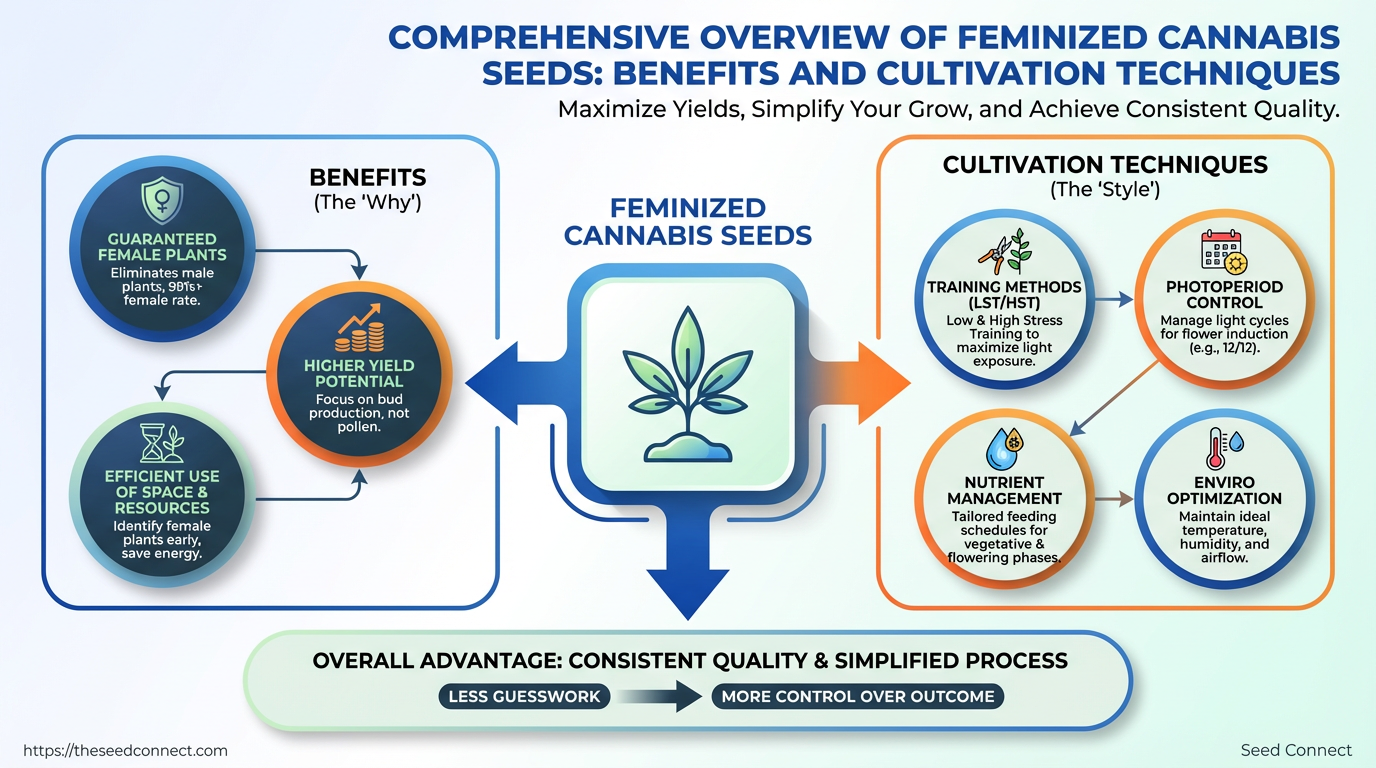
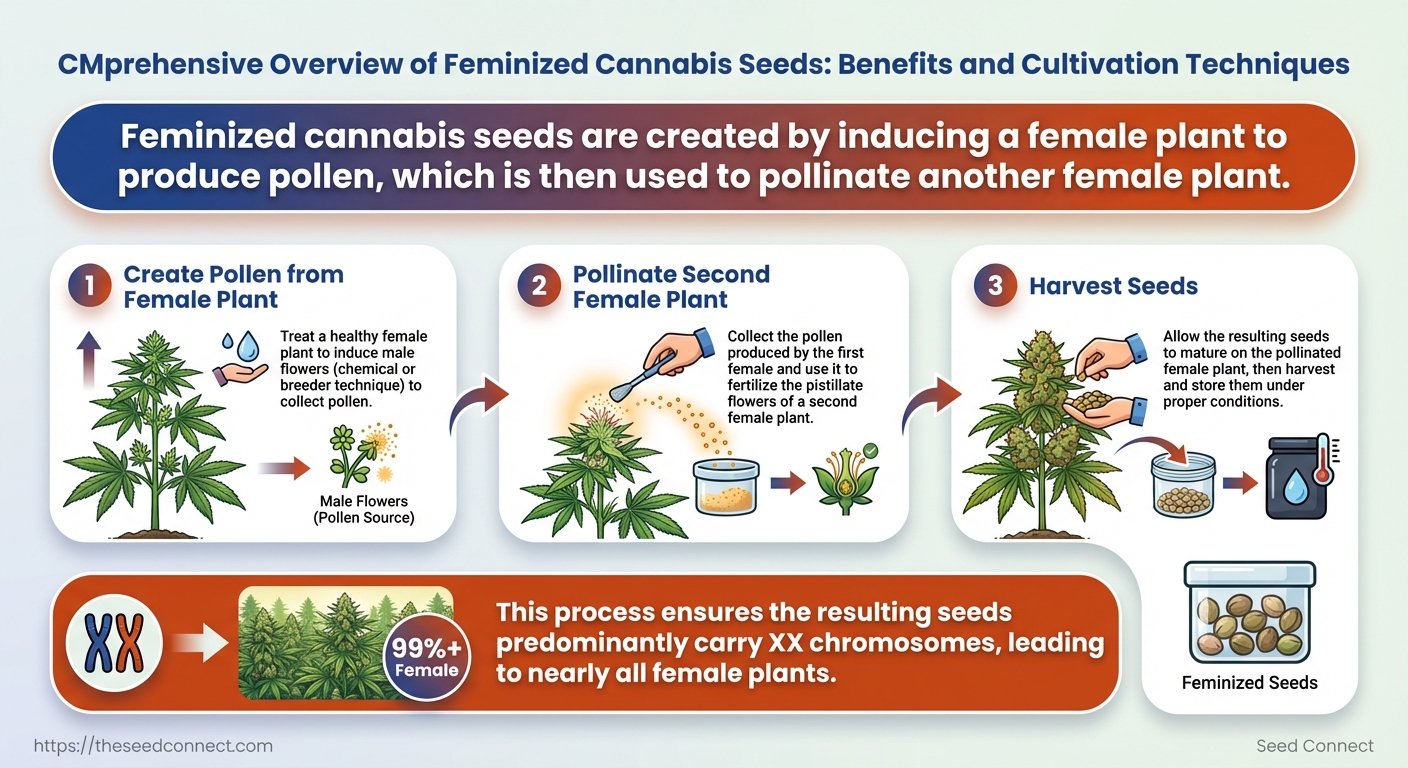
Feminized cannabis seeds are made to produce only female plants. You won’t have to worry about male plants, and you’ll see more flowers for your efforts. They are made by making a female plant produce pollen, then using that pollen to pollinate another female plant. These seeds have XX chromosomes and usually show a high rate of producing females.
Feminized seeds are seeds bred to produce female (XX) plants with a high degree of reliability.
Genetic basis: Cannabis sex is chromosomal—females are typically XX and males XY. Feminization techniques exploit this by ensuring pollen carries only X chromosomes, producing primarily XX offspring.
- Rodelization (stress-induced): Letting a female hermaphrodite self-pollinate under stress; less controlled and riskier.
- Ruderalis backcrossing and selective breeding: Breeders stabilize traits while ensuring feminization without chemical agents.
How feminized seeds differ from regular seeds: Regular seeds result from male and female plants cross-pollinating, leading to a nearly equal chance of producing males and females. Feminized seeds shift that balance toward nearly all females, eliminating the need to sex plants early in flowering or to remove males.
Common advantages of feminized seeds:
- Predictability: Growers avoid male plants that waste space and can seed the crop.
- Resource efficiency: More canopy dedicated to flower production.
- Simplified workflow: Less time spent sexing and culling plants.
- Create pollen: Treat a healthy female to induce male flowers (chemical or breeder technique).
- Pollinate a second female: Collect pollen and fertilize pistillate flowers.
- Harvest seeds: Allow seeds to mature and then store under proper conditions.
> “Feminized seeds typically approach near-100% female plants when produced with reliable breeder protocols” — breeder catalogs and grower guides concur (see detailed methods in the breeder guides linked below).
Sources include breeder and cultivation overviews such as the detailed explainer on feminized seeds from Trilogene Seeds (https://trilogeneseeds.com/blogs/blog/feminized-cannabis-seeds-and-what-to-know) and technical method summaries from Gamut Packaging (https://gamutpackaging.com/blogs/news/what-are-feminized-cannabis-seeds-everything-you-need-to-know?srsltid=AfmBOorJZTfTI6bHskBMBEBaVWnlG9CK39WLrhoNS5Iafisr79RIyCfa) and a comprehensive how-to from Marijuana Packaging (https://marijuanapackaging.com/blogs/resources/comprehensive-guide-to-creating-and-growing-feminized-cannabis-seeds?srsltid=AfmBOooNLKs2htp-zzXbMvksypZO3Lg7unt6N1E945DSJDgAVODY2pet).
Side-by-side comparison of seed types (feminized, regular, auto-flowering) to help readers choose
Table: What Are Feminized Cannabis Seeds? — Feature , Feminized Seeds, Regular Seeds & more
| Feature | Feminized Seeds | Regular Seeds | Auto-flowering Seeds |
|---|---|---|---|
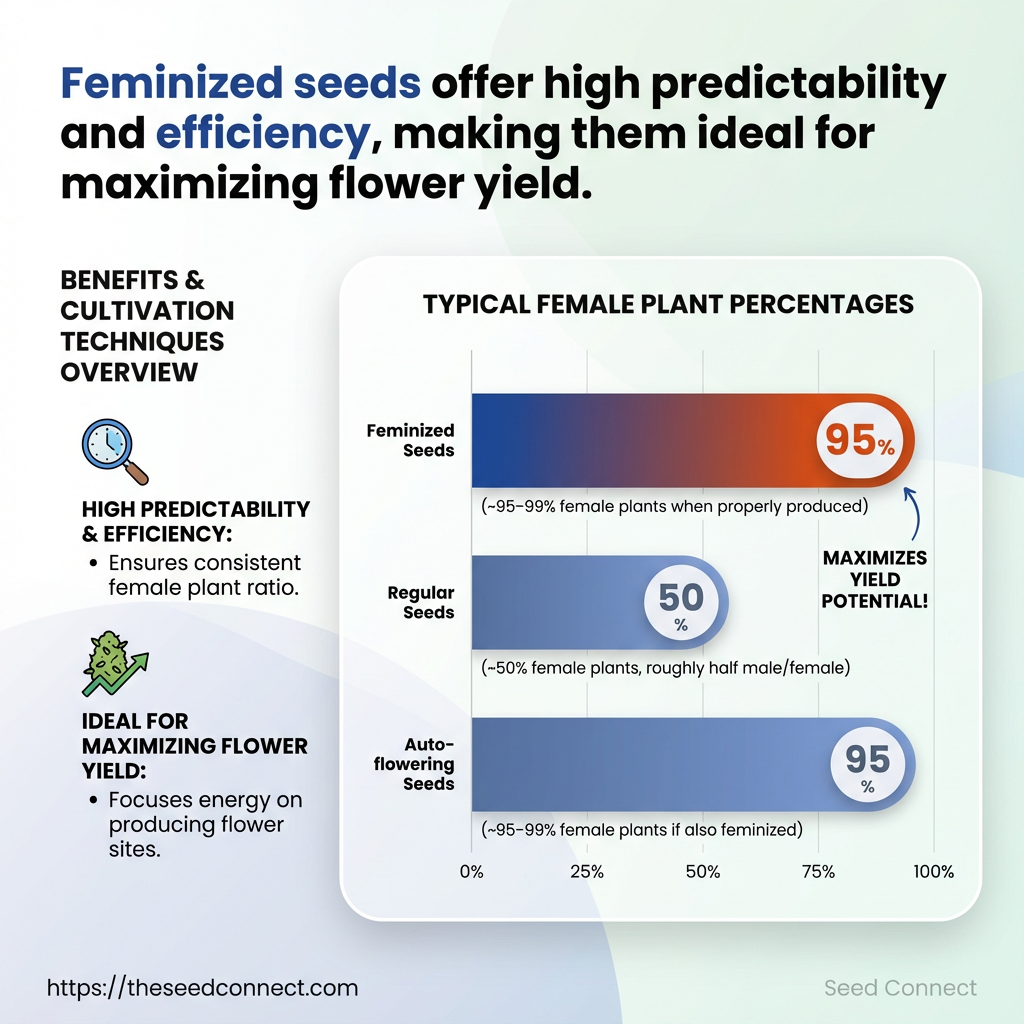
| Typical female percentage | ~95–99% when properly produced | ~50% (roughly half male/female) | ~95–99% (if also feminized) |
| Predictability of sex | High | Low | High |
| Best use case | Maximizing flower yield in limited space | Breeding and keeping genetic diversity | Fast cycles, multiple harvests per season |
| Genetic stability | High when from reputable breeders | High for maintaining wild-type genetics | Variable, depends on breeding methods |
| Beginner-friendliness | Very friendly | Less friendly (requires sexing) | Very friendly (simple cycles) |
Understanding these principles lets teams select genetics and workflows that match scale, goals, and risk tolerance. When breeders follow controlled methods, feminized seeds remove one major variable from the grow, freeing attention for nutrient management and environmental control.
Benefits of Choosing Feminized Seeds
Feminized seeds ensure that nearly every plant will be female. This aligns growing…
Benefits of Choosing Feminized Seeds
Feminized seeds ensure that nearly every plant will be female. This aligns growing efforts with harvest goals and reduces guesswork and labor needed for identifying plant sexes. Feminized seeds change how efficient and predictable growers operate. They lose fewer seedlings to males, have more plants for bud production, and can schedule harvests more easily.
Why growers prefer feminized seeds
- Higher female-to-male ratio: Feminized seeds are bred to produce female plants almost exclusively, so resources go straight toward producing flowers rather than culling males.
- Reduced labor and monitoring: There’s less need for early and repeated sex checks, which lowers labor hours and the risk of accidental pollination.
- Space and resource efficiency: Every square foot and every light watt goes to productive plants, improving per-square-foot yields and input ROI.
- Simplified harvest planning: Predictable sex ratios let teams synchronize veg/flower cycles and harvests, useful for seasonal grows or multi-room operations.
> “Research from Marijuana Packaging shows that feminized seeds typically have a 99% success rate in producing female plants, compared to regular seeds.” — comprehensive guide to creating and growing feminized cannabis seeds (https://marijuanapackaging.com/blogs/resources/comprehensive-guide-to-creating-and-growing-feminized-cannabis-seeds?srsltid=AfmBOooNLKs2htp-zzXbMvksypZO3Lg7unt6N1E945DSJDgAVODY2pet)
Practical implications for different grow scales
Small-scale / home growers
- Less risk: One accidental male can ruin a crop; feminized seeds reduce that risk and make successful single-room grows far more attainable.
- Lower cost of failure: Fewer wasted pots, nutrient cycles, and light hours.
Commercial / multi-room operations
- Forecastable yields. Plan inventory and retail timing with greater confidence.
- Labor optimization. Allocate staff to value-add tasks like canopy management instead of sexing.
- Consistent product runs. Maintain genetic and phenotypic uniformity across batches.
Considerations and caveats
- Genetic stability matters: Feminized seeds vary by breeder; choose reputable genetics for predictable traits.
- Not immune to hermaphroditism: Stress can induce hermaphrodites; proper environmental control remains essential.
- Breeding limitations: Feminized plants complicate seed breeding unless using specialized techniques.
Choosing feminized seeds streamlines operations and focuses inputs on flower production rather than uncertainty. For most growers operating with finite space, time, or labor, feminized genetics are the practical choice that reduces overhead and improves consistency.
How to Select High-Quality Feminized Seeds
To find high-quality feminized seeds, begin with reliable breeders and…
How to Select High-Quality Feminized Seeds
To find high-quality feminized seeds, begin with reliable breeders and ensure they offer clear policies. Start by choosing breeders with documented and stable genetics, along with clear terms for germination and returns. Choosing wisely saves time and money in the grow room and makes it easier to predict yields.
Breeder reputation and reviews matter because they reveal consistency across batches. Look for breeders cited in grower communities and with verifiable test results. The trend demonstrates that breeders who publish phenotype galleries and third-party lab results produce far fewer surprises.
Germination guarantees are not just marketing — they shift risk back to the supplier and indicate confidence in seed handling and storage.
Germination guarantee: A written promise about viability rates and explicit return/replacement steps.
Genetic stability: Documentation showing multiple generations with consistent phenotype and cannabinoid profiles.
Phenotype descriptions: Clear notes on expected height, flowering time, terpene profile, and typical yield range.
Practical checks to perform before purchase:
- Verify breeder reputation — Read recent grow reports and cross-check breeder claims against community forums. Confirm germination policy — Ensure the guarantee includes shipping damage and a clear claims process. Assess genetic documentation — Require phenotype galleries, lineage charts, and expected cannabinoid ranges.
- Weigh price vs quality — Very low prices can indicate low germination or unstable genetics; consider per-seed value, not just sticker price. Confirm shipping & compliance — Ensure the breeder ships to your jurisdiction and documents discreet, compliant packaging.
- Inspect online breeder portfolios and look for multiple, dated phenotype photos.
- Read the germination and returns policy line-by-line; note time windows and evidence required.
- Cross-reference lab reports or pesticide tests when provided; request them if absent.
Feature availability matrix showing which breeder features to expect (germination guarantee, shipping countries, speed of delivery, testing certificates)
Table: How to Select High-Quality Feminized Seeds — Feature, Must-have, Nice-to-have & more
Industry guides on feminized seed production and breeder transparency provide useful deeper reading, for example the overview of feminized seeds and production techniques available from trusted grower resources like the Trilogene Seeds guide to feminized cannabis seeds and the practical walkthrough on creating feminized seeds from Marijuana Packaging’s comprehensive guide.
Understanding these selection principles makes purchasing decisions faster and reduces the probability of batch failures in the grow room. When breeders are transparent and policies are clear, the cultivation process becomes more predictable and efficient.
Key Takeaway: Getting germination right sets you up for success throughout the entire growing process. Optimizing moisture, temperature, and handling in the first 7 to 14 days helps avoid common failures and promotes healthy root and shoot growth.
Germination and Early-Stage Cultivation Best Practices
Getting germination right sets you up for success throughout the entire growing process. Optimizing moisture, temperature, and handling in the first 7 to 14 days helps avoid common failures and promotes healthy root and shoot growth. Use a gentle, reproducible protocol that prioritises stable warmth, high but non-saturating humidity, sterile contact surfaces, and minimal disturbance when the taproot appears. For feminized seeds, reliability improves markedly with quality genetics and adherence to these controls — reputable breeders document specific humidity and substrate preferences for their lines (see feminized seed guides for breeders’ recommendations) Feminized Cannabis Seeds: A Comprehensive Grower’s Guide.
Tools & materials
- High-quality seeds: purchase strains with a germination guarantee when possible.
- Sterile paper towels or starter plugs: rapid germination without contaminants.
- Thermostat-controlled heat mat: maintain
20–25°C(68–77°F). - pH-balanced water (
5.8–6.5) for pre-soak and first feed. - Dome-capable propagation tray: preserves humidity while allowing airflow.
Step-by-Step Germination Protocol
- Place seeds between two moist, sterile paper towels on a tray.
- Cover with a second tray or dome and keep in darkness at
20–25°C.
- Check twice daily; keep towels damp but not dripping to avoid anoxic conditions.
- Once taproot reaches 2–5 mm, transfer seed to starter plug or small pot with the taproot pointing downward.
- Plant to a depth of 3–6 mm (about two to three times seed width) and cover lightly.
- Maintain 70–80% relative humidity under a dome and introduce 18–24 µmol/m²/s of light for the first 24–48 hours.
- After cotyledons unfurl, gradually reduce humidity and increase light intensity over 3–5 days.
How to transfer seedlings safely
- Handle minimally: touch only the seed shell or plug, never the stem.
- Support root angle: plant with taproot down; avoid jamming it into the medium.
- Avoid shock: keep temperature and humidity consistent before and after transfer.
Immediate next steps after sprout
- Light ramp: move to 100–200 µmol/m²/s over 48–72 hours.
- Feeding: hold off on nutrients until true leaves form; then start at 1/4 strength.
- Airflow: introduce gentle fans to strengthen stems once cotyledons open.
Troubleshooting table
Troubleshooting table listing common germination problems and precise fixes
Table: Germination and Early-Stage Cultivation Best Practices — Problem, Likely cause, Immediate fix & more
| Problem | Likely cause | Immediate fix | Prevention |
|---|---|---|---|
| No sprout after 7 days | Seed non-viable or too cold | Gently open towel; check for taproot; if dry, rehydrate and incubate 48–72h | Use fresh seeds, maintain 20–25°C, buy seeds with germination guarantee |
| Mold on paper towel | Excess moisture, poor airflow | Discard contaminated towel, sterilise tray, start new towel with lower moisture | Use sterile towels, avoid pooling water, change towels every 48h |
| Taproot emerges but seedling dies | Transplant shock or root damage | Inspect for mechanical damage; replant gently deeper and stabilise humidity | Transfer when taproot 2–5 mm, avoid touching root, stable microclimate |
| Yellowing cotyledons | Overwatering or nutrient burn | Reduce water, flush with pH-balanced water, withhold nutrients | Use well-draining medium, wait for true leaves before feeding |
Understanding and applying these practices reduces wasted seeds and gives plants a start; consistent small adjustments in the first week save far more time and resources than corrective measures later.
Key Takeaway: Feminized plants simplify canopy planning, which means vegetative training and early feeding decisions have outsized impact on final yield. Start veg with a clear architecture goal—wide, even canopy for a SCROG or multiple sturdy colas for a…
Vegetative and Flowering Stage Techniques for Feminized Plants
Feminized plants simplify canopy planning, which means vegetative training and early feeding decisions have outsized impact on final yield. Start veg with a clear architecture goal—wide, even canopy for a SCROG or multiple sturdy colas for a feed-forward LST approach—and shift feeding and light strategies when pistils appear to trigger flowering. Practical timing and stress control during veg reduce hermaphrodite risk and maximize bud sites.
Vegetative training essentials
- Topping timing: Top after 4–6 nodes when the plant shows recovery; this redirects apical dominance into two main leaders.
- Low-stress training (LST): Tie down new shoots gently over 1–3 weeks to spread the canopy and expose inner nodes.
- SCROG setup tips: Install
screenwhen plants are 3–6 weeks into veg; weave branches horizontally as they grow to fill the mesh evenly. - Feeding adjustments during veg: Increase nitrogen proportionally to encourage foliage; reduce EC slightly compared to flowering levels to avoid salt buildup.
Practical step-by-step for LST and SCROG
- Select a flexible tie and anchor point.
- Begin tying when stems are pliable, bending shoots horizontally.
- For SCROG, place a 40–50% cover screen at canopy height and tighten every 3–5 days.
- Maintain a 2–3 node spacing between crossover points to prevent overcrowding.
Flowering stage care and optimization
Recognize readiness by observing the plant for consistent pistil formation at multiple nodes and reducing the photoperiod to induce bloom. Once flowering begins, shift nutrient ratios and irrigation cadence.
- Nutrient and water schedule changes: Move from high-
Nveg mixes to bloom formulations higher inPandK; target more conservative EC increases and monitor runoff EC. - Hermaphrodite detection and response: Scan weekly for pollen sacs; remove or cull any hermaphrodites immediately to protect seedless yields. Using feminized seeds reduces occurrence, but stress can still trigger hermies (see techniques for feminized seeds for background) Feminized Cannabis Seeds: A Comprehensive Grower’s Guide.
- Harvest timing and drying basics: Track trichome development with a loupe; aim for mostly cloudy with 5–20% amber depending on desired effect. Dry in
18–21°Cat45–55%RH for 7–14 days, then cure in jars for at least two weeks.
> According to a comprehensive grower overview, feminized seeds typically show very high female rates, which helps growers focus efforts on training and quality rather than sexing plants (https://marijuanapackaging.com/blogs/resources/comprehensive-guide-to-creating-and-growing-feminized-cannabis-seeds?srsltid=AfmBOooNLKs2htp-zzXbMvksypZO3Lg7unt6N1E945DSJDgAVODY2pet).
Common flowering nutrient programs and their target EC/pH ranges for soil vs soilless systems
Table: Vegetative and Flowering Stage Techniques for Feminized Plants — System (Soil/hydro/coir), Typical N-P-K focus (early/late), Target EC & more
| System (Soil/hydro/coir) | Typical N-P-K focus (early/late) | Target EC | Target pH |
|---|---|---|---|
| Organic soil | Early: moderate N, Late: increased P/K | 0.6–1.2 (runoff slightly higher) |
6.0–6.8 |
| Coco coir | Early: balanced, Late: higher P/K | 1.2–1.8 |
5.8–6.2 |
| Deep Water Culture (DWC) | Early: lower N, Late: peak P/K | 1.6–2.2 |
5.5–6.0 |
| Soilless mix (perlite/peat) | Early: balanced N, Late: higher P/K | 1.0–1.6 |
5.8–6.3 |
EC and pH control to avoid nutrient lockout. Adjust feeding charts to cultivar vigor and monitor runoff for accurate control.
Understanding these stage-specific techniques lets a grower shape canopy, reduce stress-triggered hermaphroditism, and dial nutrient programs precisely for feminized plants—delivering predictable, high-quality yields. When applied consistently, these methods convert genetic potential into harvestable results.
Key Takeaway: Spotting and resolving issues early prevents lost yields. This section walks through a diagnostic flow for the most common, high-impact problems—hermaphroditism, nutrient deficiency versus lockout, pests and biological controls, and when to escalate…
Common Problems and Advanced Troubleshooting
Spotting and resolving issues early prevents lost yields. This section walks through a diagnostic flow for the most common, high-impact problems—hermaphroditism, nutrient deficiency versus lockout, pests and biological controls, and when to escalate to lab testing for molds or pesticide residues—using clear detection steps and practical fixes.
Hermaphrodites: early detection and response
Hermaphroditism shows as male pollen sacs or single white pollen sacs in otherwise female nodes; stress is the usual trigger.- Early signs: tiny pollen sacs at node junctions or flowers with mixed pistils and anther-like structures.
- Fix: remove affected branches immediately and adjust environmental stressors—reduce light stress by ensuring
12/12switches are stable and avoid sudden temperature swings. - Prevent: use stable genetics and reliable seed sources; for critical runs, choose feminized seeds with strong lineage and germination guarantees from trusted suppliers.
Nutrient deficiency vs nutrient lockout: diagnostic flow
Start with visible symptoms, then confirm with measurements rather than assumptions.- Observe and photograph the symptom under natural light, noting pattern and progression.
- Test runoff pH and EC. If pH is outside crop-specific range (commonly
5.8–6.3hydro,6.2–6.8soil), lockout is likely.
- If pH/EC normal, match symptom patterns to deficiency maps (e.g., older leaf chlorosis = nitrogen; interveinal chlorosis = magnesium).
- Correct by flushing only when lockout is indicated, then rebalance pH and reintroduce nutrients at 50% strength.
- Tip: sudden multi-element issues often point to pH/EC problems; single-element decline tends to be true deficiency.
Pest identification and biological controls
Accurate ID makes control predictable.- Scouting routine: inspect undersides of leaves, new growth, and media once weekly.
- Beneficials: predatory mites for spider mite outbreaks,
Hypoaspisfor fungus gnats, and beneficial nematodes for root-borne pests. - Cultural controls: remove heavily infested material, maintain airflow, and reduce humidity to discourage thrips and whiteflies.
When to seek lab testing
Send samples when visual diagnosis is ambiguous or consumer safety is at stake.- Mold spores or mycotoxin risk: send flower samples for mycotoxin and mold species identification.
- Pesticide residue uncertainty: submit a composite sample from the affected batch for multi-residue screening.
Mold testing labs and pesticide analysis provide definitive results that justify remediation or product holds.
Understanding these diagnostic flows cuts wasted effort and protects final product quality. When a problem persists after systematic troubleshooting, definitive lab results or switching to trusted genetics can save an entire crop.
Legal, Sourcing, and Ethical Considerations
Make legal and sourcing checks a key part of your cultivation plan, not an afterthought. Local statutes dictate whether seeds may be bought, shipped, or planted, and breeder practices determine the biological and regulatory risk that follows. Proper sourcing minimizes legal exposure, prevents contamination from unsafe chemical inputs, and preserves genetic integrity—so integrate compliance into procurement workflows before you click “purchase.”
Critical sourcing and compliance checklist
- Check local laws: Research state/provincial and national rules for seed purchase, import, and possession. Verify breeder shipping policies: Confirm whether the breeder ships to your jurisdiction and what declarations they use. Assess breeder practices: Avoid breeders using unreported chemical treatments or unlicensed tissue-culture operations.
- Document every step: Save invoices, shipping labels, phytosanitary paperwork, and any communications for audits. Plan quarantine and testing: Allocate time and space for seed/plant inspection and pathogen testing before integrating into a grow. Confirm germination guarantees: Understand terms, replacement windows, and proof required to claim guarantees.
Breeder Verification: Look for transparent provenance details, public lineage records, and contactable references from other growers.
Shipping Policy: A clear statement of international shipping, customs declarations, and return/replacement policy.
Chemical Safety Practices: Documentation showing absence of banned pesticides or unapproved growth regulators.
Germination Guarantee Terms: Conditions and timeframes required to claim seed replacement.
Industry resources that explain feminized seed production and breeder claims can be helpful when evaluating vendors; for example, overviews of feminized seeds explain methods and expected outcomes, which helps cross-check breeder assertions (Feminized Cannabis Seeds: A Comprehensive Grower’s Guide, What Are Feminized Cannabis Seeds? A Comprehensive Guide).
Timeline of steps from purchase to planting, highlighting compliance checks and quarantine/inspection timelines for international shipments
Table: Legal, Sourcing, and Ethical Considerations — Step, Action, Recommended timeframe & more
| Step | Action | Recommended timeframe | Compliance note |
|---|---|---|---|
| Before purchase | Research local seed laws and breeder reputation | 1–7 days | Verify legality of import/possession in your jurisdiction |
| At purchase | Collect invoice, breeder T&C, shipping policy | Immediately | Ensure seller documents value and contents accurately for customs |
| Upon shipment | Track shipment and secure required permits | 0–3 days after purchase | Some countries require import permits or certificates |
| At receipt | Inspect package, photograph condition, retain paperwork | Within 24 hours of delivery | If damaged or misdeclared, notify carrier and breeder immediately |
| Pre-plant quarantine | Quarantine seeds/plants and run visual/pathogen checks | 7–21 days before planting | Hold until tests clear; document lot numbers and test results |
Practical examples include refusing suppliers who cannot produce clear lineage or who claim unrealistically high feminization without documentation—reputable breeders often publish their methods and success metrics (How to Make Feminized Seeds: Comprehensive Growing Guide). Understanding and enforcing these sourcing, legal, and ethical controls reduces operational surprises and protects both cultivators and their customers. This approach keeps compliance simple and decisions defensible while preserving genetic quality and safety.
Conclusion
Having explored feminized cannabis seeds—what they are, why growers love them, how to choose quality seeds, and how to manage germination and flowering—your next step is to turn that knowledge into repeatable practices. Expect higher female rates when sourcing from reputable breeders, validate genetics with a small germination and phenotype trial before scaling, and prioritize environmental control during the vegetative and early flowering windows to protect yield potential. A small-scale Oregon hobbyist who ran a 50-seed germination test and kept a tight humidity schedule doubled her usable plants compared with prior runs; a commercial greenhouse that standardized photoperiod and nutrient checks reduced hermaphroditism incidents across one season.
Take three concrete next steps: verify breeder guarantees and lab data, perform a controlled germination trial (20–50 seeds), and log environmental conditions from day one. If sourcing seed stock or seeking plant-specific guidance, consult vendor guarantees and growing guides such as those at TheSeedConnect and technical references like Trilogene Seeds for feminized-seed fundamentals. Legal constraints and ethical sourcing remain critical—confirm local regulations before purchasing or cultivating.
With those actions in place, the undefined space in your plan turns into a predictable, repeatable grow cycle ready for optimization.