

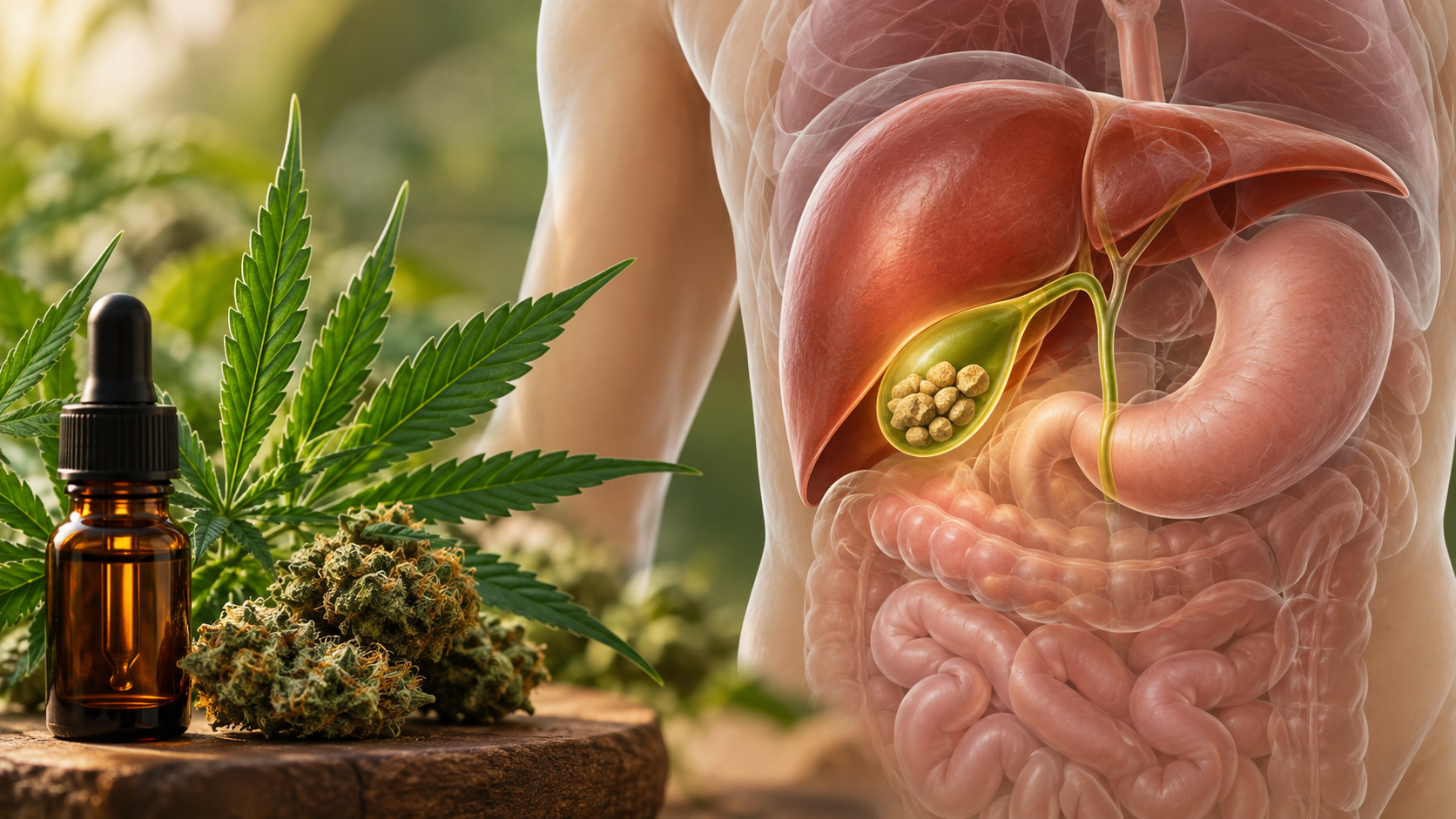
Cannabis and gallstones are sometimes discussed together because cannabinoids such as THC and CBD can affect pain, nausea, appetite, and the nervous system. But that does not mean cannabis can dissolve gallstones, remove them, or treat the underlying gallbladder problem.
Gallstones are hardened deposits that form in the gallbladder. Many cause no symptoms, but when a stone blocks a bile duct it can trigger sudden pain in the upper-right abdomen, often called a gallbladder attack or biliary colic. The National Institute of Diabetes and Digestive and Kidney Diseases notes that persistent blockage can lead to complications involving the gallbladder, liver, bile ducts, or pancreas.
So where does cannabis fit? At most, current evidence suggests it might affect some symptoms, such as pain or nausea, in certain situations. There is not good evidence that it treats gallstones themselves.
Key Takeaway:
- Cannabis is not a proven gallstone treatment. There is no reliable evidence that THC, CBD, indica, or sativa can dissolve gallstones or clear a blocked bile duct.
- Cannabinoids may affect pain or nausea, but the evidence comes mainly from other conditions. That means the findings cannot simply be applied to gallstone attacks.
- Severe or recurring gallstone symptoms need medical evaluation. Persistent pain, fever, jaundice, vomiting, or chills can signal complications that should not be masked with symptom relief alone.
Table of Contents
What Gallstones Actually Do
Gallstones are usually made from cholesterol or bilirubin and form inside the gallbladder, a small organ that stores bile.
Most gallstones are “silent,” meaning they do not block a duct or cause symptoms. Problems begin when a stone obstructs the flow of bile.
A gallbladder attack can cause:
- sudden pain in the upper-right abdomen
- pain lasting for hours
- nausea or vomiting
- discomfort after a heavy meal
- pain that may radiate toward the back or shoulder
According to NIDDK, gallstones that remain stuck in the bile ducts can cause inflammation, infection, pancreatitis, and other serious complications.
That distinction matters because reducing pain is not the same as removing the obstruction.
Can Cannabis Treat Gallstones?
At this point, there is no established clinical evidence that cannabis treats gallstones themselves.
The older version of this article claimed cannabinoids could stimulate bile flow, shrink stones, and potentially help eliminate gallstones. Those claims are too strong and should not be repeated without reliable human clinical evidence.
The established medical approach looks very different.
For people with gallstones that are not causing symptoms, treatment may not be necessary. When gallstones cause repeated attacks or complications, the usual treatment is surgical removal of the gallbladder, known as cholecystectomy.
Cannabis is not listed among treatments that dissolve or remove gallstones.
Could Cannabis Help With Gallstone Pain?
This is where the discussion becomes more nuanced.
Cannabinoids have been studied for several types of pain. Some systematic reviews have found modest pain relief in certain chronic pain conditions, although results vary considerably by condition, study design, dose, and cannabinoid product.
But gallstone pain is different.
A gallbladder attack is generally caused by a mechanical blockage of a bile duct. Even if a substance changes how pain is perceived, the blockage may still be present.
That means any pain relief from cannabis would be symptom management, not treatment of the cause.
This is especially important because pain can be an important warning sign. If pain is severe or lasts several hours, simply dulling the sensation could delay recognition of a complication.
Readers interested in how THC affects the nervous system can also see The Seed Connect’s guide to how THC interacts with the body. It explains CB1 receptors, metabolism, and why THC effects can vary substantially between people.
What About Cannabis for Nausea?
Cannabinoids have clearer evidence for nausea in some very specific medical settings.
For example, prescription cannabinoids such as dronabinol and nabilone have been studied for chemotherapy-induced nausea and vomiting, and systematic reviews have found anti-nausea effects in that context.
But again, this does not mean cannabis has been proven to treat nausea caused by gallstones.
The cause matters.
Gallstone-related nausea may occur during a gallbladder attack because of pain, inflammation, or biliary obstruction. Treating the nausea does not resolve those underlying problems.
The Seed Connect also has a broader article on cannabis, nausea, and vomiting, but readers should keep the same distinction in mind: evidence for one cause of nausea cannot automatically be applied to another.
Does Indica vs. Sativa Matter for Gallstones?
Not in any medically reliable way.
Older cannabis articles often recommend “indica for pain” or “sativa for energy,” but those labels are not a treatment framework for gallbladder disease.
For gallstones, there is no clinical evidence showing that one cannabis strain, indica, sativa, or hybrid, can:
- dissolve stones
- improve bile-duct obstruction
- prevent gallstone attacks
- reduce gallstone size
- replace surgery or other established treatment
The relevant questions would instead involve the actual cannabinoid dose, THC-to-CBD ratio, route of administration, interactions with other medicines, and the person’s medical history.
Even then, that would concern symptom management, not removal of the stones.
Cannabis Can Also Cause Gastrointestinal Symptoms
Another reason to be cautious is that cannabis does not always improve gastrointestinal symptoms.
A systematic review of cannabis-related gastrointestinal effects found reports of nausea, vomiting, abdominal pain, diarrhea, and other GI symptoms among cannabis users.
So cannabis could potentially make it harder to interpret what is happening during an episode of abdominal pain.
Long-term heavy cannabis use can also be associated with cannabinoid hyperemesis syndrome in some people, which causes repeated nausea and vomiting.
For someone already experiencing abdominal symptoms, that overlap can complicate self-diagnosis.
Risks and Side Effects Matter
Cannabinoids are not free of adverse effects.
Systematic reviews of medical cannabinoid studies commonly report effects such as:
- dizziness
- drowsiness
- dry mouth
- nausea
- fatigue
- impaired coordination
- altered perception
Dizziness is among the most frequently reported adverse effects in cannabinoid trials.
Cannabinoids can also interact with some prescription medicines through shared liver-metabolism pathways. A recent systematic review documented clinically relevant interactions involving medicines such as warfarin, tacrolimus, valproate, and others.
That matters for anyone considering cannabis while also taking medication for pain, nausea, cardiovascular disease, blood clotting, or another condition.
What Actually Treats Symptomatic Gallstones?
For confirmed gallstone disease, treatment depends on symptoms and where the stones are located.
According to NIDDK, the usual definitive treatment for symptomatic gallstones is cholecystectomy, or removal of the gallbladder. People can generally live normally without a gallbladder because bile continues to flow from the liver directly into the intestine.
Other options may include:
- ERCP, if a stone is stuck in the common bile duct
- ursodiol or chenodiol, in selected cases involving cholesterol stones
- rarely, shock-wave lithotripsy
These options are used based on the type of stone, symptoms, complications, and whether surgery is suitable.
That is why a correct diagnosis matters before discussing symptom relief.
When Gallstone Symptoms Need Urgent Attention
Do not treat severe abdominal symptoms as something to simply manage at home.
NIDDK advises seeking medical care promptly when a gallbladder attack is accompanied by signs such as:
- abdominal pain lasting several hours
- persistent nausea or vomiting
- fever or chills
- yellow skin or eyes
- dark urine
- pale or light-colored stool
These symptoms can indicate infection, persistent obstruction, liver involvement, or pancreatitis.
In that situation, cannabis should not be used as a substitute for evaluation.
What About Prevention?
Cannabis has not been shown to prevent gallstones.
Evidence-based prevention focuses more on metabolic and dietary factors.
NIDDK recommends maintaining a healthy weight, avoiding rapid weight loss, eating more fiber, choosing healthier fats, and reducing refined carbohydrates and excess sugar. Rapid weight loss itself can increase gallstone risk.
Those strategies address known gallstone risk factors in a way cannabis does not.
Final Thoughts
The evidence around cannabis and gallstones is much more limited than some online claims suggest.
Cannabinoids may influence pain or nausea in certain medical conditions, but there is currently no good evidence that cannabis dissolves gallstones, clears blocked bile ducts, or treats the underlying gallbladder disease.