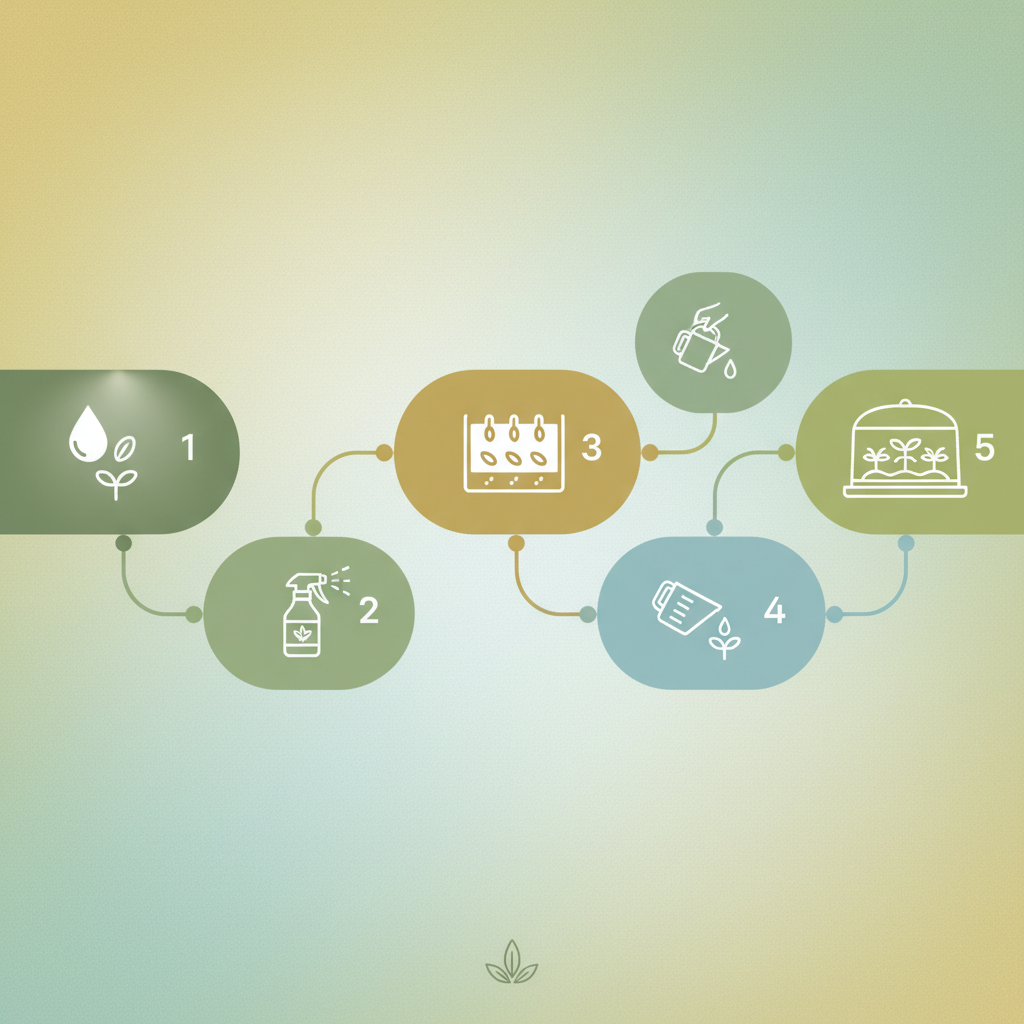
What Cannabis Seeds Need Before They Sprout
A seed does not need a swamp.
It needs steady moisture that softens the shell, wakes the embryo, and still leaves room for air.
That balance matters more than most beginners expect.
For cannabis germination watering, the best watering techniques keep the medium evenly damp, not soaked, because standing water pushes oxygen out and slows the process.
That same idea shows up often in grower discussions, like this long-running paper towel germination troubleshooting thread , where people keep the towel moist and re-wet it before it dries out.
Success looks pretty ordinary at first.
The seed usually swells a little, the shell gets softer, and a tiny split appears before the taproot shows.
Moist, not drenched: The seed coat needs water to open up, but the medium should still feel airy.Slight swelling: A healthy seed often looks fuller within the first day or two.A clean split: The shell cracks as the embryo gets moving.White taproot tip: This is the first clear sign that moisture and oxygen are both in the right range.
Too much water creates a different problem.
The seed can sit in dampness and still struggle, because waterlogged material leaves little oxygen for the embryo to use.
That is why a squeezed-out paper towel or lightly watered starter medium works so well.
It gives the seed enough moisture to start the process without drowning it, which is the whole game during this stage.
Once the shell has softened and the first split appears, the job is to stay consistent.
Keep the moisture steady, avoid puddles, and let the seed breathe while it wakes up.
Moist, not soggy, is the sweet spot.
Get that part right, and the rest of sprouting starts to feel a lot less mysterious.
Choosing the Best Watering Technique for Your Setup
A paper towel in a dry room behaves very differently from a starter cube in a humid tray. The right choice depends on how quickly your space dries and how closely you can monitor moisture.
In practice, misting , bottom watering , drop-by-drop watering , and pre-moistened media each fit a different setup—so picking based on your container and environment is the difference between “steady progress” and repeated stalls.
Comparing the common watering methods
Watering method
Moisture control
Risk of overwatering
Best for
Main drawback
Misting
Fine surface control
Low to medium
Paper towel setups and light soil top-ups
Easy to miss deeper dry spots
Bottom watering
Moderate to high
Low to medium
Soil cells, starter trays, and plugs once media is in place
Slower to hydrate very dry mix
Drop-by-drop watering
Very precise
Low
Single seeds in small containers or dry pockets in soil
Slow and tedious
Pre-moistened starter cube
Stable, even moisture
Low if drained well
Starter cubes, plug trays, and humid propagation spaces
Can stay too wet if packed too tight
Paper towel method
High if watched closely
Medium to high if soaked
Germination checks where you want to watch root emergence
Towel can dry out or get waterlogged fast
A simple way to choose:
If you want maximum visibility (and can check often): use the paper towel approach.If you want the most “set it up once” consistency: use pre-moistened cubes .If you’re germinating in an actual growing medium (cells/trays): start with bottom watering once the media is packed in place.If only small areas need moisture: drop-by-drop helps you target without saturating the whole container.
Humidity and temperature matter as much as the method. Dry air pulls moisture out faster, warm spaces amplify drying, and larger containers hold moisture longer than small cups.
If the room is dry, use a lighter approach and check more often. If the environment stays humid and your medium already holds moisture well, keep watering gentle so conditions don’t tip into stagnant wetness.
(Then, for execution details like pre-moistening, misting without soaking, and consistent checking, see the step-by-step section.)
Step-by-Step Watering Methods That Protect Young Seeds
A seed tray fails fast when water pools in one corner.
Young seeds handle steady dampness far better than a wet base, and the difference shows up quickly in weak shells and stalled roots.
The cleanest approach is simple: wet the medium first, then add only enough moisture at the seed surface to keep things evenly damp.
That keeps oxygen in the mix, which matters just as much as water during cannabis germination watering.
A lot of growers still default to “more water, more often,” and that usually backfires.
The better move is controlled moisture from the first soak to root emergence, with no soggy spots and no dry edges.
Pre-moisten the medium evenly.
Add water in small passes until the starter mix feels like a wrung-out sponge, not a dripping towel.
If a squeeze releases water, it is too wet.
Mist the seed area, not the whole setup.
Use a fine spray over the top layer so the seed stays damp without getting buried under runoff.
Guidance from paper towel germination method notes on keeping the towel wet but not drowned matches this same idea.
Cover loosely and let excess escape.
Use a dome, lid, or loose wrap with a small gap for air movement.
Tight sealing traps condensation, and that is how surfaces turn swampy overnight.
Check moisture on a schedule.
Touch the top layer with a clean finger or the tip of a tool twice a day.
If the surface lightens in color or feels cool but not damp, give it a light mist instead of a full soak.
Keep the pattern consistent until emergence.
Water at the same time each day and use the same light spray amount.
Consistency matters more than volume when the root is just breaking through.
A few growers like to keep their setup under a cupboard shelf or another sheltered spot, but the real trick is not the location.
It is keeping watering methods cannabis seeds balanced enough to stay damp, airy, and stable.
That rhythm protects the seed from the two usual mistakes: drowning and drying out.
It also makes the whole process far easier to read, which is half the battle with the best watering techniques.
Common Watering Mistakes and How We Avoid Them
What if the seed is not weak at all, and the problem is the water around it never changes?
That happens more often than people admit.
In cannabis germination watering, the trouble usually comes from a towel that stays too wet, a seed that dries out between checks, or water that brings extra stress with it.
The easiest mistake to spot is stagnant moisture.
A seed sitting in soggy material often turns dull, smells off, or slows down instead of swelling evenly.
Too little water looks different: the shell stays hard, the seed feels unchanged, and nothing seems to move for days.
Growers who use the best watering techniques usually aim for damp and fresh , not soaked and stale.
That matches what experienced growers describe in paper towel methods, where the towel is kept moist without drowning the seed or leaving runoff behind THCFarmer discussion on paper towel germination and Amsterdam Genetics’ beginner-friendly paper towel guide.
Signs the seed is getting the wrong kind of water
A seed can tell you plenty if you look closely.
Overwatering: The medium looks shiny or waterlogged, and the seed stays inactive longer than expected. Underwatering: The surface dries fast, and the seed feels stuck in place. Stagnant moisture: The smell turns sour or musty, which usually means the environment needs a reset. Rough handling: A seedcoat that gets nicked or squeezed often reacts by stalling.
One practical rule helps here: if the material looks visibly wet, it is probably too much.
Several germination guides advise dampening paper towels until they hold moisture without dripping Herbies Head Shop germination guide.
Why tap water can change the result
Water is not just water during germination.
Tap water can carry chlorine, hardness, or a pH that pushes the seed out of its comfort zone.
Room-temperature water is usually the safest bet.
Very cold water can slow the seed down, while hot water can stress delicate tissue before it even emerges.
How we rescue a slow seed without fuss
Move it once. Transfer the seed to fresh, lightly damp material. Reset the moisture. Wring out excess water until nothing drips. Leave it alone. Check only once or twice a day. Watch for change. Swelling or a tiny crack means the seed is responding.
The goal is calm correction, not a full rebuild.
Gentle adjustments beat constant poking every time.
Watering for Better Germination Results Across Different Seed Types
Fresh, older, and fragile seeds do not all want the same amount of attention.
Cannabis germination watering gets easier when the method matches the seed’s age and strength.
Fresh seeds usually respond well to steady moisture and very little handling, while older seeds often benefit from a brief pre-soak before they go into a damp medium.
Fragile varieties sit in their own lane; they hate rough handling and punish overwatering faster than most.
A gentle hybrid approach often works best when the seed mix is uneven.
Cannabiz Seed’s soaking-vs-paper-towel comparison points to a short soak followed by a paper towel stage, which gives older seeds a nudge without leaving them sitting in water too long.
For fresh seeds, Amsterdam Genetics’ paper towel guide recommends room-temperature water and a towel that stays damp rather than dripping.
Matching moisture to the seed
Fresh seeds: Keep them in lightly damp conditions and check them on a steady rhythm.
Older seeds: Use a short soak first, then move them to a controlled moist setup.
Fragile varieties: Minimize handling and keep the medium evenly moist, not soggy.
Different seed batches: Label them separately so one slow seed does not throw off the whole tray.
When several seeds start at once, the smartest move is to group by age or type.
That way, one stubborn seed does not force you to treat the whole tray the same way.
Community guides on the paper towel method in THCFarmer and Herbies’ germination PDF both reinforce the same habit: keep the environment damp, and avoid drowning the seed.
That same logic shows up in AliceSeeds’ guide to achieving higher germination rates, which stresses squeezing out excess water before placing seeds in the towel.
Seed quality changes the whole game.
Cleaner genetics usually germinate more predictably, which means less fiddling with water levels and fewer rescue missions later.
That is why we keep the focus on consistent genetics and support, because watering gets much simpler when the seed itself is already on your side.
Our Cannabis Seeds collection is built around that idea.
How long will seeds germinate in the paper towel method?
Cannabis seeds in a paper towel setup typically show a white taproot in about 2–7 days when the towel stays evenly damp but never waterlogged. The key sign to watch is steady swelling followed by a clean shell split and a visible taproot tip. Avoid stopping too early or re-soaking heavily after the towel has gone soggy.
Is it better to germinate seeds in water or paper towel?
Paper towel germination is usually better because it maintains gentle, steady moisture while still leaving oxygen space around the seed. Full water soaking can create stagnant, soaked conditions that reduce oxygen and stall the embryo. A brief pre-soak can help some older seeds, but the medium should finish evenly damp, not flooded.
How long does it take for a cherry seed to sprout in a wet paper towel?
Cherry seeds often take about 1–3 weeks to show sprouting in a wet paper towel, assuming conditions stay consistently damp and warm. Some cherry varieties also need cold stratification before they reliably sprout, which can extend timelines. If nothing happens after a couple of weeks, the limiting factor may be temperature and stratification, not watering alone.
What’s the best method to germinate cannabis seeds?
The best method is the one that keeps the germination medium evenly damp (not soaked) so the seed can swell, split, and produce a white taproot tip without waterlogging. Practically, that means pre-moistening the medium, adding only enough moisture at the seed surface to prevent drying, and re-wetting only when needed. Whether you use a paper towel, starter cube, or soil, avoid one heavy pour that compacts or creates stagnant water.
Will cannabis seeds become illegal in 2026?
No single answer applies everywhere because cannabis seed legality depends on your country, state, and local rules. Even if a change is possible in 2026, it will vary by jurisdiction and licensing requirements. The safest approach is to check your local regulations and official government guidance for any scheduled updates before 2026.
Keep Moisture Steady, Not Heavy
The goal of cannabis germination watering is simple: set up stable conditions so the seed progresses in order—swelling, then a shell split, then a visible white taproot—without repeated swings between soaking and drying.
Quick checklist:
Choose a method that matches your setup: paper towel (best visibility), pre-moistened cubes (stable moisture), or tray/pot approaches (only when your medium can hold dampness evenly).Moisten first, then control at the surface: start with evenly damp (wrung-out) media—no puddles.Avoid tight sealing: leave room for air so condensation doesn’t turn into swampy wetness.Check on a rhythm, not random re-soaks: mist lightly only when the surface dries.If rescue is needed, do it once: move to fresh, lightly damp material, wring/drain excess, and reduce handling until you see a clear response.
When moisture stays consistent from day one through emergence, the “mystery” fades—because the seed finally gets the same conditions each day.