



Why do two seeds from the same strain sometimes grow into very different plants? The answer usually starts long before germination, in the cannabis seed genetics itself.
A seed is more than packaging for a strain name.
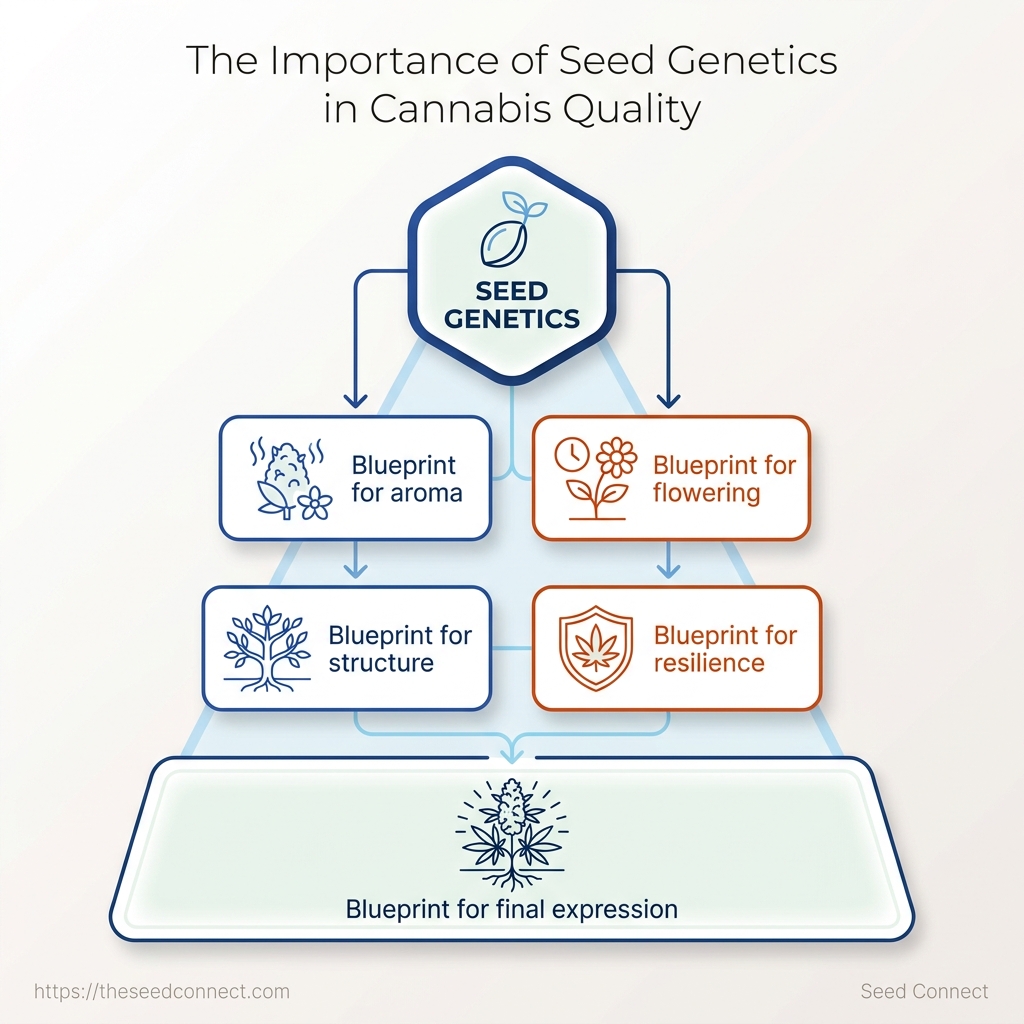
It carries the plant’s blueprint for structure, aroma, flowering behavior, resilience, and final expression.
That is why one crop can finish with rich flavor and tight buds, while another from a similar label looks ordinary and acts unpredictable.
This is where the genetics effect on quality becomes impossible to ignore.
Potency matters, but it is only one piece of the picture.
Stable genetics can shape consistency, disease resistance, growth speed, and how closely a plant matches the profile a grower expected.
That is also why understanding cannabis genetics saves time, money, and frustration.
When the starting material is weak, even careful growing cannot fully fix the result.
When the genetics are strong, the plant has a much better chance of delivering the traits growers actually want.
Quick Answer: Seeds from the same cannabis strain can grow differently because a strain name describes a lineage, not a guaranteed outcome. Genetics set the possible range of traits; breeder selection (stability) determines how tightly seeds tend to express that range. Your grow conditions then influence where each plant lands within it. If you want more consistent results, prioritize seed sources that demonstrate stability with proof—documented parent lines, transparent strain descriptions, and evidence that the line performs consistently across grows—rather than relying only on the strain label.
Why do two seeds from the same strain sometimes grow so differently?
Two seeds can share a strain name and still behave like cousins, not twins.
That surprises a lot of growers the first time it happens.
The reason starts with cannabis seed genetics.
A seed carries a range of traits, not a fixed promise, so one plant may lean taller, smell sweeter, or finish a little earlier than the next.
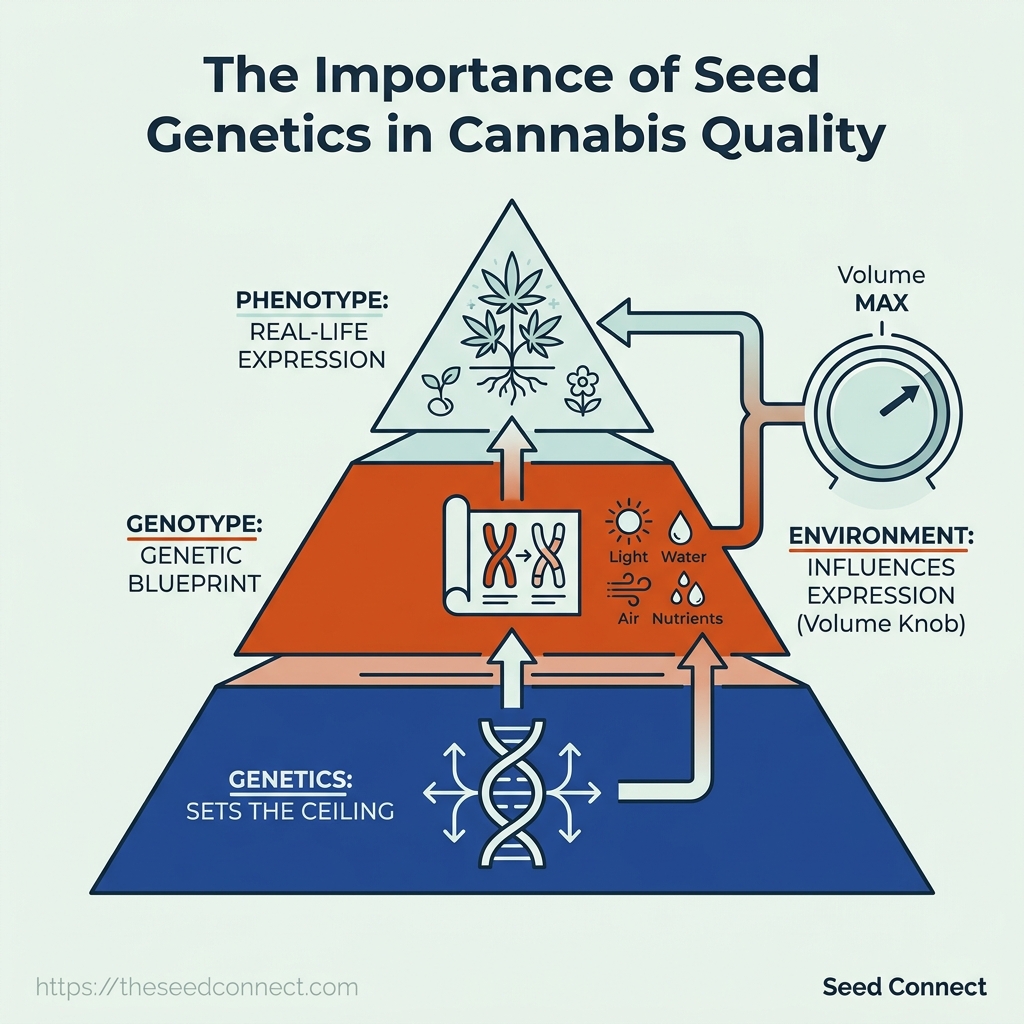
Genotype is the plant’s genetic blueprint. Phenotype is how that blueprint shows up in real life, under your light, your medium, and your care.
That difference matters before germination, not after.
As 420 Magazine’s 2026 cannabis genetics overview notes, stable genetics help improve germination rates, plant structure, yield consistency, cannabinoid expression, and resistance to mold and pests.
In plain terms, genetics set the ceiling.
Environment decides how close each plant gets to that ceiling.
- Flowering window: Genetics guide when a plant tends to finish, but small shifts still happen.
- Plant shape: Height, spacing, and branch style often vary within the same strain family.
- Aroma and resin: Terpenes and trichome density can lean one way or another in siblings.
- Stress response: Two seedlings can react differently to heat, feeding, or pruning.
A simple example helps.
Imagine two seeds from the same pack under identical conditions: one may stack tighter nodes and show darker leaves, while the other stretches more and smells louder by week six.
Both can still be “true” to the strain, just expressed differently.
That is why understanding cannabis genetics saves time and frustration.
It helps set realistic expectations about the genetics effect on quality, especially when you compare seed-grown plants to clones.
The smartest growers treat strain names as a range, not a guarantee.
That mindset makes the first grow calmer, cleaner, and a lot easier to read.
Which quality traits are shaped most by genetics?
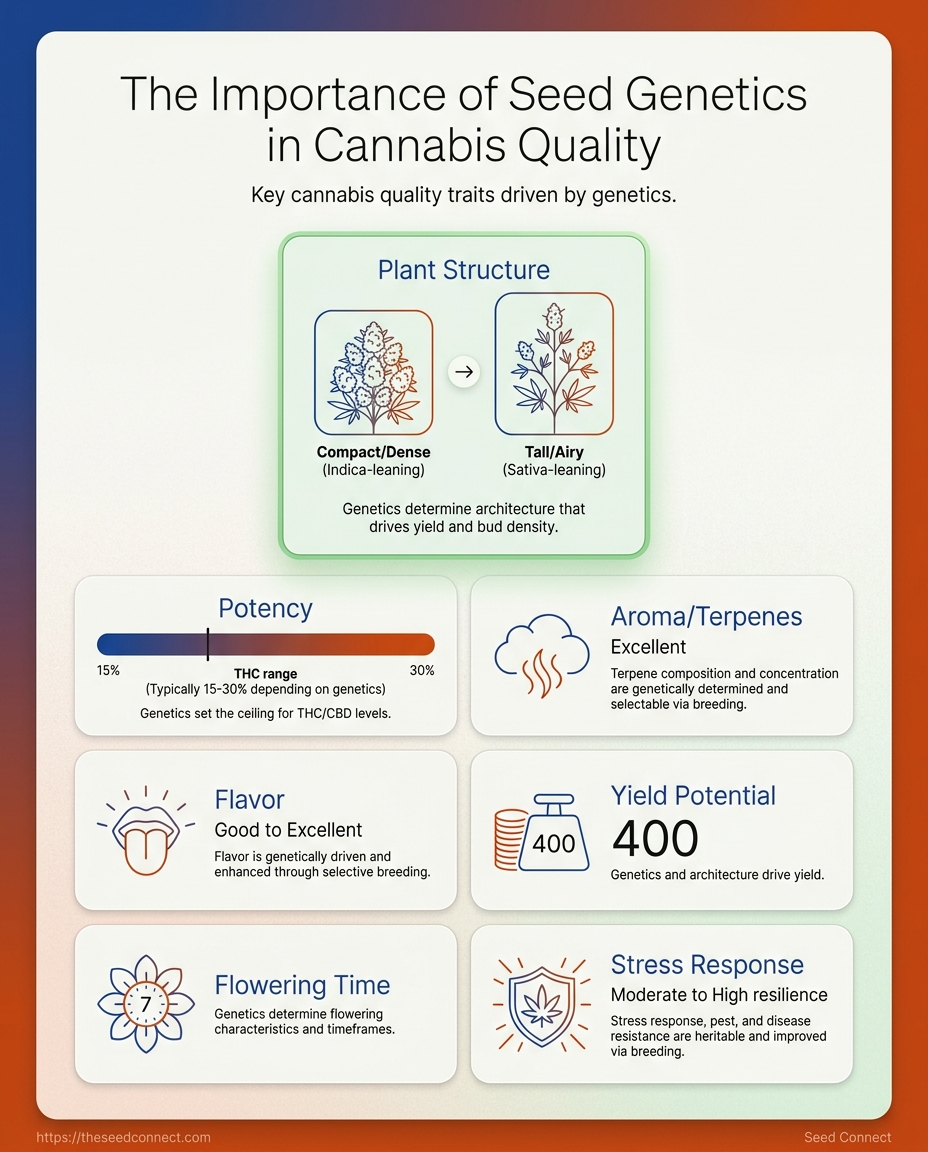
Which parts of a cannabis plant are “built in” from the seed, and which parts are shaped by the room around it? The biggest genetics-driven traits are potency, aroma, flavor, yield potential, flowering time, plant structure, and stress response.
Environment still matters, but it works like a volume knob, not the composer.
The seed sets the range, and the grow conditions decide how closely each plant expresses that range.
Genetics-driven quality traits
| Trait | What Genetics Influence | What Growers Notice | Why It Matters |
|---|---|---|---|
| Potency | Cannabinoid potential, including THC and CBD balance | Stronger or milder effects, depending on the line | Sets the upper ceiling for market fit and desired effect |
| Aroma and terpene expression | Dominant terpene profile and how strongly it appears | Citrus, gas, pine, fruit, dessert, or earthy notes | Aroma often signals quality before harvest even starts |
| Flavor | Resin chemistry and terpene balance | Clean, sweet, sharp, skunky, or layered taste | Flavor helps separate standout plants from average ones |
| Yield potential | Bud density, branching pattern, and flower size | Bigger harvests from the same space and time | Higher output improves efficiency and room planning |
| Flowering time | How fast a plant finishes bloom | Earlier or later harvest windows | Affects scheduling, labor, and room turnover |
| Plant structure | Height, internode spacing, and branch strength | Tall stretch or compact growth | Shapes training, canopy control, and light access |
| Stress response | Tolerance to mold pressure, handling, and common late-flower issues | Fewer setbacks and less loss | Protects quality late in flower, when damage hurts most |
A small grow-room example makes it clear.
Two plants can receive the same feed and light, yet one finishes with tighter internodes, a stronger terpene profile, and a more predictable shape under stress. The other may show the same “type” of plant, but with weaker structure and a less expressive aroma.
That’s the practical side of understanding cannabis genetics: the seed doesn’t promise perfection, but it strongly shapes the odds. For growers choosing seed lines, these traits are usually the first ones worth judging.
The plant still needs solid care—but the seed decides how much room there is to work with.
How can you tell if cannabis seed genetics are worth trusting?
Ever buy seeds that sounded perfect, then realize the description was doing most of the work?
Trustworthy cannabis seed genetics usually come with traceable parent lines, a clear breeder history, and enough consistency that the same strain keeps behaving like itself.
Stable genetics are tied to better germination rates, plant structure, and yield consistency, as 420 Magazine’s 2026 genetics roundup points out.
Checklist for breeder reputation, parent lines, and strain history
| What to Check | Good Sign | Red Flag | Why It Matters |
|---|---|---|---|
| Breeder reputation | Named breeder with a visible release history and repeat buyers | No breeder name, copied branding, or vague origin stories | Reputation is often the first clue that selection standards are real |
| Parent lineage clarity | Parent strains are listed clearly, with breeding notes | “Secret genetics” or buzzwords instead of actual lineage | Parent lines help you judge likely traits, not just marketing |
| Consistency across reviews | Buyers describe similar smell, structure, and finish | Reviews are all over the place or sound templated | Repeated patterns suggest the genetics are behaving predictably |
| Seed freshness | Recent pack dates, sealed packaging, storage guidance | Old stock, no date, or poor storage details | Fresh seed usually performs better and gives cleaner germination |
| Support availability | Real answers on phenotype, vigor, and grow fit | No support, or only generic sales replies | Good support often reflects deeper breeder knowledge |
| Transparent product descriptions | Balanced claims, clear flowering window, and honest trait notes | Overhyped promises and too many “best ever” claims | Clear descriptions are easier to trust than flashy language |
A weak one reads like a billboard.
- Do: Look for parent lines, release notes, and realistic trait ranges.
- Do: Compare multiple reviews for the same strain name.
- Don’t: Trust “rare,” “elite,” or “top-shelf” without proof.
- Don’t: Assume a germination guarantee fixes weak genetics.
A germination guarantee matters because it protects the purchase, not the inheritance.
Seeds can sprout well and still produce uneven plants if the underlying genetics are sloppy.
The best test is simple: if the breeder can explain the line clearly, the strain history matches the reviews, and the description stays grounded, the genetics are probably worth your time.
When those pieces line up, the genetics effect on quality is usually easier to trust before the first seed even cracks.
What usually goes wrong when genetics are poor or unstable?
Why does a grow look healthy in veg, then fall apart once flowering starts?
That’s often the moment genetics variability (or weak selection) becomes obvious. A plant can look vigorous early on, but the bloom phase is where flower size, bud placement, flowering timing, and terpene development all have to line up.
In many real grows, weak genetics don’t fail in one dramatic way—they reveal themselves as mismatched performance between plants.
A stable line tends to keep growth predictable. An unstable or poorly selected line can produce siblings that “look similar” at first, then diverge in stretch, branch strength, bud density, and finish timing.
Common warning signs show up fast once flowering begins.
- Uneven stretch: One plant shoots up while its sibling stays compact, making canopy management harder and light penetration uneven.
- Weak branching: Stems bend under flower weight, and support needs come much earlier than expected.
- Sparse bud sites: The plant keeps building leaves and space, but flower density doesn’t catch up, so output feels disappointing even with good conditions.
- Delayed finish: Some tops ripen while others keep pushing new pistils, which makes harvest timing awkward (and often lowers overall uniformity).
- Flat aroma: The plant may smell faintly sweet or grassy, but the expected terpene “signature” never fully arrives.
Poor genetics can also hurt the final bag appeal.
Flowers may end up loose, lopsided, pale, or filled with extra leaf—even if the room conditions were solid. That matters because the genetics effect on quality isn’t just potency; it shows up in bud density, scent expression, and the clean, attractive structure buyers notice first.
Once a line starts showing weak structure and dull aroma, the final flower usually confirms the same story—more clearly, and with less room to fix it.
How should we choose seeds with strong genetics for better results?
The cheapest seed often becomes the most expensive mistake.
A low price looks smart until uneven growth, weak flowering, or poor germination eats the savings.
Strong cannabis seed genetics usually show up in boring, practical ways: better plant uniformity, steadier structure, and fewer surprises later.
Industry guides from 2026 keep pointing in the same direction; stable genetics are tied to better germination, more consistent yield, and stronger resistance to common stressors, according to 420 Magazine’s 2026 cannabis genetics review.
A simple buyer framework helps cut through the hype.
Start with three questions: does the seed line clearly explain what the plant is meant to do, does the breeder show signs of stable selection, and do the support terms match the risk you are taking? That approach matters because the genetics effect on quality is not one trait; it shows up across vigor, terpene expression, and consistency from plant to plant.
A simple way to compare seed options
| Buying Factor | Why It Matters | What to Look For | Seed Connect Fit |
|---|---|---|---|
| Genetic stability | Stable lines produce more even plants and fewer odd outliers | Clear breeder focus, repeatable strain details, fewer vague claims | We focus on quality genetics and keep strain descriptions easy to compare |
| Germination support | Good support reduces wasted time and dead starts | A real germination guarantee and clear help if a seed fails | Our germination guarantee is built into the buying decision |
| Clear strain information | Good descriptions help you match the seed to your grow goals | Flowering style, expected growth pattern, and effect notes | Our strain pages are written for practical understanding, not fluff |
| Expert guidance | Support matters when you are choosing between close options | Responsive grower help, not generic sales replies | Our team offers expert grower support |
| Shipping considerations | Seeds should arrive quickly and discreetly | Fast, secure delivery with clear fulfillment expectations | We ship within 3–5 days in the U.S. |
| Variety depth | More options make it easier to match genetics to a setup | Feminized, autoflower, and high-THC choices | We carry a wide range of seed types for different grow styles |
| Value over sticker price | Cheap seeds can cost more if they fail or vary too much | Total cost, not just the initial price | Exclusive deals and seed points help improve value without cutting quality |
Breeders are winning attention with flavor, structure, and terpene balance too, as noted in Weed Seeds Express’s top strains guide for 2026 and Green Nursery’s 2026 cannabis strain roundup.
For readers comparing options, strong genetics are the ones that save time later.
At Seed Connect, that is the standard we build around, especially when consistency matters more than a low price tag.
Will cannabis seeds become illegal in 2026?
Cannabis seed legality in 2026 is not something that can be predicted from seed genetics alone. Laws vary by country and state, and legality typically depends on licensing, possession rules, and whether seeds are regulated as controlled inputs. To be sure, check your local cannabis regulations or regulator updates for 2026 rather than relying on general cannabis discussions.
What is the best pH for germinating cannabis seeds?
Aim for slightly acidic conditions when germinating cannabis seeds, typically around pH 5.8 to 6.2. This range supports nutrient availability and healthy root development in most common germination media. If you’re using plain water, buffering to that target pH can help keep conditions stable while the seed opens.
Do cannabis seeds germinate better in light or dark?
Cannabis seeds generally germinate best without strong light, so darkness or low, indirect light is usually preferred. The key driver is moisture and temperature stability, not illumination. Many growers place seeds in a warm, dark spot and only add light once roots have emerged and seedlings begin growing.
What are the chemotypes of cannabis?
Cannabis chemotypes are categories defined by the plant’s chemical profile, especially the relative balance of cannabinoids like THC and CBD. Different chemotypes can produce noticeably different effects, even when grown under similar conditions, because genetics sets the trait “range.” In practice, chemotype helps you understand what cannabinoid expression to expect from a line.
How do cannabis chemovars differ from chemotypes?
A chemotype is the broad chemical category (for example, a THC-leaning versus CBD-leaning profile), while a chemovar refers to a particular named genetic line or cultivar that expresses a specific chemical profile. In other words, chemotype describes the chemistry category, and chemovar ties that chemistry to a particular plant/line. Stable genetics are what help a chemovar consistently express its chemotype over repeated grows.
When you’re trying to predict how a harvest will turn out, seed genetics matter—because the seed carries most of the signals that show up early in structure, flowering rhythm, and aroma development. Weak or unstable selection usually reveals itself well before late-flower, through issues like uneven stretch, inconsistent bud formation, and a terpene profile that never fully shows up.
Good genetics won’t make every outcome perfect, but they do raise your odds that what the label promises is what your crop delivers.
The smartest next step is simple: verify what you’re buying (clear lineage, credible breeder track record, and realistic strain descriptions that align with reviews). That way, you can focus on growing skills and conditions—letting the genetics you chose express as fully as possible.