
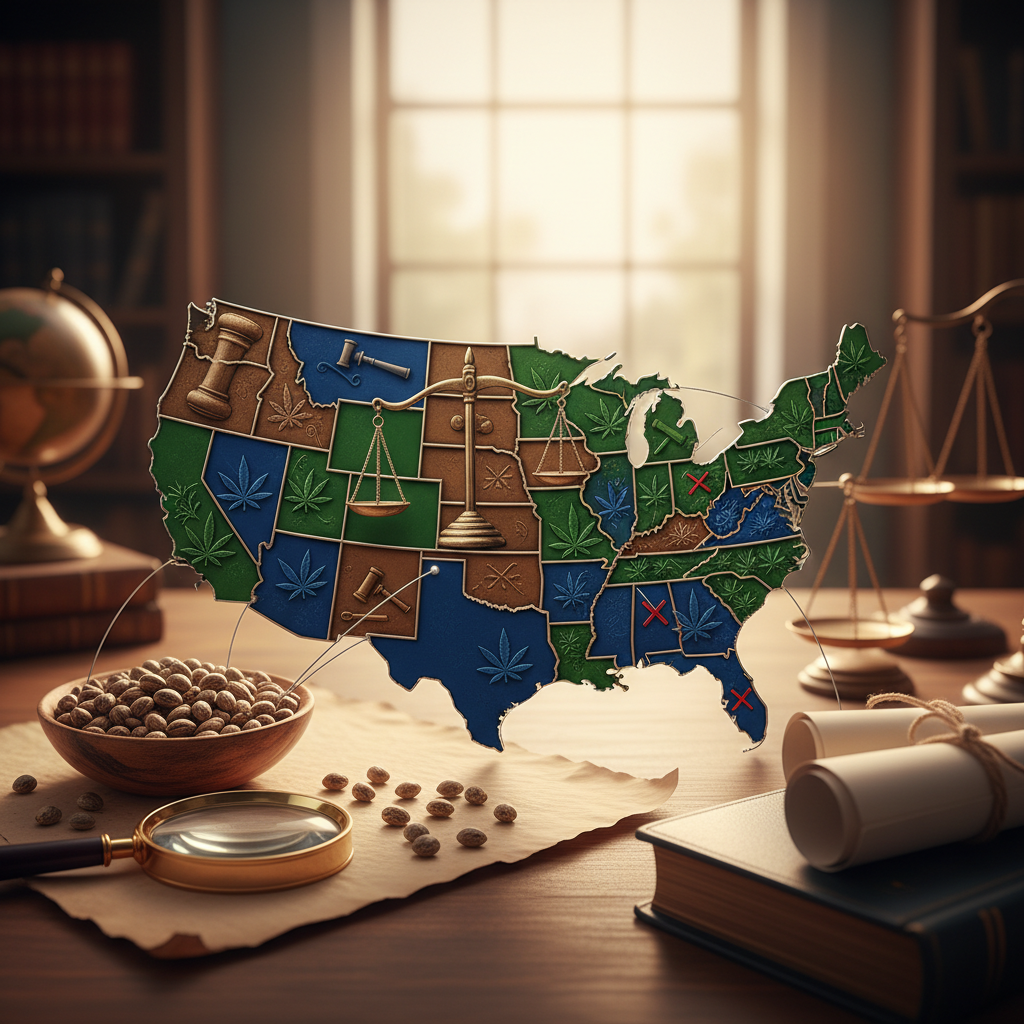
Cannabis seed legality in the United States is more complicated than a simple yes-or-no answer. The legal status of a seed, the rules for buying it, the rules for shipping it, and the rules for actually growing it can all be different.
As of September 2026, federal law still defines hemp as Cannabis sativa L. and any part of that plant — including the seeds — containing no more than 0.3% delta-9 THC by dry weight. You can see that definition in the USDA’s current hemp guidance.
But that does not mean everyone in every state can legally germinate those seeds and grow marijuana at home. State and local cannabis laws still control home cultivation, plant limits, licensing, where plants may be grown, and who can legally sell cannabis genetics.
The practical question is therefore not just:
“Are cannabis seeds legal?”
It is:
“Can I legally possess them, buy them, ship them, and grow them where I live?”
Key Takeaway
- Possessing a seed and growing cannabis are separate legal questions. A seed may fall within federal hemp rules while your state still restricts home cultivation.
- State law matters just as much as federal law. Plant limits, age requirements, licensing, and local cultivation rules vary widely across the U.S.
- Federal hemp law is changing. A new statutory definition affecting viable cannabis seeds is scheduled to take effect later in 2026, so buyers and sellers should verify current rules before relying on older guidance.
Table of Contents
Are Cannabis Seeds Federally Legal?
Under the federal rules currently in effect, hemp includes the cannabis plant and its parts, including seeds, when they contain no more than 0.3% delta-9 THC on a dry-weight basis. The current definition appears in both USDA guidance and federal hemp regulations. (USDA hemp FAQ)
That means the legal status of the seed itself is not automatically determined by how potent the mature plant could eventually become.
That distinction has been important under the current federal framework.
However, there is a major change coming.
Congress enacted a revised hemp definition that is scheduled to exclude certain viable seeds from cannabis plants exceeding the new total-THC threshold. A September 2026 continuing-resolution law delayed parts of that change until December 11, 2026, unless Congress changes the law again before then.
Because this area is actively changing, anyone buying or selling seeds should check the latest federal guidance rather than relying on articles written under the 2018 Farm Bill alone.
Owning Cannabis Seeds Is Not the Same as Growing Cannabis
This is where many buyers get confused.
A seed can have one legal status while the plant that grows from it has another.
Once a seed germinates and becomes a cannabis plant, state cultivation laws become especially important.
For example, California allows adults 21 and older to grow up to six cannabis plants at home, although cities and counties may impose additional rules on how and where those plants are grown.
New York also allows adults 21 and older to cultivate cannabis at home, with limits of three mature and three immature plants per person and a household maximum of six mature and six immature plants.
Other states have different rules, and some do not allow recreational home cultivation at all.
That is why seed possession should never be used as proof that home growing is legal where you live.
How Cannabis Seed Laws Differ by State
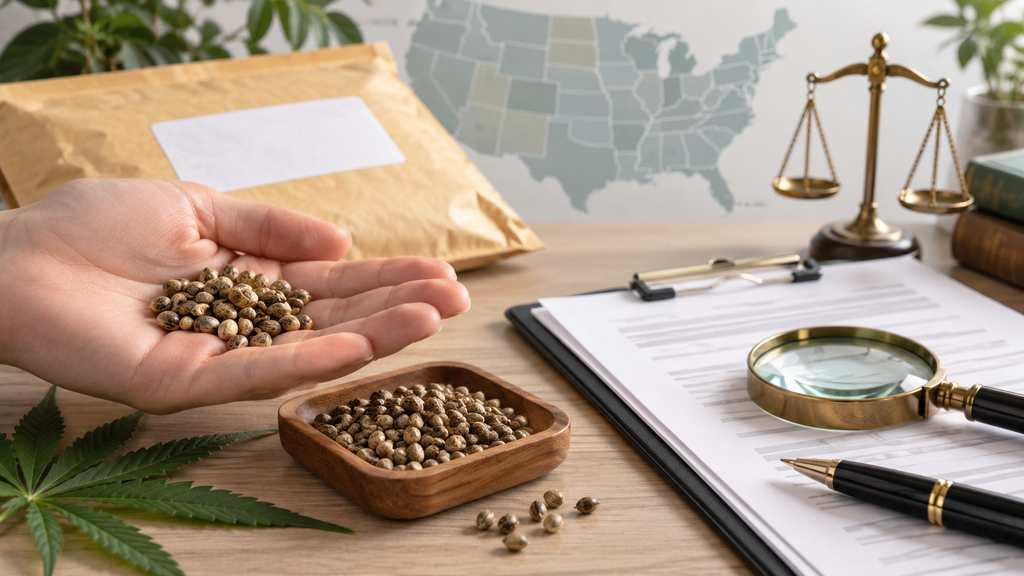
There is no single state-by-state rule for cannabis seeds.
Broadly, states tend to fall into a few categories:
| State framework | What it may mean for seed buyers |
|---|---|
| Adult-use cannabis legal | Home cultivation may be allowed, often with plant limits |
| Medical cannabis only | Growing may be limited to registered patients or caregivers |
| Hemp-focused framework | Hemp production may be legal while marijuana cultivation remains restricted |
| More restrictive state | Home cultivation or marijuana possession may remain prohibited |
Even within adult-use states, the rules can differ significantly.
California allows six plants per adult household under state law, while New York uses separate mature and immature plant limits.
For current legislation across all 50 states, the National Conference of State Legislatures cannabis database is much more reliable than an old forum post or social-media answer. NCSL updates the database as states enact new cannabis laws.
Can You Buy Cannabis Seeds Online?
In many cases, yes, but the exact rules depend on your location and the seller.
The biggest mistake is assuming that because a website lets you complete checkout, the transaction must automatically comply with every applicable law.
Before buying, check:
- your state’s seed and cannabis rules
- whether the seller is legally permitted to sell or ship to you
- whether home cultivation is allowed
- whether local rules add additional restrictions
- whether the shipment crosses state or national borders
If the seeds are coming from another country, the situation becomes more complicated because customs and agricultural rules may also apply. The Seed Connect’s guide to international cannabis seed shipping explains those requirements separately.
Can Cannabis Seeds Be Shipped Across State Lines?
Do not assume that cannabis being legal in two states automatically makes every form of interstate transport legal.
Cannabis remains subject to federal law, while state-licensed marijuana markets generally operate within their own state systems.
California’s Department of Cannabis Control, for example, explicitly warns that cannabis remains illegal under federal law and should not be taken across state lines. (California Department of Cannabis Control)
Seeds that qualify as hemp under current federal rules may present a different legal question from marijuana flower, but buyers should still verify:
- the federal status of the seeds
- origin-state rules
- destination-state rules
- carrier requirements
If a shipment is moving internationally instead of between states, also read The Seed Connect’s customs guide for cannabis seed shipping.
Does the 0.3% Rule Make the Future Plant Legal?
No.
This distinction is crucial.
The THC level used to classify a seed does not guarantee that the mature plant will remain within the hemp threshold.
Federal hemp production rules apply THC testing standards to the plant or crop itself. If a plant exceeds the applicable legal threshold, it may no longer qualify as compliant hemp.
So even if a seed is lawful to possess, growing it may produce a plant that falls under marijuana rules rather than hemp rules.
That is why people who intend to cultivate should focus on the laws governing plants, not just the laws governing seeds.
Can Adults Buy Seeds in Legal Cannabis States?
Often, yes, but regulated cannabis markets may control where legal sales take place.
In New York, adults 21 and older may obtain seeds or immature plants for home cultivation from certain licensed cannabis businesses. The state’s home-cultivation guidance explains that licensed dispensaries, microbusinesses, and certain registered organizations can provide seeds or immature plants.
California also regulates cannabis retailers and home cultivation through its licensed cannabis system.
The important point is that personal possession and commercial sale are different issues.
Just because someone may legally possess a seed does not mean anyone may legally operate a business selling cannabis genetics.
Can You Sell Cannabis Seeds Legally?
Commercial sales are generally more regulated than personal possession.
Depending on the state, businesses may need:
- cannabis retail licensing
- nursery licensing
- seed-related agricultural registrations
- age verification
- packaging or labeling compliance
- recordkeeping
New York, for example, permits licensed adult-use cannabis businesses to sell seeds or immature plants for home cultivation under state rules.
Anyone planning to sell seeds commercially should review current state regulator guidance rather than assuming federal hemp status alone authorizes retail activity.
What About Germinated Seeds, Seedlings, and Clones?
Once a seed germinates, you are no longer dealing only with a dormant seed.
You are dealing with a living cannabis plant.
At that point, rules may depend on:
- your age
- whether home cultivation is legal
- whether medical registration is required
- the number of plants
- whether the plant is mature or immature
- where the plant is kept
- whether the plant falls under hemp or marijuana rules
In New York, for example, adults 21 and older may cultivate up to three mature and three immature plants per person, subject to the household limit.
If growing is legal where you live and you later need cultivation guidance, The Seed Connect’s complete cannabis transplanting guide covers moving young plants safely once they are established.
Can You Carry Seeds From One State to Another?
This is an area where caution matters.
Do not assume that because two states both allow recreational cannabis, cannabis products can move freely between them.
Interstate movement introduces federal law and potentially different state rules.
For marijuana products generally, states such as California specifically warn against taking cannabis across state lines.
Seeds that independently qualify as hemp may be treated differently under federal law, but because federal hemp rules are changing in late 2026, it is especially important to verify the current legal definition before transporting viable cannabis seeds across state borders.
What If You Order Seeds From Another Country?
International orders add another layer: agricultural import law.
Seeds are biological plant material, so U.S. Department of Agriculture rules may apply even when the seed’s cannabis status is otherwise lawful.
Depending on the species, origin, quantity, and intended use, imported seeds may require:
- permits
- phytosanitary documentation
- inspection
- specific labeling
- designated entry procedures
That is why international orders should be checked separately from domestic seed purchases.
The Seed Connect’s international cannabis seed shipping guide explains these steps in detail, including USDA and customs requirements.
Common Cannabis Seed Legal Myths
“If cannabis seeds are legal, growing them must be legal too.”: No. Seed possession and cultivation are separate legal issues.
“If recreational cannabis is legal in my state, I can grow it.”: Not necessarily. Some states permit adult possession without allowing unrestricted home cultivation.
“If two states have legal cannabis, I can freely transport it between them.”;Do not assume that. Interstate movement raises federal-law issues even when both states have legal cannabis markets.
“Any cannabis seed below 0.3% THC will always remain federally legal.”; That is true only under the current framework in effect today. Federal seed rules are scheduled to become more restrictive later in 2026 unless Congress changes the law again.
“If an online store ships to me, the purchase must be legal.”; No. A seller’s checkout system does not replace your responsibility to understand the rules in your state.
A Simple Way to Check Cannabis Seed Legality
Before buying seeds, answer these four questions:
- Can I legally possess cannabis seeds where I live?
- Can the seller legally sell or deliver them to me?
- Can I legally germinate and grow them?
- Are there local rules that add extra restrictions?
Start with your state cannabis regulator.
Then use the NCSL State Cannabis Policy Enactment Database to check recent legislative changes across states.
If the seeds are coming from outside the U.S., also review current USDA and customs requirements before ordering.
Final Thoughts
Cannabis seed legality is easier to understand when you stop treating it as one question.
Buying, possessing, shipping, germinating, growing, and selling seeds can each be governed by different rules.
Under the federal framework currently in effect, cannabis seeds containing no more than 0.3% delta-9 THC can fall within the definition of hemp. But federal law is scheduled to change later in 2026, including new rules affecting certain viable cannabis seeds.
At the same time, state laws continue to determine whether adults may grow cannabis at home, how many plants are allowed, and where cultivation may take place.