


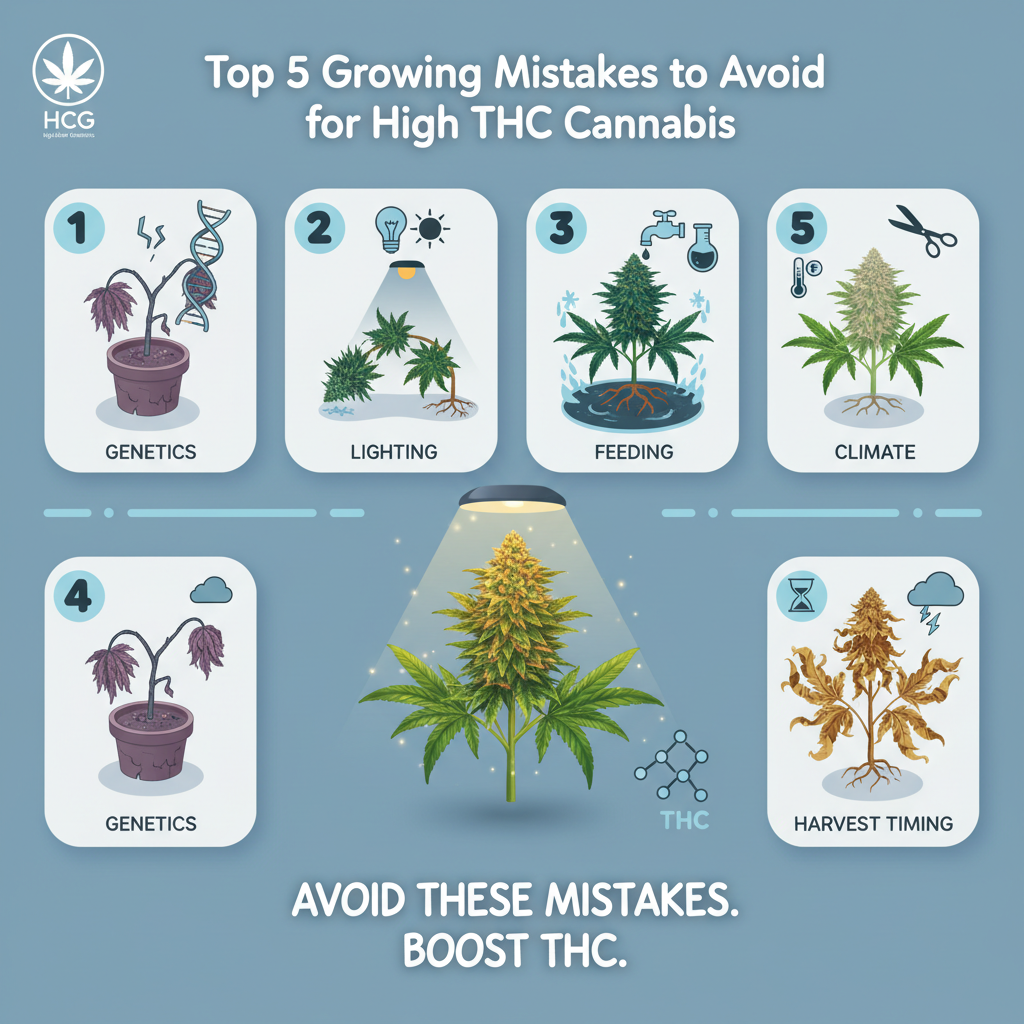
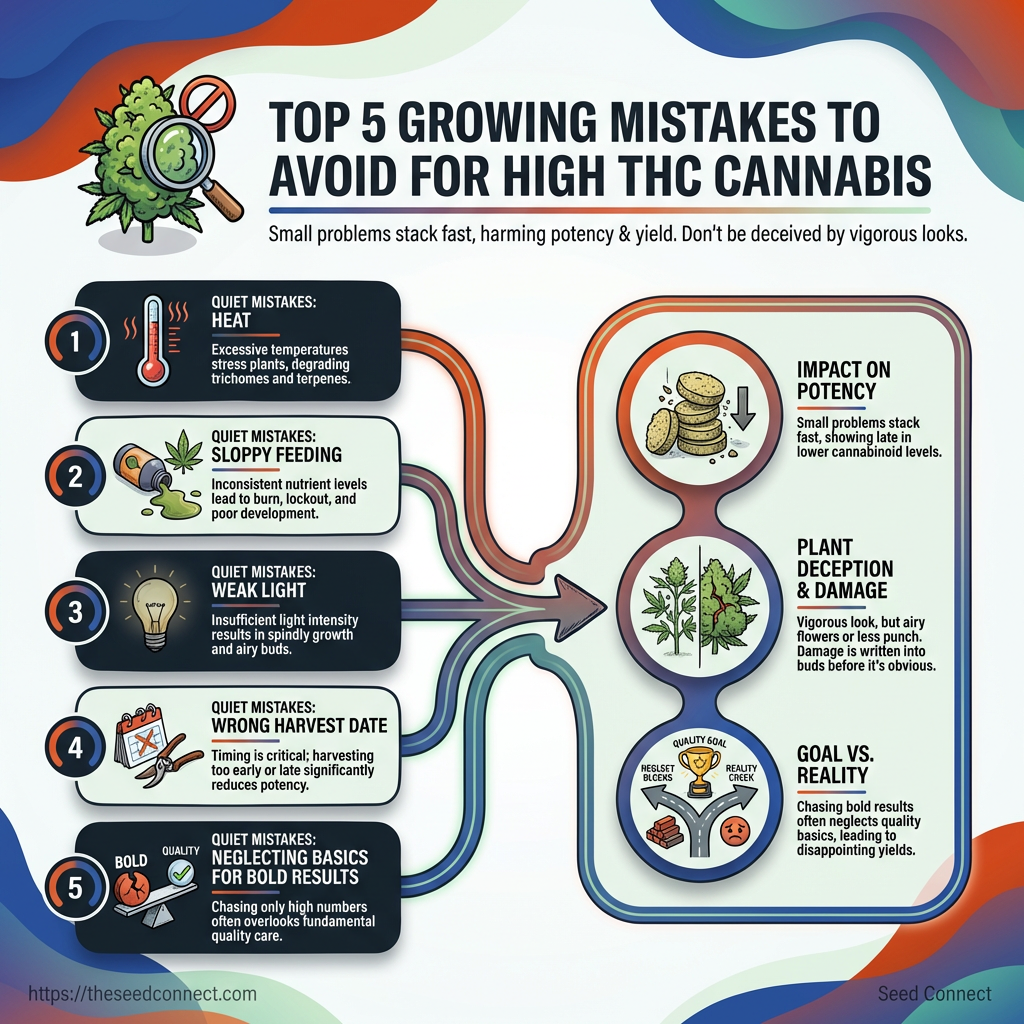
A healthy-looking plant can still be heading in the wrong direction.
In high THC cultivation, the most expensive mistakes are often the quiet ones: too much heat, sloppy feeding, weak light placement, or a harvest date chosen by habit instead of ripeness.
That is why growing mistakes hurt more here than in a forgiving setup.
When potency is the goal, small problems stack fast, and the plant usually shows it late, when the fix is no longer simple.
A lot of growers chase bold results and forget the basics that actually protect quality.
Good cannabis growing tips are rarely flashy; they usually sound boring because they work, like keeping the root zone steady, watching the canopy closely, and resisting the urge to “help” every time a plant slows down.
The hard part is that strong plants can fool you.
They may look vigorous while the flowers stay airy, burn at the tips, or finish with less punch than expected, and by then the damage is already written into the buds.
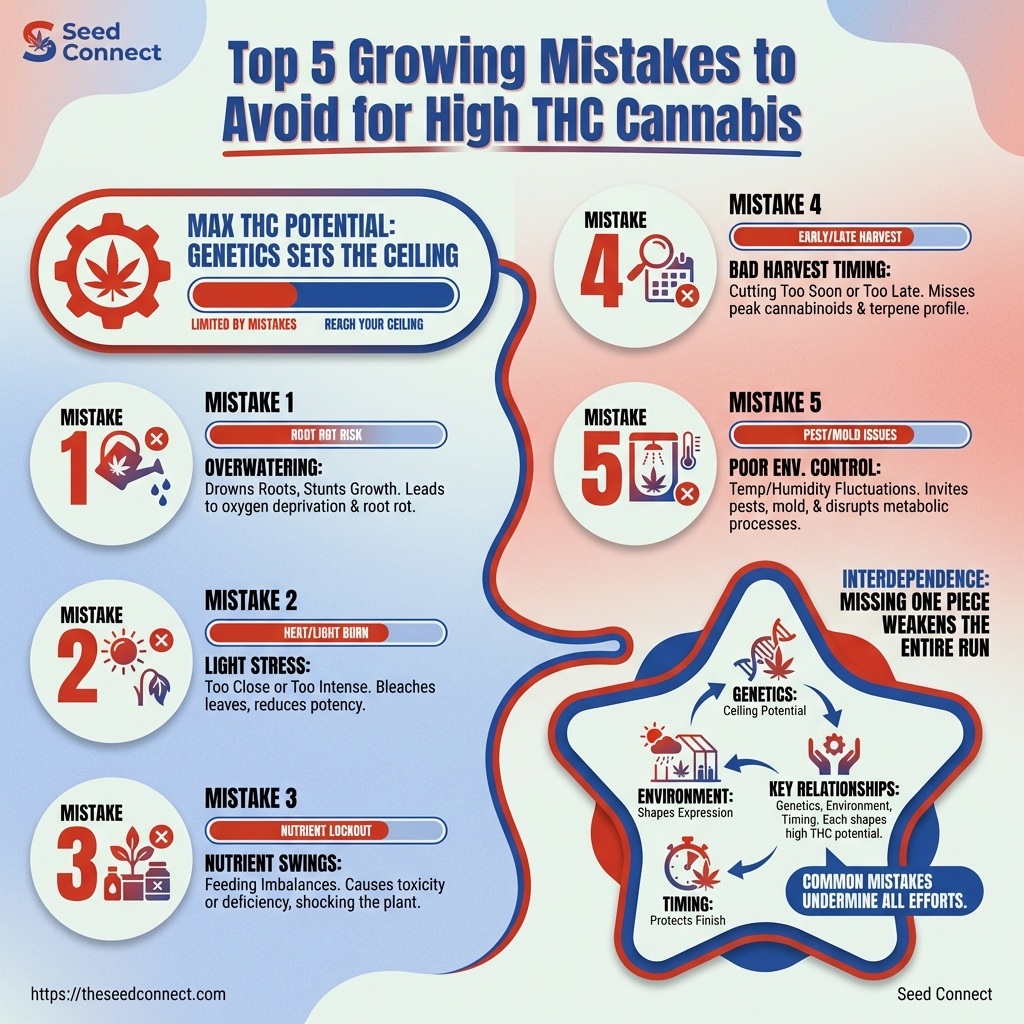
Quick Answer: Avoid the 5 stacking mistakes that prevent genetics from expressing at full THC: weak genetics, incorrect light during key flower stages, nutrient swings from overfeeding or underfeeding, poor climate control that adds plant stress, and harvesting too early or too late instead of by true ripeness. High-THC quality depends on genetics, environment, and timing working together, and stress from any one of these issues often shows up late as airy buds, tip burn, or reduced final potency.
Why high THC grows fail when the basics slip
High THC potential doesn’t fail because the strain is “wrong”—it fails because the run never lets genetics express at full strength.
When the room, feeding rhythm, light placement, or harvest window is sloppy, the plant compensates with stress. That stress costs resin, structure, and finishing quality—often long before you realize what changed.
THC potential comes from three things working together: genetics, environment, and timing.
- Genetics sets the ceiling: a strong line can promise a lot, but it cannot rescue a plant that is stressed, underfed, or constantly swinging between wet and dry.
- Environment shapes expression: light, temperature, humidity, and nutrition influence how hard a plant can push and how efficiently it can build flower.
- Timing protects the finish: harvest too early steals potency; harvesting too late can dull the effect and soften the best traits.
This is why this guide focuses on the “stacking” mistakes growers see over and over:
- Overwatering: roots need oxygen as much as moisture.
- Light stress: too little light leaves buds airy; too much can bleach or stall growth.
- Nutrient swings: heavy feeding one week and panic flushing the next can unsettle the plant.
- Bad harvest timing: the window is narrower than many growers expect.
High THC cultivation is rarely about one magic fix. It’s about steady basics done well, week after week—so the plant can finish with the potency and character it was capable of from the start.
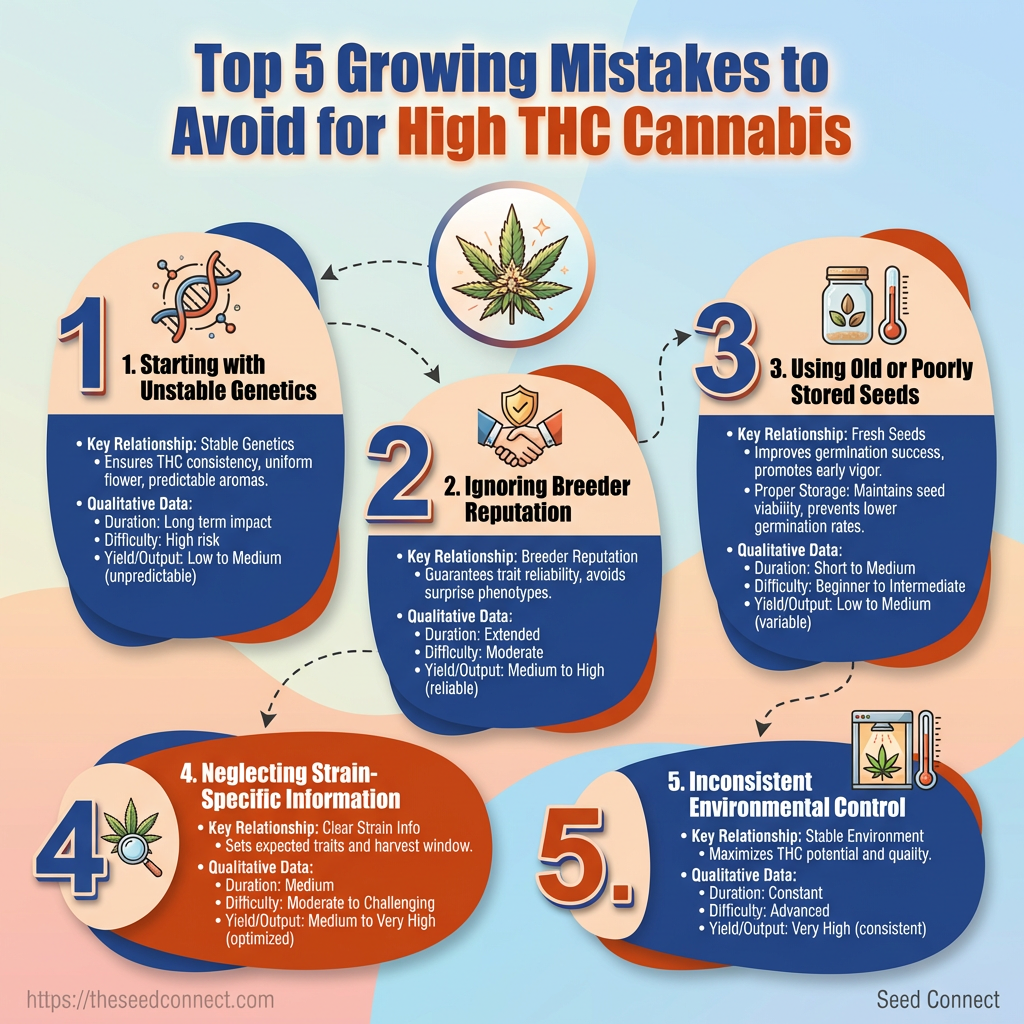
Mistake 1: starting with weak genetics
Think of your seed pack as the ceiling before the lights ever turn on. If the starting genetics are inconsistent or low-vigor, you’ll spend the whole run trying to compensate for what the plant can’t reliably deliver.
In high-THC cultivation, seed quality is one of the fastest ways to lose potency, because no later fix can fully rewrite the biology you started with.
A good seed pack supports:
- More uniform flower development
- Predictable aroma direction
- THC results that land closer to what the breeder actually describes
Freshness is part of genetics too. Seeds that have been sitting in heat, moisture, or harsh light can lose vigor before they ever crack—showing up as slow sprouting, weak seedlings, and uneven plants from the first week.
Why seed quality changes the ceiling
| Seed quality factor | What it affects | Risk if ignored | What to look for |
|---|---|---|---|
| Stable genetics | THC consistency across plants | Uneven potency from plant to plant | Stabilized lines, clear breeding history, repeatable results |
| Breeder reputation and line stability | Trait reliability | Surprise phenotypes and mixed flower quality | Well-documented breeder notes and consistent strain releases |
| Fresh seeds | Germination success and early vigor | Poor sprouting and weak starts | Recent harvest, sealed packaging, cool storage history |
| Proper storage history | Seed viability before planting | Lower germination rates over time | Dark, dry, airtight storage with minimal heat exposure |
| Clear strain info | Expected traits and harvest planning | Wrong expectations about flowering and potency | Honest THC range, flowering time, and grow notes |
| Reliable THC range and grow notes | Goal-setting and phenotype selection | Chasing hype instead of realistic results | Transparent breeder descriptions and phenotype guidance |
So the smart move is simple: match the genetics to your THC target, confirm the breeder has a reputation for consistency, and verify the seeds are fresh enough to sprout cleanly.
If your starting material is solid, every later decision—light, feed, climate, and harvest—has a better chance of paying off.
That first choice saves a lot of frustration later.
A strong seed pack doesn’t guarantee greatness, but weak genetics can ruin the ceiling before the plant even begins.
Mistake 2: giving plants the wrong light during key stages
Light control is your plant’s schedule—and when you misread the schedule, the whole grow gets out of rhythm.
In THC-focused grows, the cost shows up quickly: veg can turn weak or stretched, and flowering can become underdeveloped, bleached, or stalled—especially when intensity or photoperiod isn’t consistent.
Vegetative growth needs enough intensity to build structure. Flowering needs even, stable coverage so bud sites can stack efficiently and produce resin.
When light timing or placement is wrong, you usually see one of two patterns:
- Tall, thin plants that stretch for what they aren’t getting
- Stressed flowers that bleach, fade, or stop progressing
During veg, aim for steady growth without forcing extra stress. During flowering, the plant expects a stable environment and a clean dark period—because light leaks and inconsistent cues can blunt the development you’re trying to maximize.
The most common lighting errors are also the most “boring”:
- Lamps set too high, too low, or uneven across the canopy
- Flipping to flower before the plant has enough structure to support dense buds
- Moving weak seedlings into intense conditions too soon (or letting an aggressively dried flowering canopy slow progress)
- Too little light: Plants stretch, internodes widen, and lower bud sites stay small.
- Too much light: Leaves canoe upward, tops bleach, and flowers can stall instead of fattening.
- Uneven coverage: The top colas look fine while the lower half becomes airy.
- Dark-cycle mistakes: Light leaks during flowering can disrupt resin-forward development.
The easiest signs are usually on the leaves and the tops.
If plants lean hard toward the lamp and keep reaching, they likely want more intensity. If upper leaves pale, curl, or feel hot at canopy level, the light may be too aggressive.
A simple canopy check can prevent a lot of guesswork. Strong cannabis growing tips start with keeping the light even, adjusting height in small steps, and watching response over several days instead of changing settings daily.
Get the light stage wrong, and everything downstream becomes harder. Get it right, and the plant finally gets a fair shot at showing what its genetics can do.
Mistake 3: overfeeding, underfeeding, or chasing nutrient trends
Feeding mistakes usually don’t come from a single missing ingredient—they come from changing your plan too often.
When you respond to slow growth by switching bottles, raising strength, or altering mixes every time you see a setback, you shift the plant into a constant adjustment mode instead of steady flower-building.
Nutrients matter because roots absorb food in ratios, not as isolated elements. If you push one part too hard, other needs get crowded out. If you run too light or inconsistently, the plant can’t access what it needs to build dense, resin-forward flowers.
How it shows up
Leaf color is often the first clue.
Deep, shiny green with curling tips can signal too much nitrogen. Pale new growth can mean the plant isn’t getting enough available nutrition.
Growth tells the next part of the story.
Stalled tops, thin stems, and uneven development often appear when feeding strength is too weak, too strong, or repeatedly changing week to week.
Flower quality usually takes the hit last—making this mistake easy to miss.
Buds may stay airy, aroma can come on weak, and the plant can finish with extra stress instead of extra resin.
- Dark, clawed leaves: usually too much nitrogen.
- Burnt leaf tips: the feed is too hot for the plant.
- Pale new leaves: the plant can’t access enough nutrition.
- Slow stretch and weak stems: uptake is off balance.
- Loose, unimpressive flowers: stress stole energy from bud building.
Simple habits that keep feeding steady
- Start light and watch the response. A mild feed is safer after transplant or early flower.
- Change one thing at a time. If you adjust feed strength, don’t also change watering timing and additives in the same week.
- Use a simple log. Write down what went in, what the plants looked like, and what changed after a few days.
- Ignore trend chatter. A shiny new bottle doesn’t beat a routine that matches your plant.
- Let the plant tell you. Healthy leaves stay active, tips stay clean, and flowers keep building without drama.
The better move is boring, steady, and repeatable feeding. That rhythm keeps the plant focused on flower quality instead of recovery.
Mistake 4: ignoring climate control and plant stress
A room can look “fine” and still be costing you potency.
In THC-focused grows, climate stress matters because it pulls energy away from efficient growth and resin production—often leaving flowers looser than they should be by the time you notice.
The effect is both simple and sneaky: when a plant is constantly coping with temperature swings, humidity problems, or stale air, it spends less of its output on building dense, quality buds.
Outdoor grows get hit too—hot walls, trapped morning dew, or a still corner of the garden can create similar stress in a different setup.
Good cannabis growing tips start with watching the environment before chasing anything else.
Heat, humidity, and airflow
Heat pushes plants to work harder than necessary.
When leaves run too warm for too long, transpiration rises, stomata can close, and the plant can’t build dense flowers as efficiently.
Humidity matters just as much.
Damp air around thick buds can slow drying inside the flower mass and invite mold or mildew—especially when airflow barely reaches the lower canopy.
- Heat stress: Leaves taco, tips curl, and flowers can stall during peak swell.
- Humidity pockets: Dense buds stay damp longer and lose quality faster.
- Poor airflow: Stagnant air leads to weak stems, uneven drying, and more pest pressure.
Easy checks that catch trouble early
You don’t need fancy gear to spot most climate problems.
A quick daily scan catches many issues before they become real damage.
- Check canopy temperature at plant level. The room can feel fine near the door while tops sit in a hotter pocket.
- Feel for dead air. A hand inside the canopy should notice gentle movement, not stillness.
- Watch leaf posture during the hottest part of the day. Droop, curl, or sharp edge lift usually means the plant is under pressure.
- Inspect dense flowers and shaded spots. These areas are where humidity and mold like to hide.
- Track every sudden change. Moved fans, closed vents, or a heat wave can create stress overnight.
Keep the room steady, and the plant spends its energy where you want it—on finishing strong.
Mistake 5: harvesting too early or too late
Harvest isn’t just a finish date—it’s the final control knob on potency, flavor, and effect.
In THC-focused grows, the last stretch can swing the outcome more than most people expect. The plant may look close, and you still end up with results that don’t match the work you put in.
That’s because cannabinoids and terpenes keep changing as the plant matures. Cutting early or pushing too long changes the balance of what your buds deliver.
Read the plant, not the calendar
Trichomes tell the clearest story.
- Clear heads usually mean the flower is still building.
- Cloudy heads often line up with peak potency for many cultivars.
- Amber heads can indicate a later, heavier finish.
Pistils can help, but they’re easier to misread—some strains darken early. Use them as supportive evidence, not the only signal.
Check more than one sign
Flower feel adds context.
Mature buds tend to feel firmer and more resinous. Underfinished flowers often still feel airy and soft.
A quick harvest check can look like this:
- Inspect trichomes first: Use a loupe or microscope and check several buds, not just the top cola.
- Compare trichome colors: Many growers aim for mostly cloudy if they want a brighter THC-forward effect.
- Watch pistils second: Darkened pistils can signal maturity, but don’t treat them as the only rule.
- Feel the structure: Finished buds are typically denser and less “spongy” than under-ripe flowers.
Give the finish room to finish
The hardest part is patience.
After weeks of feeding, training, and climate work, it’s tempting to chop the moment the plant looks almost done.
Resist that urge.
A few extra days can change the profile more than another round of rushed tweaks—and a few days too early is usually far harder to correct than a short delay.
If the trichomes aren’t where you want them, wait.
Pick the harvest window the same way you built everything else: with attention and consistency.
That final decision shapes the smoke just as much as the grow itself.
A quick mistake-to-fix checklist for growers
What if the fastest improvement in a grow is not a new light or a fancier feed chart, but a cleaner start? In high THC cultivation, the same five growing mistakes keep showing up, and they usually stack on top of each other.
This checklist keeps the fix simple.
Spot the problem early, correct the smallest thing that matters, and move on before it snowballs into a weak finish.
Top five mistakes and the simplest correction for each
| Mistake | What it looks like | Why it hurts THC | Best fix |
|---|---|---|---|
| Weak genetics | Uneven seedlings or vague strain results | Low THC ceiling | Start with trusted Cannabis Seeds |
| Wrong light | Stretching or weak flower growth | Lower resin production | Match light to the stage |
| Bad feeding | Burnt tips or pale leaves | Plant stress and slowed growth | Feed in smaller, measured steps |
| Poor climate control | Mold risk or heat stress | Reduced flower quality | Keep airflow and temperature steady |
| Bad harvest timing | Cloudy, clear, or overripe trichomes | Lost potency or harsh effects | Harvest by trichome maturity |
The real win is speed: you do not need to diagnose everything at once, just the first problem that clearly matches what you see.
Most growers make things harder than they need to be.
One run with stable genetics, matched light, careful feeding, steady climate, and proper harvest timing usually tells the truth faster than any theory.
How to use it before your next grow cycle
- Read the table before planting.
- Check one stage at a time.
Each stage has its own failure point.
- Fix the easiest issue first.
- Keep notes on what changed.
- Review the cycle before the next run.
That simple habit catches most growing mistakes before they cost a whole cycle.
It also keeps high THC cultivation boring in the best way: steady, repeatable, and a lot less stressful.
Choosing better seeds for stronger results next time
What if the next jump in potency starts before the seed ever cracks?
That is usually where better results begin.
In high THC cultivation, the seed source shapes how much uncertainty you carry into the run, and that matters as much as light or feed choices later on.
A solid seed source gives you more than a strain name.
Look for clear genetics, honest strain notes, storage and shipping that protect freshness, and support that answers real questions instead of tossing out canned replies.
At Seed Connect, our seed selection and germination guarantee are built around that kind of confidence, not guesswork.
What to compare before you buy
| Option | Key strengths | Best fit | Notes |
|---|---|---|---|
| Seed Connect cannabis seeds | Quality genetics, germination guarantee, expert support, and fast U.S. shipping in 3–5 days | Growers who want dependable seed quality | Good when you want clear strain info and help planning the run |
| Germination guarantee and expert support | Reduces the risk of paying for dead seed and gives you a real person to ask | Newer growers and anyone tired of avoidable growing mistakes | Always check how claims work before ordering |
| Feminized cannabis seeds | Cuts down on sexing work and keeps the focus on flowering plants | THC-focused growers who want a cleaner crop plan | Ask whether the breeder notes stability and consistency |
| Autoflower cannabis seeds | Faster life cycle and simpler timing | Small grows or quick-turn runs | Potency can be strong, but the ceiling varies by cultivar |
A guarantee helps, but it does not replace good judgment.
The best purchases usually come from sources that answer hard questions clearly and give you enough detail to plan the grow well.
Before buying, ask these:
- How old are the seeds?
- Who bred this strain, and how stable is it?
- What happens if germination fails?
- Can support explain the strain’s best growing conditions?
A better seed source will not erase every risk, but it lowers the odds of starting with weak material.
That is a quiet upgrade, and in cannabis growing tips, quiet upgrades are often the ones that pay off most.
Strong Plants Start With Fewer Mistakes
The biggest lesson from high THC cultivation is simple: strong results come from boring consistency, not heroic rescues.
Weak genetics, bad light timing, messy feeding, and poor climate control all chip away at potency long before harvest day.
Once you see how those growing mistakes stack up, the path gets a lot clearer.
That plant that looked healthy at first can still finish with thin buds if it spent weeks stressed, underlit, or rushed too early.
Harvest timing matters just as much as feeding and temperature, because resin peaks in a narrow window and patience pays off in the jar.
Good cannabis growing tips usually sound unglamorous for a reason — they protect the plant from avoidable stress.
If you want a better crop next run, start with genetics you trust, then give them steady light, balanced nutrients, and a stable environment.
That one decision does more than chasing every new trick online.
We keep that same logic at the center of our own seed selection, because better starting material makes every later step easier.