

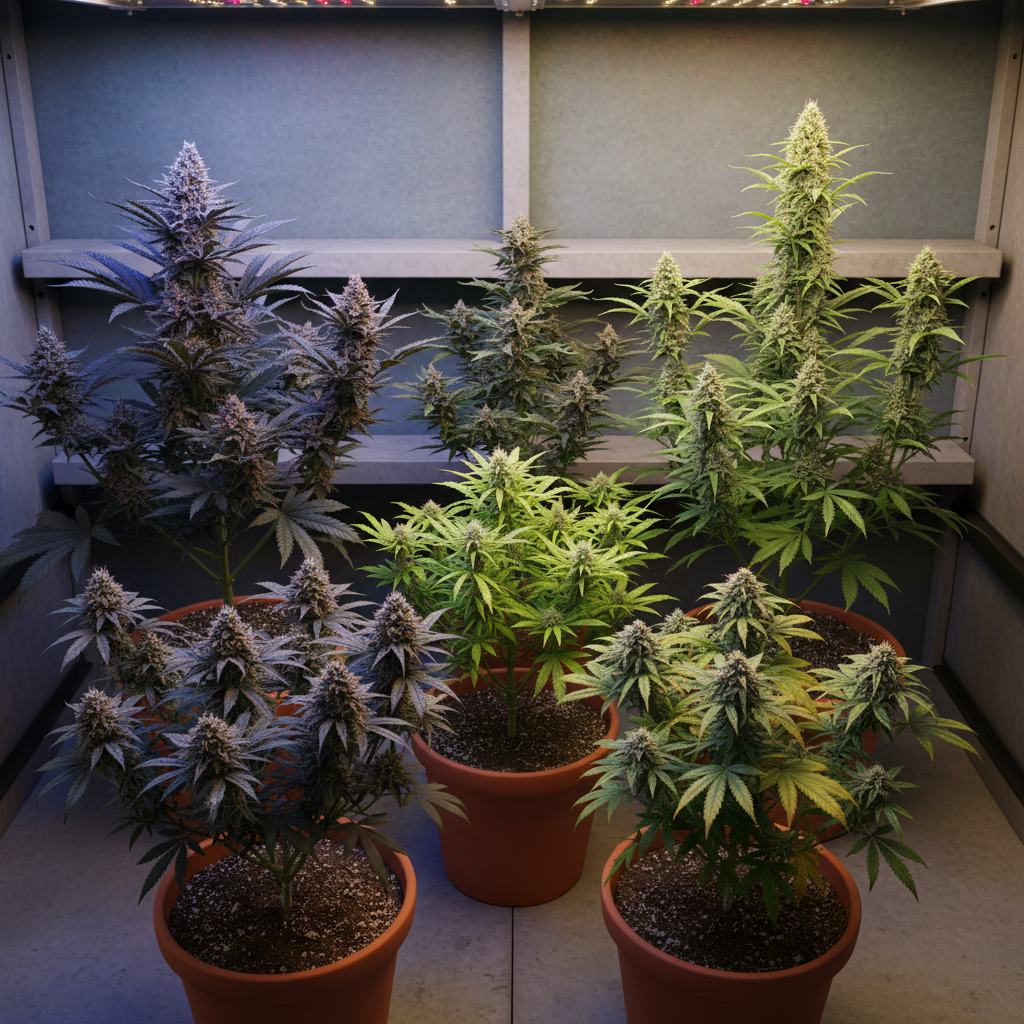
Choosing the best weed strains to grow indoors can make a major difference in how efficiently you use your space, lighting, and growing environment. Some cannabis strains naturally stay more manageable indoors, while others offer desirable traits such as predictable growth, strong yields, and resilience under controlled conditions.
According to research published in Frontiers in Plant Science, indoor cannabis production allows growers to closely control environmental factors such as lighting, which can influence plant growth and yield. At The Seed Connect, popular indoor-friendly options include strains such as Northern Lights, White Widow, Girl Scout Cookies, and Blue Dream.
Table of Contents
1. What makes a cannabis strain suitable for indoor growing?
Are you choosing a strain that suits your grow space, or just going for a popular name? A well-known strain may not be suitable if it grows too tall, flowers unpredictably, or has a strong smell.
Indoor-friendly genetics usually combine compact structure, a reasonably predictable flowering period, and growth that stays manageable under artificial light.
Tolerance for common beginner errors also matters, especially when watering, nutrition, or environmental control is not yet consistent.
The right choice starts with the room rather than the label.
A small tent may favor shorter plants, while a larger space can accommodate more vigorous growth and greater vertical stretch.
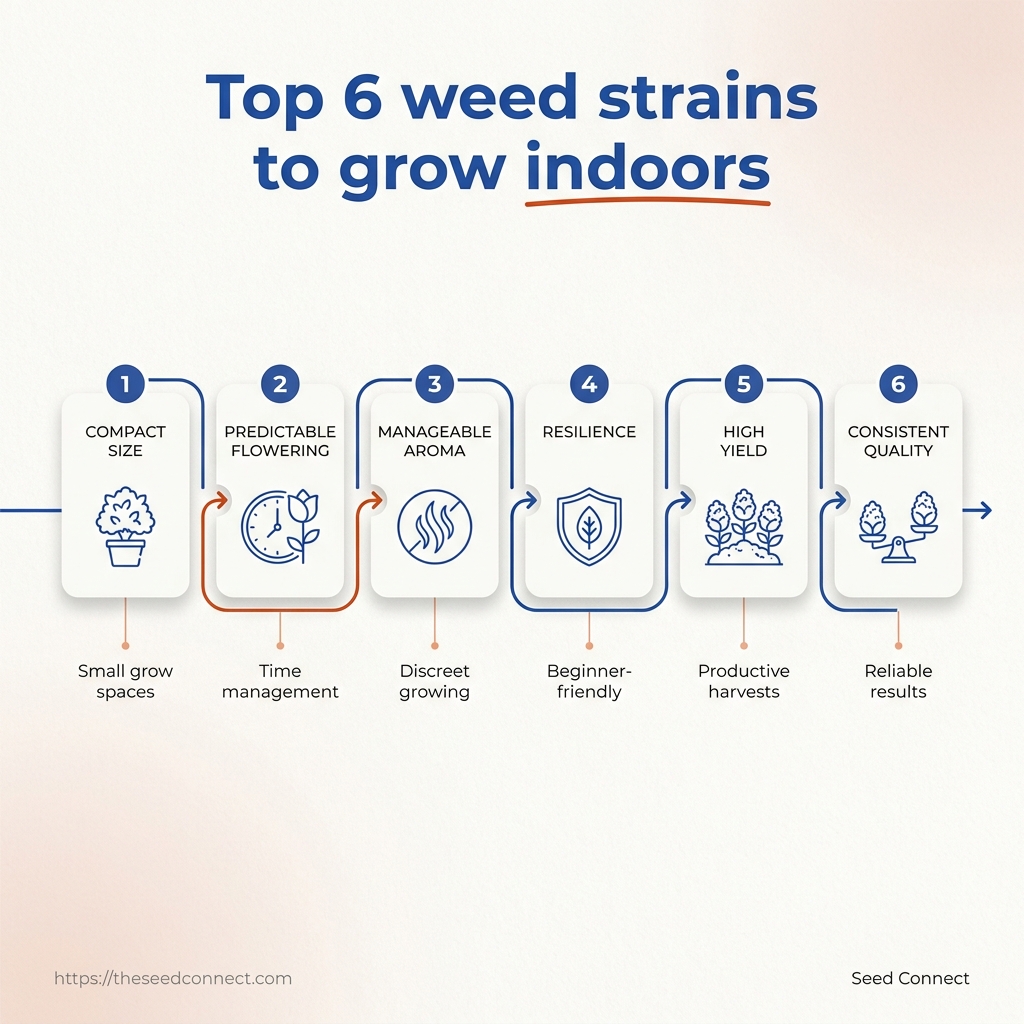
Plant size: Compact or moderate-growth plants are easier to position beneath indoor lights and maintain within a limited vertical space.
Flowering pattern: Predictable flowering helps growers plan around available time, light schedules, and harvest expectations.
Aroma level: Manageable fragrance can matter in apartments or shared homes, where strong odor may create practical or legal concerns.
Resilience: Genetics that handle minor care mistakes give newer growers more room to learn without immediate setbacks.
Expected yield: Yield should match the space, light, and experience available rather than relying only on a strain’s reputation.
Strain names still provide useful clues.
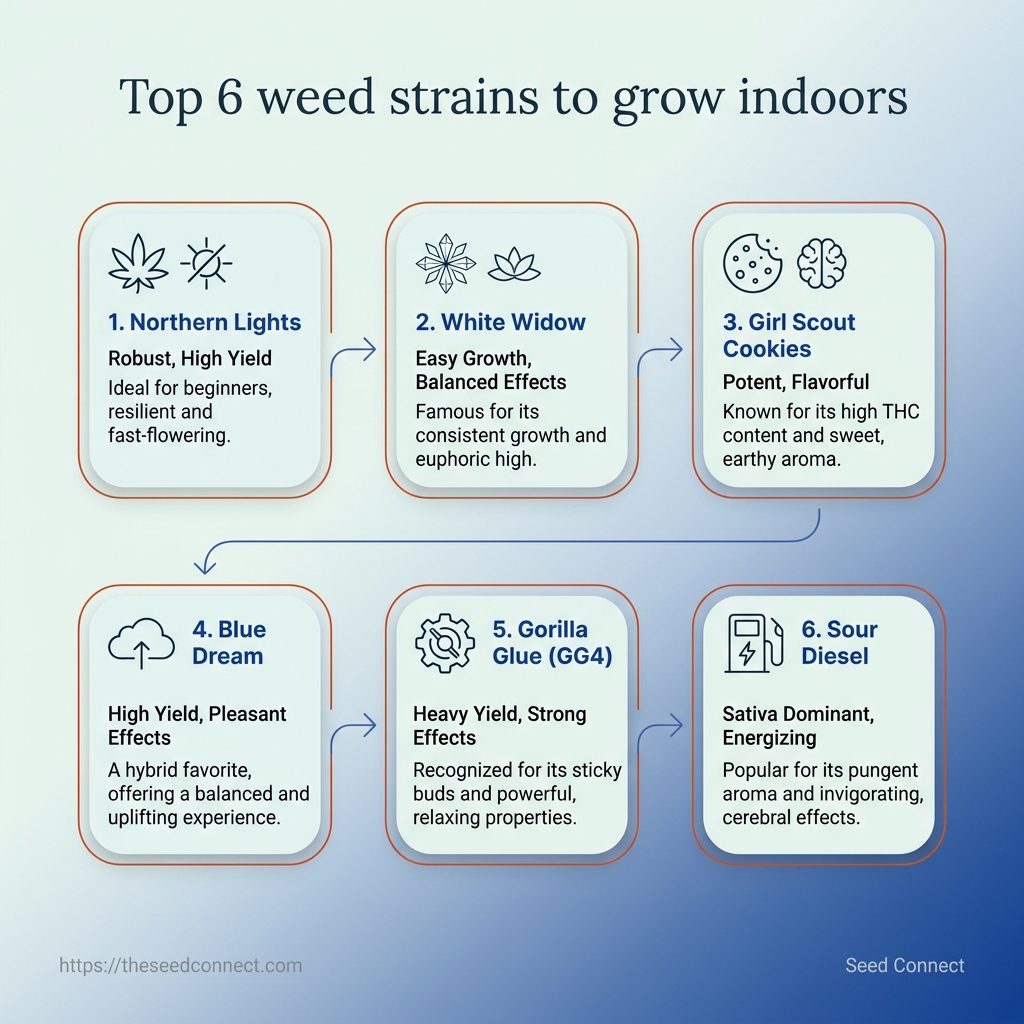
Northern Lights is known for robustness and high yield, making it a strong indoor candidate.
White Widow is popular for its balanced effects and ease of growth, while Girl Scout Cookies is valued for potency and flavor in indoor settings.
Blue Dream is often selected for its high yield and pleasant effects.
Genetics do not remove uncertainty.
Seeds from the same strain can produce different phenotypes, meaning plants may vary in height, aroma, flowering behavior, and final form.
Seed quality also matters, so consistent sourcing and clear germination policies deserve attention; our cannabis seeds include a germination guarantee.
Seed type shapes the growing goal:
Feminized seeds: Designed to produce female plants, reducing the chance of unwanted male plants in a personal indoor garden.
Autoflower seeds: Flower according to age rather than a changing light schedule, which can suit growers seeking a simpler timeline.
Photoperiod seeds: Allow greater control over when flowering begins, making them useful when plant size and timing need careful management.
Local cultivation laws remain part of the selection process.
Check current rules on possession, plant counts, home growing, and tenancy before buying or cultivating.
A suitable indoor strain fits the genetics, the room, the grower’s experience, and the law—not just the name on the packet.
2. The six best weed strains to consider for indoor gardens
The best indoor strain may not always be the one with the highest yield claims.
Other factors can be more important.
A productive plant still needs to fit the room, tolerate routine training, and finish within the grower’s available time.
The six strains listed below meet various priorities, from predictable structure to strong aroma and great flavor.
Height and flowering times are typical estimates; breeder genetics, training, light intensity, and environmental conditions can shift them.
Indoor strain comparison
| Strain | Type | Typical indoor height | Approximate flowering range | Aroma intensity | Best suited to |
|---|---|---|---|---|---|
| Northern Lights | Indica-dominant | 60–100 cm | 45–55 days | Low to medium | Newer growers seeking predictable structure |
| Blue Dream | Sativa-dominant hybrid | 100–180 cm | 55–65 days | Medium to high | Growers wanting vigorous growth and a familiar profile |
| White Widow | Balanced hybrid | 80–140 cm | 55–65 days | Medium to high | Newer and intermediate growers |
| Critical | Indica-dominant hybrid | 70–120 cm | 45–55 days | Medium | Growers prioritizing fast flowering and productivity |
| Gelato | Hybrid | 90–150 cm | 55–70 days | High | Experienced growers focused on flavor and potency |
| Gorilla Glue #4 | Hybrid | 100–160 cm | 55–65 days | High | Growers prepared for vigorous growth and strong aroma |
These estimates make the contrast easier to see.
Northern Lights and Critical suit compact spaces, while Blue Dream and Gorilla Glue #4 may need earlier training or more vertical clearance.
Six strong candidates for indoor gardens
Northern Lights remains a compact, forgiving choice for growers who value predictable structure.
Its robustness and high yield make it practical when consistency matters more than novelty.
Blue Dream offers vigorous growth, a familiar profile, and strong yield potential.
Its taller habit deserves early attention, especially in tents with limited headroom.
White Widow is a classic indoor candidate with broad appeal and a distinctive resin profile.
Its balanced structure makes it a useful middle ground between compact indica types and taller hybrids.
Critical fits practical harvest plans.
Its fast flowering period and productive plants appeal to growers who want efficient crop turnover without choosing an especially demanding variety.
Gelato suits experienced growers chasing layered flavor, potency, and premium genetics.
Strong aroma and sensitivity to environmental swings make steady conditions particularly important.
Gorilla Glue #4 is resin-rich and vigorous, but its strong aroma requires careful ventilation and odor control.
Seed versions can also vary, so the breeder’s specific description deserves close attention.
The right choice depends on the room and the grower’s priorities.
A well-matched strain usually delivers more dependable results than an impressive yield claim alone.
3. Match each strain to your indoor growing priorities
A gardener with a low ceiling once faced a simple choice: manage an unsuitable plant constantly or rule it out before buying…
A gardener with a low ceiling had to choose: either manage an unsuitable plant or eliminate it before buying seeds.
By starting with growth habits, the decision became easier.
Compact structure mattered more than a famous name or an impressive yield claim.
That approach works for small tents, low ceilings, and discreet indoor spaces.
Look for strains with manageable height and predictable branching, then confirm the expected flowering window from current breeder information.
A compact plant still needs room for airflow and light distance, so “short” should never mean “packed tightly.”
Match the strain to the room and schedule
Indoor priorities often overlap, but they do not always point to the same variety.
A plant praised for strong yields may create more height or odor than a shared home can comfortably manage.
-
Small tents and low ceilings: Start with Northern Lights when robustness and a productive indoor habit matter.
Its established reputation makes it a practical candidate, but actual height still depends on genetics and training.
-
Shorter timelines: Choose seeds with a clearly documented flowering period and avoid treating the breeder’s fastest estimate as a promise.
Build extra time into the plan for ripening, drying, and unexpected delays.
-
Aroma-sensitive homes: No cannabis strain should be treated as odor-free.
Compare aroma descriptions carefully, then plan ventilation, carbon filtration, and harvest storage around the plant’s likely scent intensity.
-
Flavor and potency: Girl Scout Cookies suits growers prioritizing pronounced flavor and potency in an indoor setting.
Those traits may also demand closer attention to plant support and environmental consistency.
-
A balanced beginner experience: White Widow offers a useful middle ground, combining ease of growth with balanced effects.
It may suit someone who wants a forgiving first run without giving up quality.
-
Yield and pleasant effects: Blue Dream is worth considering when a grower values high yield alongside a more approachable effect profile.
Its appeal still depends on whether the plant fits the available space.
Breeder descriptions help create a shortlist, not a guarantee.
Do compare height, branching, flowering time, aroma, and stated effects across several sources.
Do not select a strain because one headline promises maximum yield, fastest harvest, or unmatched potency.
A realistic shortlist connects the plant’s likely traits to the room’s hardest limit.
That single habit prevents many avoidable indoor-growing problems before they reach the tent.
4. Indoor strain selection mistakes that can reduce your chances of success
One height problem can throw off your entire indoor setup.
If a plant grows too tall, you need to raise the light.
This makes airflow harder to control and can lead to heat stress.
Many growers also judge seeds through one headline trait.
While high THC levels, impressive yield claims, and famous names can attract attention, they do not always provide a complete picture of a strain’s suitability.
Northern Lights is known for robustness and yield, while Girl Scout Cookies is famous for potency and flavor; each still requires a practical review of growth behavior before selection.
Mistake 1: Choosing only by potency, yield, or popularity.
These traits matter, but they should not replace details about flowering time, plant structure, odor, or likely stretch.
A popular strain can create more work than expected when its growth pattern conflicts with the room.
Mistake 2: Ignoring flowering behavior.
The label “indoor” does not guarantee a compact plant.
Check the expected flowering period, stretch after the light cycle changes, branch spacing, odor intensity, and whether the plant tends to form one central stem or several spreading branches.
Mistake 3: Expecting identical results from every seed.
Seeds from the same variety can show natural differences in height, branching, aroma, and finishing time.
Plan around the breeder’s stated range rather than assuming every plant will develop in exactly the same way.
Mistake 4: Overlooking seed quality and support.
Poor storage can reduce seed viability before planting.
Heat, moisture, and repeated temperature changes are common risks.
Review breeder information, packaging, storage guidance, germination instructions, and the seller’s support process before ordering.
We publish our current germination guarantee terms and support details on the cannabis seeds page, so those conditions should be checked before purchase.
Pre-purchase legality and quality checklist
Rules can differ between national, state, provincial, and local authorities.
Confirm the current position through official government and customs sources before ordering, receiving, possessing, or growing seeds.
| Check before ordering | Why it matters | What to verify |
|---|---|---|
| Local cannabis laws | Possession and cultivation rules may differ by location. | Check official national, state, provincial, and municipal government guidance. |
| Import and customs rules | A legal domestic purchase may still create problems across borders. | Review official customs and border-control requirements for seeds. |
| Seed type and breeder | Genetics may have different growth traits and legal considerations. | Confirm strain type, breeder details, and product description. |
| Shipping availability | Some destinations may be excluded from delivery. | Check current destination restrictions, delivery terms, and tracking options. |
| Germination guarantee terms | Support may depend on timing, storage, and documented steps. | Read the current guarantee conditions before placing an order. |
| Customer support access | Questions about storage or germination need timely answers. | Confirm contact methods, response channels, and required purchase records. |
Mistake 5: Skipping the legal check. Laws can change, and online listings do not replace official guidance.
Verify the rules before payment, then confirm the package, paperwork, and intended use remain compliant after delivery.
Careful selection is more than comparing strain names.
It means checking the plant’s likely behavior, the seed’s quality controls, and the rules that apply where you live.
5. How to assess seed quality before choosing a strain
It is commonly believed that a well-known strain name does not necessarily guarantee better seed quality, though this can vary.
Northern Lights may be known for robustness and high yield, while White Widow is valued for balanced effects and straightforward growth.
Those reputations describe strain history, not the quality of every seed listing available today.
Seed quality depends on more than the label.
A reliable seller should provide clear information about the breeder, genetic lineage, expected traits, seed type, and current availability.
Vague descriptions, copied strain names, or missing breeder details make a purchase harder to assess.
Look for practical information you can compare.
Girl Scout Cookies is often associated with potency and flavor, while Blue Dream is commonly chosen for yield and pleasant effects.
Treat those descriptions as starting points, then confirm whether the listing explains the specific genetics being offered.
What to check before placing an order
A transparent listing should answer basic questions without making you chase down the details.
Pay particular attention to:
-
Breeder identity: The listing should name the breeder or genetic source clearly.
-
Genetic lineage: Parent strains can provide useful context about likely growth, aroma, and effect traits.
-
Expected characteristics: Review stated flowering behavior, plant size, yield range, and environmental preferences without treating them as guarantees.
-
Seed type: Confirm whether the option is feminized, autoflowering, or another type that matches your plan.
-
Current availability: Fresh stock information matters, especially when a strain has several versions or limited releases.
-
Support terms: Check whether help is available before and after purchase if germination questions arise.
Germination support deserves close attention.
A germination guarantee generally means the seller offers a defined remedy when seeds fail to germinate under the conditions and time limits stated in its policy.
It does not necessarily cover poor storage, unsuitable moisture levels, damaged handling, or every later growing problem.
Read the guarantee before buying.
Note the claim period, required evidence, approved germination method, replacement rules, and any exclusions.
At Seed Connect, our cannabis seeds range may suit growers who want quality genetics alongside expert support and a clear germination guarantee.
Record the buying decision before checkout
A short written comparison can prevent an appealing strain name from making the decision for you.
Record the following details for each option:
-
Strain goal: Desired effect, flavor, yield, or plant behavior.
-
Space limits: Available room, lighting plan, and clearance.
-
Experience level: Beginner, intermediate, or advanced.
-
Seed type: Feminized or autoflower, based on the growing plan.
-
Legal checks: Confirm local rules for possession, cultivation, and delivery.
-
Support needs: Germination policy, grower assistance, and delivery questions.
Quality assessment becomes much easier when the name, genetics, policy, and practical fit all withstand scrutiny.
Choose the listing you can understand—not simply the one you recognize.
6. Buying cannabis seeds internationally for an indoor grow
You find a strain that suits your room, climate control, and growing goals.
Your order must pass legal, shipping, customs, and delivery checks before it arrives.
International seed orders do not follow one global rulebook.
A destination may permit possession but restrict importation, require documentation, or prohibit cannabis seeds entirely.
Shipping eligibility can also change by country, carrier, product type, and local policy.
Discreet packaging usually refers to plain, privacy-conscious outer packaging rather than a way to avoid customs rules.
Delivery terms matter too.
Tracking, replacement policies, estimated transit times, and responsibility for seized or delayed parcels may differ between destinations.
Checks to complete before placing an international order
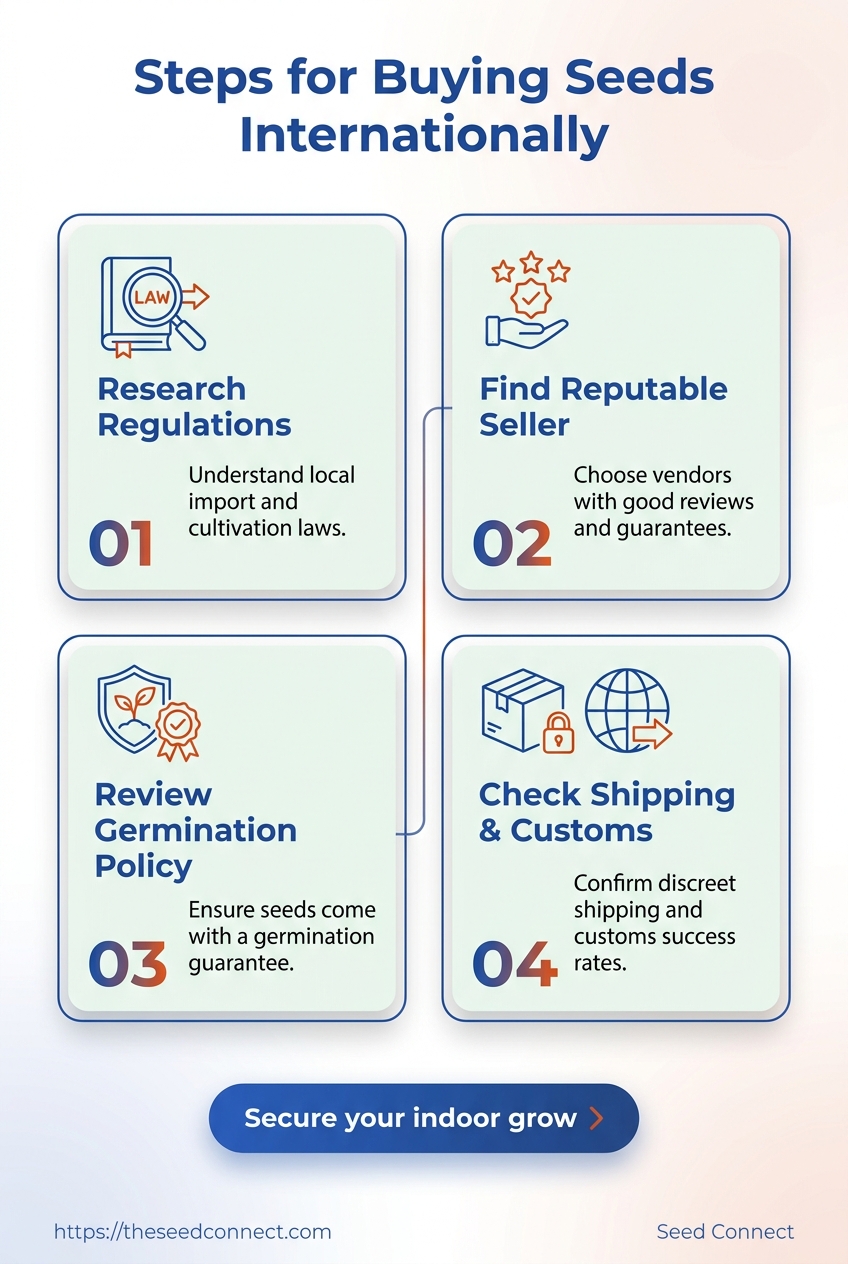
Research the rules that apply where the package will enter the country, not only those where the seller operates.
Government customs, agriculture, and controlled-substance agencies provide the most reliable guidance.
Before paying, confirm:
-
Import legality: Check whether cannabis seeds may legally enter your country and whether possession has separate restrictions.
-
Documentation: Find out whether an import permit, phytosanitary certificate, declaration, or other paperwork applies.
-
Shipping eligibility: Confirm that the seller accepts orders for your destination and identify any excluded regions or delivery limits.
-
Packaging terms: Review how the order is packaged for privacy, whether the contents are declared, and how customs information is handled.
-
Delivery conditions: Check tracking, estimated delivery windows, failed-delivery procedures, and the policy for customs delays or returns.
-
Payment and personal data: Understand transaction records, address handling, and any age or identity checks required by the seller.
A seed bank cannot override local law, and no delivery method removes the buyer’s responsibility.
Keep records of the rules you reviewed and avoid ordering until the requirements are clear.
Use cultivation support without expecting a guaranteed result
Expert guidance can help narrow a purchase, especially when several varieties appear suitable indoors.
Ask focused questions about expected plant behavior, training tolerance, flowering duration, and how a strain may fit your available space.
Support should improve the quality of your decision, not promise a fixed harvest.
Results still depend on genetics, environmental control, lighting, plant care, and local growing conditions.
At Seed Connect, we provide a cannabis seeds range that lets indoor growers compare available varieties, while our germination guarantee and expert support address different parts of the buying decision.
Review the current destination terms before ordering.
International buying works best as a compliance check followed by a genetics comparison.
Confirm the rules first, then choose seeds that make sense for the grow you can actually manage.
7. Position this guide within the wider indoor cannabis seed topic
What should you explore after narrowing your choice to one or two strains? The next step is not to find another popularity ranking.
It is checking whether the seeds, genetics, germination plan, growing method, and purchasing route all support the same indoor goal.
This guide works best as the comparison stage in a broader research path.
Once a strain appears suitable, move into the wider cannabis seed collection for guidance on seed types, genetic traits, and buying considerations.
That wider context helps prevent a good strain match from becoming a poor seed purchase.
The surrounding topics answer different questions, so each one has a clear role:
-
Seed types: Decide whether feminized, autoflower, or another seed type fits your plans and experience.
-
Germination: Review how to begin with healthy seeds and avoid early handling mistakes that can affect development.
-
Indoor growing basics: Confirm that lighting, airflow, containers, timing, and environmental control suit the selected plant.
-
Strain genetics: Look beyond the strain name and assess traits such as growth pattern, flowering behavior, aroma, and expected plant response.
-
International ordering: Check local rules, shipping conditions, customs concerns, and import restrictions before placing an order.
Build a decision path instead of opening random tabs
A simple sequence keeps research focused.
Start with the strain comparison, then validate the seed choice, growing plan, and legal position before purchasing.
-
Compare the finalists: Record the traits that matter most for your room and growing goals.
-
Review the seed details: Check the listed seed type, genetic background, flowering information, and seller policies.
-
Plan the first weeks: Read germination and indoor growing guidance before the package arrives.
-
Confirm legal requirements: Check current rules for possession, cultivation, shipping, and importation in every relevant location.
-
Choose a support route: Keep expert grower support available for questions about germination, plant development, or strain-specific behavior.
Only after these checks should browsing become a buying decision.
Our team can support that final stage with seed information and grower guidance, while legal planning remains the grower’s responsibility.
A well-positioned guide does more than rank strains.
It connects comparison with preparation, responsible purchasing, and practical support, giving each research step a clear purpose.