

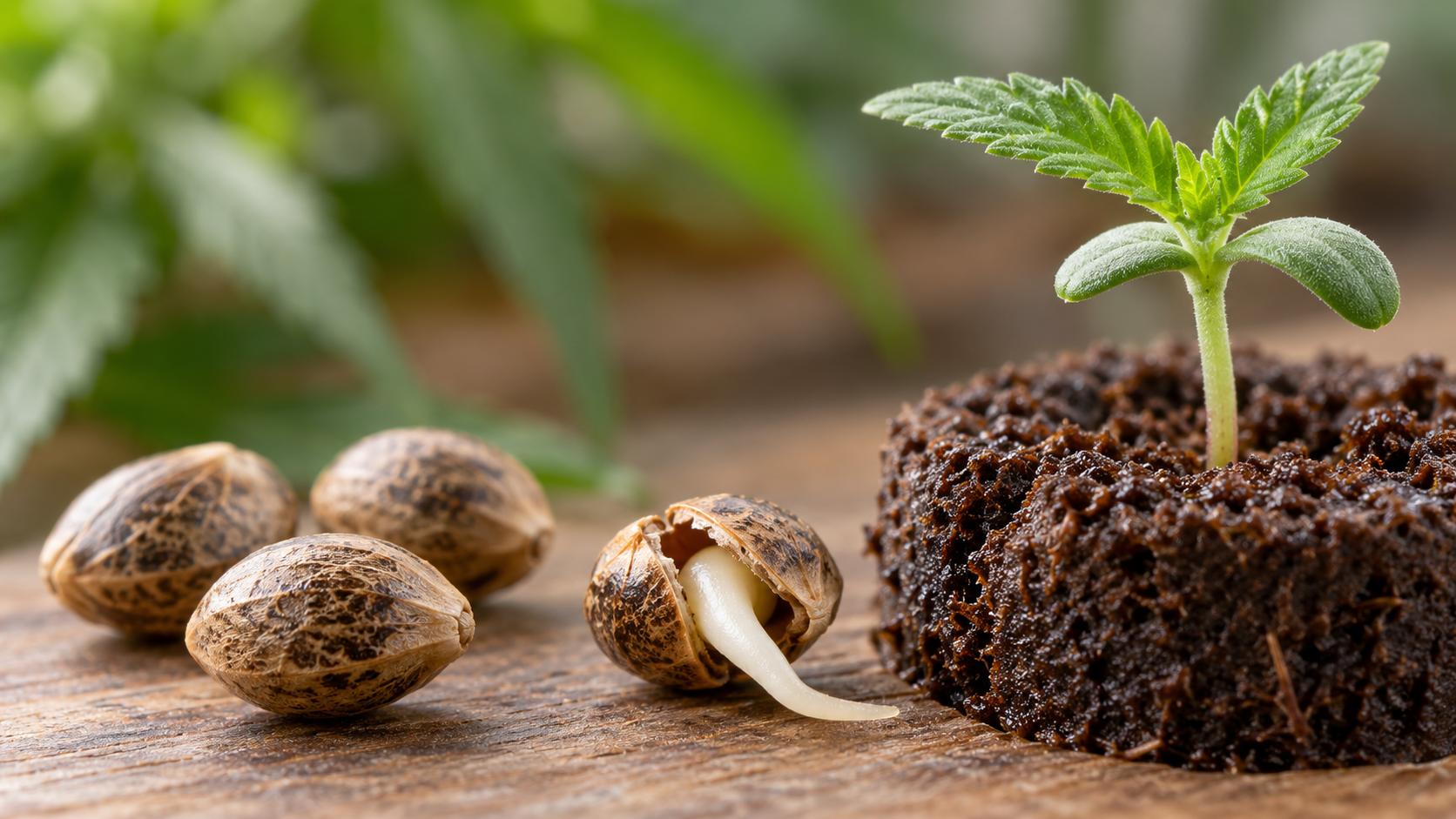
Learning how to germinate cannabis seeds is easier than it first appears. A viable seed mainly needs moisture, oxygen, suitable warmth, and a little patience to begin growing.
For most beginners, the paper towel method is a good place to start because you can actually see when the seed cracks and the small white taproot appears. Direct planting in soil is another simple option if you’d rather avoid handling the new root.
Whichever method you choose, the goal is the same: keep the seed moist without soaking it, avoid unnecessary handling, and move it into its growing medium once germination begins.
Table of Contents
What Does It Mean to Germinate a Cannabis Seed?
Germination is simply the process of waking a dormant seed and starting a new plant.
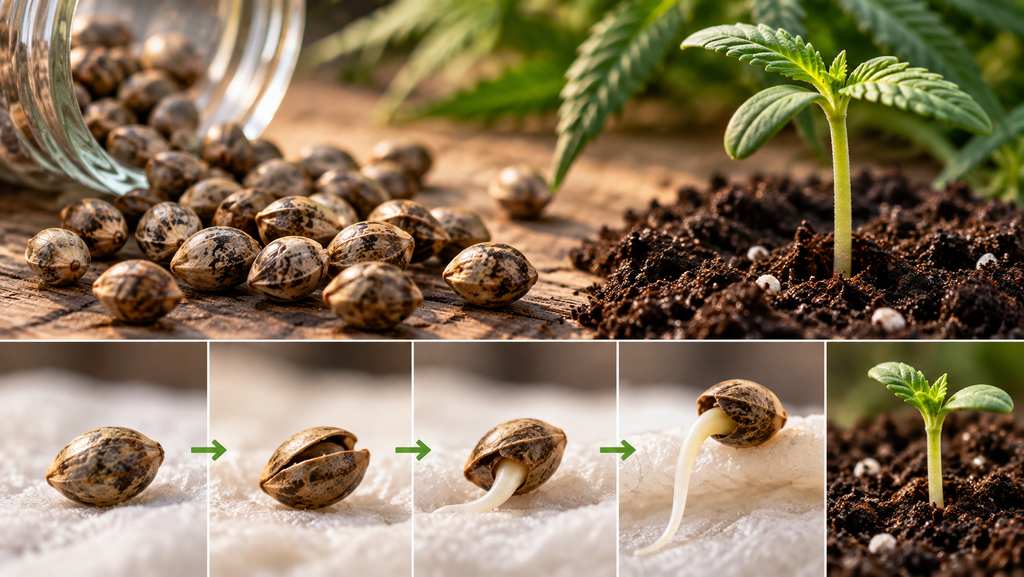
When a cannabis seed receives enough moisture under suitable conditions, it begins absorbing water. The shell eventually cracks and a small white root—called the taproot or radicle—emerges.
Once you can see that root, the seed has germinated.
According to Penn State Extension’s explanation of seed biology, water, oxygen, and suitable temperature are fundamental requirements for successful seed germination.
The cannabis seed isn’t asking for anything magical. Your job is mostly to provide stable conditions and avoid interfering with the process.
What Do Cannabis Seeds Need to Germinate?
Before choosing a method, get the basics right.
| Factor | What You Want |
|---|---|
| Moisture | Damp, not soaked |
| Oxygen | Good air availability |
| Temperature | Consistently warm conditions |
| Handling | Minimal |
| Environment | Clean and stable |
One of the biggest mistakes beginners make is assuming more water means faster germination.
It doesn’t.
Seeds require oxygen for respiration during germination. Waterlogged conditions can reduce the oxygen available around a seed, which is one reason overly saturated growing media can cause problems. The University of New Hampshire Extension also emphasizes the importance of proper moisture and aeration when starting seeds.
Now let’s look at the four practical ways to germinate cannabis seeds.
How to Germinate Cannabis Seeds With the Paper Towel Method
For beginners, this is one of the easiest methods because you can monitor progress without digging through soil.
What you’ll need
- Cannabis seeds
- Two clean paper towels
- Clean water
- A plate or clean container
- Tweezers if needed
Step 1: Dampen the paper towels
Wet the towels and gently remove excess water.
They should feel consistently damp but shouldn’t have water pooling around them.
Step 2: Place the seeds on the towel
Lay one damp paper towel flat and place your cannabis seeds on it with some space between each seed.
Cover them with the second damp towel.
Step 3: Keep them warm
Place the towels between two plates or inside a clean container.
Keep them somewhere warm and stable. Avoid constantly opening the setup every few minutes to check progress.
Step 4: Check for the taproot
Inspect the seeds periodically and make sure the towel hasn’t dried out.
Eventually, the shell should crack and a small white root will appear.
Step 5: Transfer the germinated seed
Once a short taproot is visible, prepare the growing medium first.
Handle the seed gently by the shell rather than touching the root whenever possible.
Place it into a shallow hole and lightly cover it.
That’s it.
The seed now needs time to establish itself and emerge as a seedling.
How to Germinate Cannabis Seeds Directly in Soil
Direct planting is another simple way to germinate cannabis seeds, especially if you want to avoid transferring a fragile taproot.
Start with a small container filled with a light, well-aerated growing medium.
Moisten the soil first, but don’t turn it into mud.
Make a shallow hole, place the seed inside, and cover it lightly.
Keep the soil consistently moist while waiting for the seedling to emerge.
The biggest advantage here is that you don’t have to move the seed after germination starts.
The disadvantage?
You can’t see what’s happening underground.
If you’re comparing growing media, our guide to different germination media for cannabis seeds can help you understand the strengths and weaknesses of common options.
Can You Germinate Cannabis Seeds in Water?
Yes, but soaking is often most useful as a pre-germination step rather than something you need to continue indefinitely.
Some growers place seeds in clean water briefly to help hydrate the shell before moving them to a paper towel or growing medium.
If you use this method, don’t assume a seed is dead simply because it floats.
You’ve probably seen the internet “float test”:
Floating seed = bad
Sinking seed = good
It’s not that reliable.
A seed’s position in water alone isn’t enough to confirm whether it will germinate.
After the seed has hydrated, transfer it to your chosen germination method rather than leaving it submerged unnecessarily.
Using Starter Plugs to Germinate Cannabis Seeds
Starter plugs or pellets are another convenient option, especially for growers who want a tidy, organized setup.
You simply moisten the plug according to its instructions, place the seed inside, and keep conditions stable.
Once the seedling establishes itself, the entire plug can usually be transferred into a larger growing medium.
That reduces direct handling of the young root.
Starter plugs aren’t necessary for successful germination, though.
If you’re growing only a few seeds, paper towels or direct planting may be perfectly adequate.
Which Cannabis Germination Method Is Best?
There isn’t one method that’s best for every grower.
A better approach is choosing based on your situation.
| Your Situation | Good Starting Method |
|---|---|
| First-time grower | Paper towel |
| Want to see germination happening | Paper towel |
| Want minimal root handling | Direct soil |
| Organized indoor setup | Starter plug |
| Older or dry seed | Brief soak followed by another method |
For most beginners, I’d start with the paper towel method because it’s simple and lets you see exactly when germination occurs.
If you’re starting a new grow, genetics matter too. You can browse The Seed Connect’s full selection of marijuana seeds, including feminized seeds and autoflower seeds.
How Long Do Cannabis Seeds Take to Germinate?
Some viable seeds crack relatively quickly, while others take several days.
Don’t panic if nothing happens immediately.
How fast a cannabis seed germinates can depend on:
- seed age
- genetics
- storage history
- moisture
- temperature
- overall seed quality
The important thing is keeping conditions stable.
Repeatedly opening the container, squeezing the seed, digging it up, or changing methods every few hours usually doesn’t help.
If you’re storing seeds before germination, proper conditions matter as well. Our guide to how to store cannabis seeds explains how storage conditions can affect long-term seed quality.
When Should You Plant a Germinated Cannabis Seed?
Once you can see a small white taproot, you can move the seed into its growing medium.
You don’t need to wait until the root becomes several inches long.
In fact, allowing it to grow excessively in a paper towel can make transfer more difficult.
Before touching the seed:
- Prepare the growing medium.
- Make a small planting hole.
- Pick up the seed by its shell.
- Place it gently into the hole.
- Cover it lightly.
- Moisten the surrounding medium carefully.
Avoid pressing heavily on the soil after planting.
The young root now needs room to grow downward while the seedling begins moving toward the surface.
6 Common Cannabis Germination Mistakes
1. Using too much water
Seeds need moisture, but soaking everything can reduce oxygen around them.
Think damp, not flooded.
2. Letting the paper towel dry out
At the opposite extreme, don’t let your germination setup become completely dry.
Check it periodically and maintain consistent moisture.
3. Touching the taproot
The newly emerged root is delicate.
Handle the seed shell whenever possible.
4. Planting too deeply
A tiny seedling shouldn’t have to fight through a large amount of soil just to reach the surface.
Cover it lightly.
5. Checking constantly
It can be tempting to inspect seeds every hour.
Give them time.
Repeated handling can create more problems than it solves.
6. Adding nutrients too early
A germinating seed contains stored energy to support its earliest growth.
You generally don’t need to bombard it with fertilizers or germination “boosters.”
Once the seedling develops, nutritional requirements change. Our guide to nutrients for cannabis seedlings after germination covers that next stage.
What If Your Cannabis Seed Won’t Germinate?
First, don’t give up after 24 hours.
Check the basics.
Is the environment too dry?
The seed needs consistent moisture.
Is everything completely soaked?
Excess water can reduce oxygen availability.
Is the environment unusually cold?
Temperature affects seed germination.
Was the seed stored poorly?
Age and storage conditions can affect viability.
Does the seed look rotten?
A soft seed with an unpleasant odor is different from one that’s simply taking longer.
Researchers have even studied methods for improving germination in difficult Cannabis sativa seeds. One peer-reviewed study indexed in PubMed investigated controlled hydrogen peroxide treatments.
That doesn’t mean beginners should start experimenting with random peroxide recipes from forums. For normal home germination, getting moisture, temperature, oxygen, and seed quality right should come first.
What Happens After Germination?
Germination is only the beginning.
Once the seedling emerges from the growing medium:
- provide appropriate light
- keep the medium moist without waterlogging it
- avoid overfeeding
- watch for excessive stretching
- maintain suitable temperature and humidity
At this stage, the plant begins relying less on the reserves stored inside the seed and more on its developing root system and leaves.
Treat the seedling gently during these first days. Overwatering, excessive nutrients, and unstable environmental conditions can quickly undo a successful germination.
How to Germinate Cannabis Seeds Successfully
If you’re learning how to germinate cannabis seeds, don’t overcomplicate it.
Start with healthy seeds, provide moisture without waterlogging them, maintain suitable warmth, allow access to oxygen, and handle the emerging taproot as little as possible.
The paper towel method is an excellent starting point if you want to monitor progress. Direct planting is great if you’d rather avoid transplanting the germinated seed, while starter plugs can make sense for a more structured indoor setup.
Whichever method you choose, patience matters.
Give the seed stable conditions and enough time to do what seeds are naturally designed to do: grow