


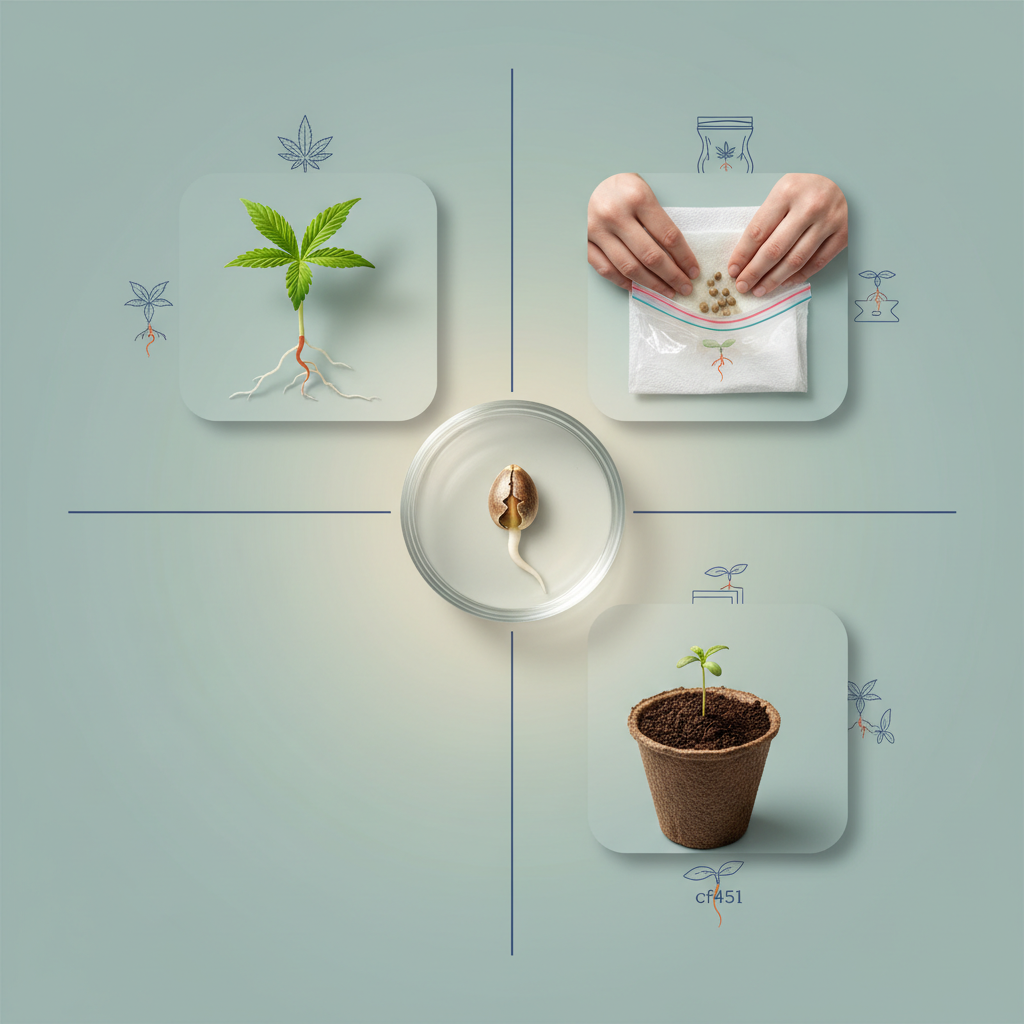
The difference between a healthy start and a stalled tray often comes down to a few quiet details. Germinating cannabis seeds looks simple on paper, but a little too much moisture, a cold corner, or rough handling can stop progress fast.
A seed that cracks at the wrong pace can still fail if the first root dries out or gets damaged.
That is why successful seed germination depends less on luck and more on steady conditions, clean handling, and patience.
Once the shell opens, the real test begins.
Early growth is fragile, and strong seedling development tips usually focus on keeping stress low, light balanced, and the root zone stable so young plants can settle in without a fight.
Quick Answer: Successful germination comes down to two controllables: warmth and moisture. Aim for roughly 75–80°F (24–27°C) and keep your germination setup damp-but-not-soggy, using clean paper towels so oxygen can still reach the seed. If the setup stays too wet or too cold, germination stalls; if it dries out, the shell won’t soften evenly. For the full “why” and what to watch for, see Sections 3 (common failure causes), 8 (ideal conditions), and 9 (signs it’s working).
Why Germination Fails More Often Than People Expect
Fresh seeds fail more often than people expect. The problem usually is not the seed itself.
It is the environment around it.
Successful germination depends on a narrow balance of moisture, warmth, oxygen, and gentle handling.
For germinating cannabis seeds, ideal temperatures sit around 75–80°F, and one practical guide from Athena Ag’s germination guide puts that range at 75–80°F, which lines up with what most growers see in practice.
A seed can look perfect and still stall.
Too much water cuts off oxygen, while too little keeps the shell from softening.
Cold conditions slow everything down, and heat swings can stress a seed before the taproot even appears.
Consider a grower who uses healthy, stored-seed stock, fresh paper towels, and a clean tray.
If the towels stay soggy overnight or the tray sits on a cold windowsill, the seed may never break through.
The seed was viable; the setup was not.
- Too much moisture: Saturated paper towels or standing water can smother the seed before it opens.
- Too little moisture: Dry patches stop the shell from softening evenly, so the root never gets a clean start.
- Wrong temperature: Cold slows the process, while heat spikes can damage the embryo before germination completes.
- Poor airflow: A sealed, swampy setup invites rot and leaves the seed with too little oxygen.
- Rough handling: Poking, moving, or burying a new taproot too deeply can break the early growth stage.
- Impatience: Some seeds pop fast, while others need a few extra days before showing life.
That is why seedling development tips matter before the seedling even emerges.
Stable conditions, clean tools, and a light touch usually beat tricks and shortcuts.
In germinating cannabis seeds, consistency wins more often than enthusiasm does.
The best setups feel almost boring.
Warm, damp, dark enough, and left alone.
That quiet discipline is usually where successful seed germination starts.
Choose the Right Seeds Before You Start
A seed can look fine on the outside and still be a poor choice for germinating cannabis seeds.
The real difference shows up in how evenly it hydrates, how quickly it cracks, and how much energy it has for early growth.
Healthy seeds usually come from mature, well-handled stock.
They tend to hold moisture better, resist rot longer, and support steadier early development once the shell opens.
That matters because successful seed germination is only the first step.
A strong seed also gives you a better shot at vigorous seedlings, which makes the next few days much easier to manage.
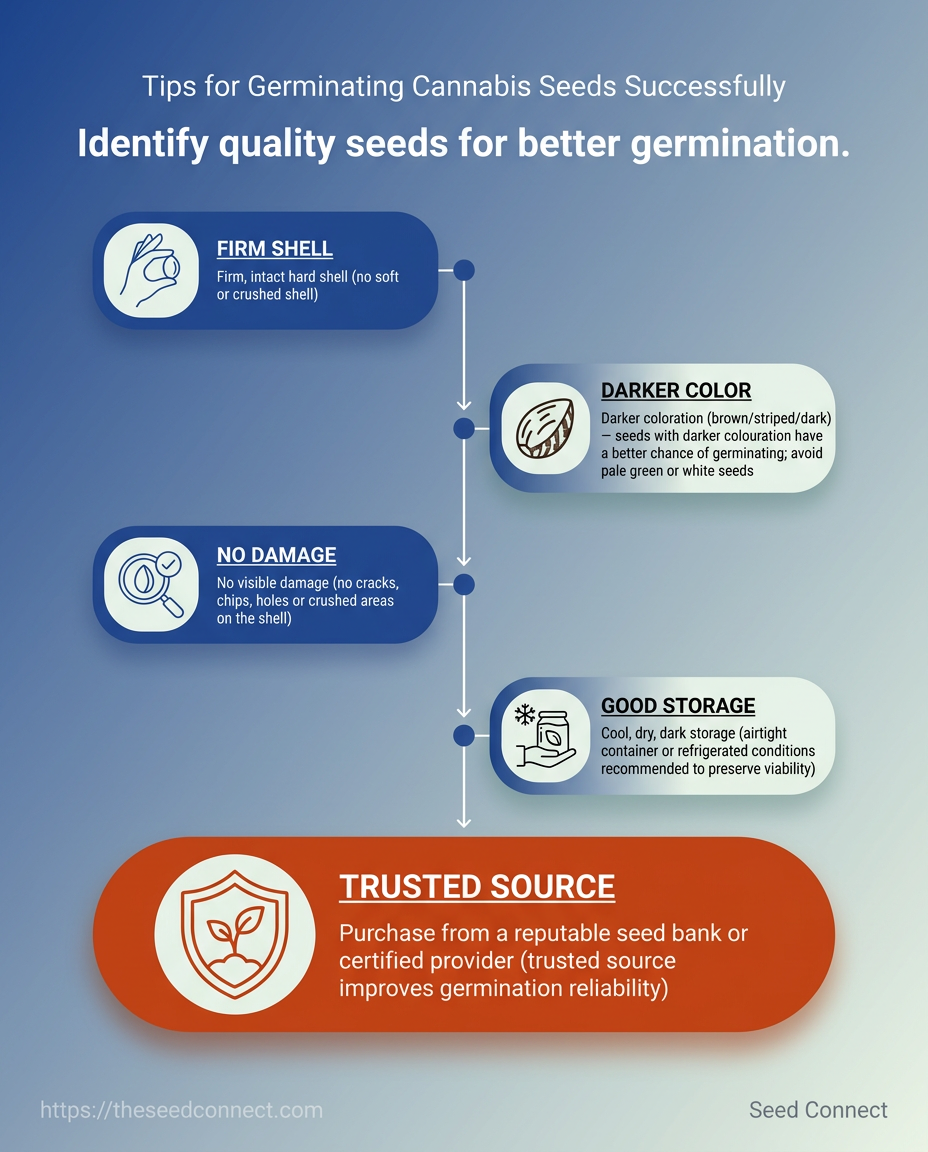
Checklist: signs a seed is more likely to germinate well
| Quality signal | What it looks like | Why it matters |
|---|---|---|
| Firm shell | Feels hard and solid between your fingers, not soft or flimsy | A firm shell usually points to proper maturity and better protection for the embryo |
| Darker color with mottling | Brown, gray, or tiger-striped patterns instead of pale green tones | Mature cannabis seeds often darken as they finish developing |
| No visible cracks or damage | No splits, dents, crushed spots, or chipped edges | Damage can let in moisture too early and weaken the seed before it starts |
| Stored in a cool, dry place | Kept away from heat, humidity, and direct light | Good storage helps preserve viability and reduces premature aging |
| Clear source from a trusted seed seller | Comes with known strain details, batch info, or consistent breeder information | Traceable seeds are easier to trust and usually handled more carefully |
The strongest clues are simple: firmness, color, and intact surfaces.
Poorly handled seeds often fail in uneven ways.
Some swell and stall, while others split weakly and never build momentum for early seedling development.
A quick habit pays off here.
Sort your seeds before you begin, set aside anything questionable, and give the best-looking ones the first chance at growth.
That small filter saves time and frustration later.
It also puts the rest of your germination setup to better use.
Pick a Germination Method That Matches Your Setup
A small tray on a warm shelf behaves very differently from a full tent or a simple kitchen counter.
That is why germinating cannabis seeds is less about finding one “best” method and more about choosing the one you can control well.
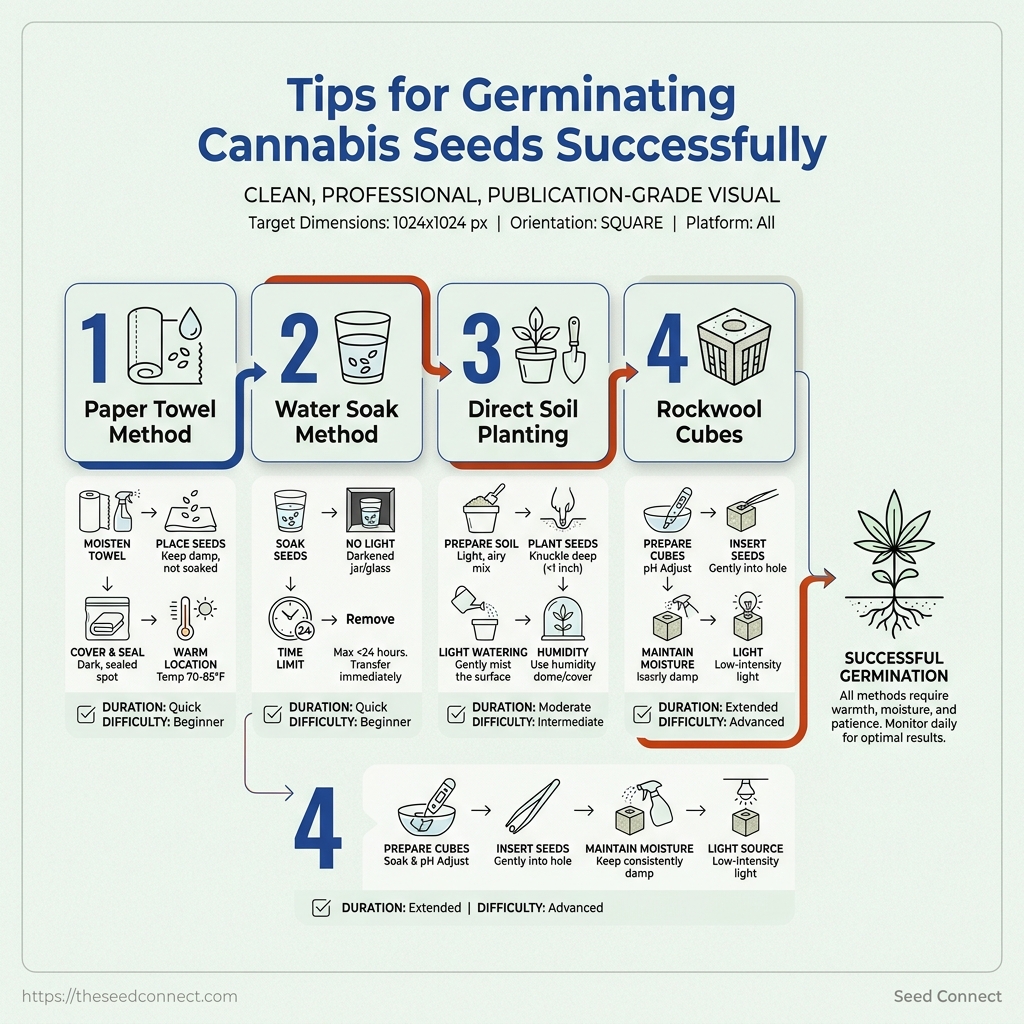
Paper towel setups work nicely when you want close monitoring.
Direct-to-medium methods suit growers who prefer fewer moves and less root handling.
Soaking first sits somewhere in between, and it can help stubborn seed shells soften faster when used with restraint.
Temperature still matters here.
According to com/blog/how-to-germinate-cannabis-seeds”>Athena Ag’s germination guide, ideal germination temperatures sit around 75–80°F (24–27°C), which is a useful target for most methods.
Common Germination Methods Compared
| Method | Best for | Difficulty | Speed | Main risk |
|---|---|---|---|---|
| Paper towel | Beginner growers who want to watch progress closely | Low | Moderate | Too much moisture |
| Direct-to-medium | Growers who want less handling | Low | Moderate | Overwatering |
| Soaking first | Harder seeds or older stock | Low | Fast | Suffocation if left too long |
It works best when the towel stays damp, not dripping, and the seed is moved as soon as the root appears.
Direct-to-medium is calmer.
The seed stays in its final environment from the start, so there is less root disturbance and fewer transfers to manage.
Soaking first can be useful, but only as a short start, not a long bath.
A brief soak helps water reach the shell quickly, while a long soak can cut off oxygen and stall successful seed germination.
Choose by matching the method to your space, not by chasing the fastest route.
A controlled setup beats a clever one, especially when tiny roots are just beginning to form.
If you want fewer surprises, pick the method you can keep steady from start to finish.
Consistency usually does more for seedling development tips than any fancy trick ever will.
Set the Right Conditions for Early Success
A warm drawer beats a sunny windowsill every time. Successful seed germination starts with conditions that feel steady, not dramatic.
For germinating cannabis seeds, the sweet spot is usually 75–80°F (24–27°C) with gentle, even moisture. com/blog/how-to-germinate-cannabis-seeds”>Athena Ag’s cannabis germination guide points to that range, and it lines up with what experienced growers see again and again: seeds respond best when the environment stays calm and consistent.
Moisture matters just as much.
The seed should stay damp enough to activate, but never sit in standing water or cling to soggy material.
That balance supports the first split in the shell without suffocating the seed before the taproot appears.
Darkness plays a quiet but useful role at this stage.
It mimics the underground setting seeds expect, which helps the embryo focus on opening before it has to deal with light, air movement, or sudden drying.
- Temperature: Keep the space in the mid-70s Fahrenheit and avoid swings from day to night. Even small drops can slow the softening process.
- Moisture: Aim for evenly damp, not wet. The seed should feel supported, not submerged.
- Light: Use darkness during the first stage. Bright light can dry the setup too quickly and add stress before the seed is ready.
- Air exposure: Limit drafts and open handling. A stable pocket of air helps the seed stay in the right moisture zone.
- Placement: Set the seed where heat and moisture stay uniform across the whole surface. Hot spots create uneven results.
A simple habit helps here: check the setup once or twice a day, then leave it alone.
Too much fussing is one of the fastest ways to throw off seedling development tips before the seed has even broken ground.
Keep the environment boring.
Boring is good.
That steady start gives the taproot a cleaner path and sets up the seedling for a smoother first week.
Watch for the Signs That Germination Is Working
A seed that has truly started germinating usually gives away the secret early.
The shell may split, a pale root tip appears, and the whole thing starts to look less like a dry seed and more like a living plant in motion.
That root tip matters more than anything else.
A healthy taproot is usually white or cream-colored, firm, and straight or gently curved.
If it looks brown, mushy, or slimy, the seed has likely stalled instead of moving into normal development.
Timing helps too.
Many growers see movement within 24 to 72 hours, and Budtrainer’s cannabis seed germination guide notes that seeds often crack and germinate in that 48 to 72 hour window under common methods.
Some seeds are simply slower, so a seed that has not opened yet is not always a failure.
- Healthy taproot: Look for a bright white tip that appears clean and hydrated. It should hold its shape instead of collapsing.
- Normal timing: Many seeds show the first split in a couple of days. A few need longer, especially if the shell is thicker or older.
- Cracked but still closed: A seed can split without fully opening. That usually means moisture has entered, but the shell has not loosened enough to release the root.
If a seed cracks but does not open, patience beats poking.
A light, steady moisture level often gives the shell more time to soften, while aggressive handling can damage the tiny root before it shows itself.
Avoid peeling the shell apart unless the taproot is already visible and stuck at the edge.
In that case, the goal is gentle assistance, not force.
One clean split is progress; repeated opening and closing usually slows germinating cannabis seeds down instead of helping them along.
A useful habit is to check once or twice a day and leave the seed alone between those checks.
That keeps you from mistaking slow progress for failure, and it protects the fragile stage before seedling development tips even come into play.
Avoid the Mistakes That Hurt Seedling Development
Once the shell cracks, the plant is in its most delicate phase.
The taproot can look tough and still be easy to damage with one careless move.
The biggest problems at this stage are usually simple: too much water, stale air, and rough handling.
Those mistakes can slow growth fast, even after successful seed germination.
A soft touch matters more than speed.
If the root tip is exposed, treat it like a fresh thread, not a sturdy stem.
- Handle the shell, not the root: Move sprouted seeds by the outer shell or with clean tweezers. Never squeeze the white taproot, because even small bends can interrupt early growth.
- Keep moisture light: The medium should feel damp, not soggy. Overwatering crowds out oxygen, and roots need air as much as they need water.
- Refresh the air: Gentle airflow helps seedlings build stronger stems and keeps the surface from staying wet too long. A stagnant, humid pocket is where damping-off problems start.
- Avoid repeated touching: Every extra adjustment increases the chance of damage. If a seed lands slightly crooked, leave it unless the root is exposed or drying out.
- Use steady light after sprouting: Bright, even light encourages upright growth and reduces stretching. A weak, leaning seedling often spends its energy reaching instead of building.
- Support the stem early: If the seedling looks unstable, add a little medium around the base. That gives the stem support without burying the growing point.
- Check once a day: A quick inspection is enough at this stage. Constant poking, lifting, and replanting does more harm than good.
These seedling development tips are small on purpose.
The early days of germinating cannabis seeds reward restraint, not drama.
That patient approach is the one our team keeps coming back to when growers want fewer losses and cleaner starts.
Know When to Ask for Help or Start Over
A seed can sit in perfect conditions and still go nowhere.
After a few days, the hard part is not patience; it is deciding whether the seed is still worth waiting on.
That call matters in germinating cannabis seeds.
The longer a truly dead seed stays in play, the more time and attention it steals from the next healthy batch.
- No shell change at all: If the seed looks exactly the same after a long, steady wait, it may be non-viable rather than simply slow.
- Soft or damaged shell: A seed that feels mushy, splits oddly, or shows obvious physical damage usually has little left to give.
- Visible mold or smell: White fuzz, dark spots, or a sour odor point to decay, not delayed success.
- Repeated failure across several seeds: When only one seed stalls, chance is possible. When many seeds fail together, the problem is often the batch or the process.
- No response after a reasonable window: In stable conditions, most healthy seeds show movement well before the point where continued waiting becomes guesswork.
That is where a germination guarantee changes the math.
Instead of treating every failure as a total loss, you have a built-in way to reduce risk and replace the uncertainty with a clearer next step.
For growers who want to keep moving, expert support matters just as much.
A quick review of seed age, storage history, moisture level, and handling can reveal whether the problem is the seed or the setup, and that often saves a full restart.
> If the seed is damaged, moldy, or unchanged after a reasonable window, starting over is usually wiser than extending the wait.
At Seed Connect, we keep that part simple with a germination guarantee and direct grower support, so you are not left guessing when a seed is done.
The best seedling development tips start before the seedling ever appears.
Knowing when to pause, ask for help, or restart cleanly protects time, space, and your next round.
Should you germinate cannabis seeds in light or dark?
You don’t need strong light to germinate cannabis seeds. Keep the environment calm and consistent, focusing on steady warmth (about 75–80°F / 24–27°C) and damp-but-not-soggy paper towels instead of bright conditions. If you’re using a sunny windowsill, a warm, controlled spot (like a warm drawer) usually behaves more reliably.
Will cannabis seeds become illegal in 2026?
Cannabis seed legality in 2026 depends entirely on your location and the specific laws where you live. The guidance here focuses on germination conditions and does not provide any information about future legality changes. Check your local and national regulations before buying, storing, or germinating seeds.
Do seeds germinate better in light or dark?
Cannabis seeds germinate best when conditions stay stable, not when they’re exposed to more light. The key targets are steady moisture and warmth—around 75–80°F (24–27°C)—with gentle handling to avoid damaging the fragile taproot. Light can be kept balanced, but it’s not the main driver compared with temperature and oxygen from correct moisture levels.
What temperature kills germination?
There is no single “killing” temperature given here, but cold temperatures and temperature swings can stall or stress germination. The practical target is to avoid cold corners and keep the germination environment consistently warm at about 75–80°F (24–27°C). Prolonged chilling or repeated drops can stop progress by preventing normal development.
Can moldy seeds still sprout?
Moldy seeds are often unlikely to sprout successfully because excessive moisture can trigger rot and other damage during germination. The safest approach is to use clean, fresh paper towels kept damp but never soggy, since too much water cuts off oxygen and can smother seeds. If a seed is visibly moldy (brown/mushy/slimy), it’s likely stalled and should be discarded rather than replanted.
The Quiet Details That Decide the Tray
Successful seed germination usually comes down to control, not luck.
Warmth, steady moisture, and clean handling matter more than fancy gear, and germinating cannabis seeds goes sideways fast when any one of those slips.
A soaked medium, a cold room, or too much handling can turn an easy start into a stalled one.
That is why the water method, the paper towel method, and direct planting can all work when they are matched to the grower’s setup.
The real difference shows up in those first days after the shell splits, when seedling development tips matter just as much as the germination itself.
Watch for a healthy taproot, then keep conditions stable instead of chasing speed.
Start with one batch, one method, and one clear routine today.
If you are choosing new genetics, Pick your method, keep the environment steady, and give the seeds time to do their part.