
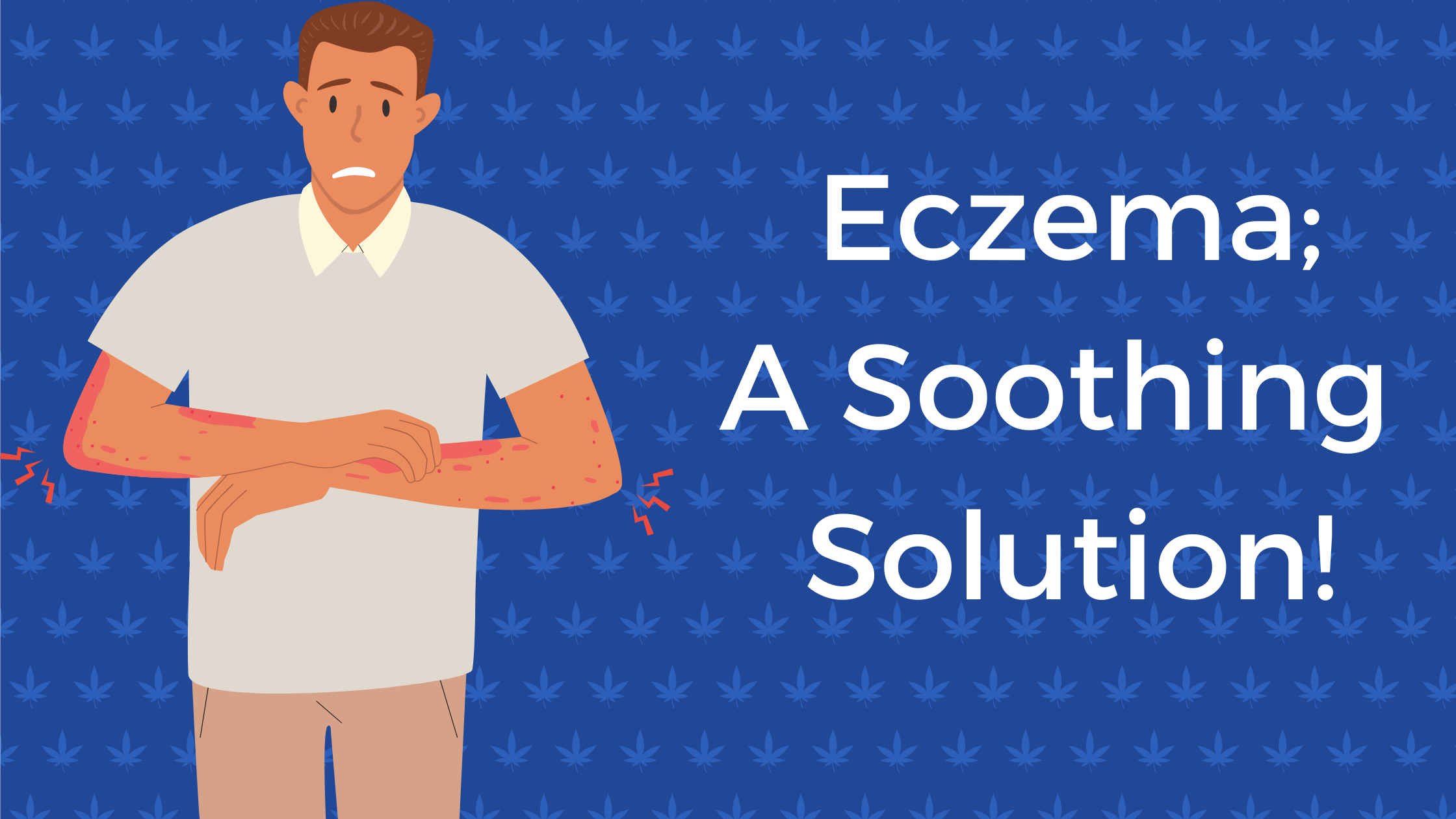
Cannabis and eczema are increasingly discussed together because researchers are studying whether cannabinoids such as CBD may influence itching, inflammation, and skin signaling. That interest is understandable, especially for people living with atopic dermatitis, a chronic condition that can cause severe itching, dryness, redness, and recurring flare-ups.
But the evidence needs to be handled carefully.
Current research does not show that cannabis strains cure eczema, and there is no strong evidence that indica, sativa, or any specific named strain should be used as an eczema treatment. Most clinical research focuses on cannabinoids and topical formulations rather than on particular strains.
The most accurate way to look at the topic is this: cannabinoids may have potential for certain symptoms, especially itching, but established eczema treatments still have much stronger evidence behind them.
Key Takeaway:
- Cannabinoids may help reduce itching, but current evidence does not show clear improvement in overall atopic dermatitis severity.
- There is no evidence-based “best cannabis strain for eczema.” Research focuses on cannabinoids such as CBD, not indica or sativa labels.
- Standard eczema care remains the foundation of treatment, including moisturizers and dermatologist-recommended topical therapies.
What Is Eczema?
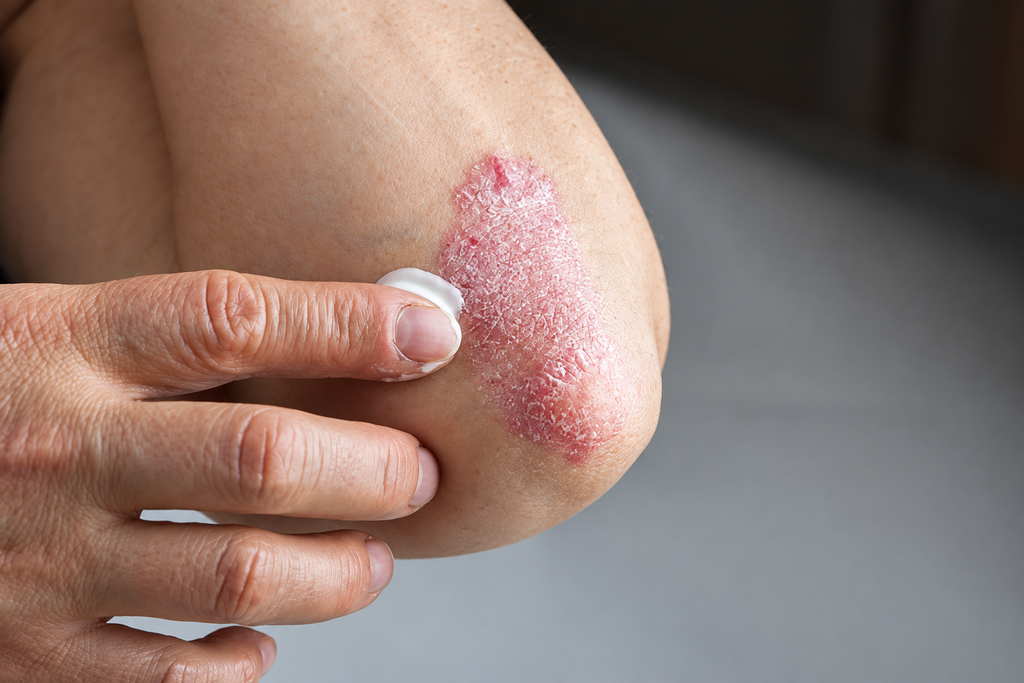
Eczema is a general term for several inflammatory skin conditions. The most common form is atopic dermatitis, which often causes itching, dry skin, inflammation, and recurring flare-ups.
The condition is linked to several factors, including:
- impaired skin-barrier function
- immune-system activity
- genetics
- environmental triggers
- allergens and irritants
The American Academy of Dermatology explains that atopic dermatitis can significantly affect quality of life and often requires long-term management rather than a one-time cure.
Because eczema involves inflammation and intense itching, researchers have become interested in whether the body’s endocannabinoid system could be a useful treatment target.
Why Are Cannabinoids Being Studied for Eczema?
Cannabis contains many biologically active compounds called cannabinoids.
The two best known are:
- THC, the compound primarily responsible for cannabis intoxication
- CBD, a non-intoxicating cannabinoid that has attracted significant medical research interest
Cannabinoids interact with the body’s endocannabinoid system, which is involved in processes such as pain perception, immune signaling, and inflammation.
Cannabinoid receptors are also present in the skin, which has led researchers to investigate whether cannabinoids might influence:
- itching
- inflammation
- pain
- skin-barrier function
- immune responses
This does not mean cannabinoids are proven eczema treatments. It means there is enough biological plausibility to justify further research.
Can Cannabis Treat Eczema?
At present, there is not enough evidence to say that cannabis treats eczema.
A 2025 systematic review and meta-analysis looked at cannabis and cannabinoid-based treatments across several dermatologic conditions. The study included more than 3,000 participants and found a modest but statistically significant reduction in pruritus, or itching.
However, the researchers did not find significant improvements in:
- skin dryness
- erythema
- quality of life
- atopic dermatitis severity scores
- transepidermal water loss
The authors concluded that larger, more standardized clinical trials are still needed.
That makes the current evidence more promising for symptom relief than for treating eczema itself.
What About CBD for Eczema?
CBD gets most of the attention because it does not produce the intoxicating effects associated with THC.
Researchers are interested in CBD because laboratory and early clinical studies suggest it may have anti-inflammatory, anti-itch, and pain-modulating properties.
Still, there is an important distinction between potential biological effects and proven clinical treatment.
The FDA has approved only one prescription CBD drug, and it is approved for certain seizure disorders—not eczema. The agency warns that many commercially available CBD products are marketed with unproven medical claims and may vary significantly in quality.
So while topical CBD may be an interesting area of research, it should not be presented as a replacement for established eczema treatment.
Do Indica or Sativa Strains Matter for Eczema?
There is currently no strong evidence that indica strains, sativa strains, or any named cannabis variety performs better for eczema.
This is an important correction to many older articles that treat strain categories as if they were medically meaningful.
Research on eczema and cannabinoids has focused on:
- CBD
- THC
- cannabinoid extracts
- topical formulations
- endocannabinoid receptors
It has not established that one cannabis strain is superior to another for treating eczema.
For that reason, statements like “indica is better for eczema” or “this strain reduces eczema inflammation” should be avoided unless supported by direct clinical evidence.
Can Cannabinoids Help With Itching?
This is where the current evidence is most interesting.
Itching is one of the most disruptive symptoms of eczema. Repeated scratching can further damage the skin barrier, increase inflammation, and interfere with sleep.
The 2025 meta-analysis found that cannabinoid-based treatments produced a modest improvement in itching across dermatologic conditions.
That does not prove cannabinoids are an effective eczema therapy, but it suggests that itch relief may be one of the more promising areas for future research.
This distinction matters.
A treatment can help a symptom without treating the underlying disease.
What Treatments Have Stronger Evidence?
For people with atopic dermatitis, established treatments are still better supported by evidence.
The American Academy of Dermatology strongly recommends several topical therapies for adults with atopic dermatitis, including:
Moisturizers: Regular moisturization helps support the skin barrier, reduce dryness, and decrease flare severity.
Topical Corticosteroids: Topical corticosteroids remain one of the most widely used treatments for eczema flares because they reduce inflammation and itching.
Topical Calcineurin Inhibitors:Tacrolimus and pimecrolimus can reduce inflammation and itching, especially in areas where long-term steroid use may be less desirable.
PDE-4 and JAK Inhibitors: Crisaborole and ruxolitinib are additional topical options that may be appropriate for certain patients.
The AAD’s current guidelines strongly recommend moisturizers, topical corticosteroids, topical calcineurin inhibitors, and topical PDE-4 and JAK inhibitors for appropriate patients.
These treatments have a much stronger evidence base than commercially available cannabis or CBD products.
Are CBD Skin Products Safe?
CBD products are often marketed as natural or gentle, but that does not automatically mean they are risk-free.
Potential concerns include:
- skin irritation
- allergic reactions
- fragrances or essential oils that trigger eczema
- inaccurate labeling
- contamination
- interactions with medications if CBD is absorbed systemically
The FDA warns that some CBD products may contain different amounts of CBD than their labels claim and may contain contaminants such as pesticides, heavy metals, or THC.
The FDA also notes that CBD can interact with medications and may affect liver function in some circumstances.
For people with eczema, where the skin barrier is already compromised, it makes sense to be especially cautious with heavily fragranced or complex topical formulations.
What Should You Look for in a CBD Topical?
If someone chooses to try a CBD skin product after discussing it with a healthcare professional, a simpler product is usually easier to evaluate.
Look for:
- fragrance-free formulas
- clear ingredient lists
- third-party laboratory testing
- transparent cannabinoid content
- reputable manufacturers
- minimal unnecessary additives
Avoid products that claim to cure eczema or replace medical treatment.
Those claims go beyond what current evidence supports.
Should You Smoke Cannabis for Eczema?
There is no good evidence that smoking cannabis is an appropriate way to treat eczema.
Research in dermatology has focused mainly on topical cannabinoids and cannabinoid-based formulations, not smoking cannabis as a skin treatment.
Smoking also exposes the lungs to combustion products that have nothing to do with managing eczema.
If someone is interested in cannabinoids for skin symptoms, topical formulations are much more relevant to the current research than inhaled cannabis.
Who Should Be Extra Careful?
People should speak with a healthcare professional before using CBD or cannabis products if they:
- take prescription medications
- are pregnant or breastfeeding
- have liver disease
- are treating eczema in a child
- have severe eczema
- have signs of skin infection
The FDA specifically advises caution with cannabis and CBD during pregnancy and breastfeeding because safety data are still incomplete.
When Should You See a Dermatologist?
Professional medical care is important if eczema:
- is severe or widespread
- causes significant pain
- repeatedly disrupts sleep
- shows signs of infection
- does not improve with appropriate skin care
- significantly interferes with daily life
A dermatologist can also confirm whether a rash is truly eczema, since other conditions can look similar.
Final Thoughts
Research into cannabis and eczema is still developing.
Cannabinoids may eventually have a role in managing certain symptoms, particularly itching, but current evidence does not support treating cannabis strains or CBD products as established eczema therapies.
The strongest evidence still supports standard eczema care, including moisturizers, topical anti-inflammatory medications, and dermatologist-guided treatment.
For now, the most responsible approach is to view cannabinoids as an emerging area of research rather than a proven replacement for conventional eczema treatment.